



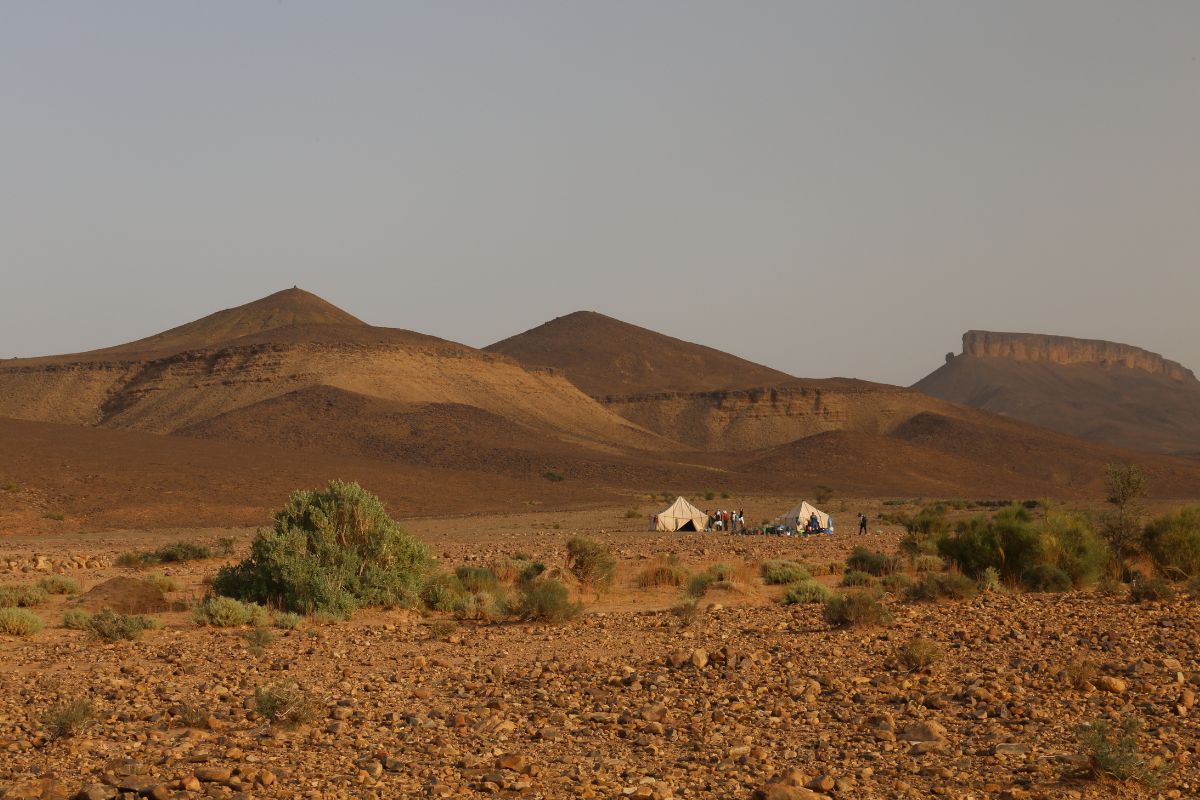
In the arid regions of southern Morocco, farmers are turning to an ancient water-management system to cope with a growing modern challenge. As droughts become more frequent and groundwater levels decline, communities are restoring centuries-old underground tunnels that transport water across long distances without pumps or external energy.
Known locally as khettaras, these underground channels were developed generations ago to move water from aquifers to farms and settlements. For many years, modern infrastructure reduced dependence on the system.
Today, climate pressures are bringing renewed interest.
Farmers and local authorities increasingly see these traditional tunnels as a valuable tool for improving water security in one of the world’s most water-stressed agricultural regions.
The revival highlights how historical knowledge can contribute to climate adaptation.
Morocco has experienced repeated droughts over recent years, placing severe pressure on farming communities. Reduced rainfall, declining groundwater reserves, and rising temperatures have affected crop production across large parts of the country. Water availability has become one of the biggest constraints facing agriculture.
Farmers who once depended on predictable seasonal rainfall now face increasing uncertainty.
The search for reliable water sources has therefore become a priority. Communities are exploring both modern technologies and traditional systems that can help sustain agriculture under changing climatic conditions.
Water management has moved to the centre of agricultural planning.
Its importance continues to grow.
Underground Tunnels Reduce Water Loss
The khettara system works through gravity. Underground tunnels carry water from higher elevations to farms located many kilometres away. Because the channels remain beneath the surface, water loss through evaporation is significantly reduced.
This advantage is especially important in hot desert environments.
Open canals often lose substantial amounts of water before it reaches crops. Underground transport helps conserve scarce resources and improves delivery efficiency.
The system requires careful construction and maintenance, but it functions without fuel or electricity.
Its simplicity has allowed it to survive for centuries.
Many restoration projects depend on local participation. Villagers contribute labour, maintenance, and traditional knowledge needed to repair damaged tunnel networks. In several regions, community organisations are working alongside government agencies to rehabilitate abandoned systems.
The collaborative approach helps preserve technical knowledge while ensuring long-term management.
Residents understand that infrastructure alone is not enough. Sustainable operation requires collective responsibility and regular maintenance.
Community involvement remains one of the strongest foundations of the programme.
The system survives because people support it.
Farmers using restored tunnel systems gain more reliable access to irrigation water. This stability allows them to continue cultivating crops despite difficult environmental conditions. Vegetables, fruit trees, and other agricultural products benefit from improved water availability during dry periods.
Researchers studying arid-land agriculture note that efficient water use is becoming increasingly important as climate pressures intensify.
Every litre saved contributes to long-term sustainability.
Traditional irrigation systems often contain valuable lessons about resource conservation developed through centuries of practical experience.
Those lessons remain relevant today.
Ancient Knowledge Meets Modern Challenges
The renewed interest in khettaras reflects a broader trend occurring in many parts of the world.
Communities facing climate risks are revisiting traditional practices that evolved under harsh environmental conditions. Rather than replacing modern technologies, these systems often complement contemporary adaptation strategies.
Researchers argue that historical knowledge should not be overlooked when developing climate solutions.
Ancient systems survived because they addressed real environmental challenges effectively.
Their continued relevance demonstrates the value of learning from past experience.
Innovation sometimes begins with rediscovery.
Water scarcity is becoming one of the defining agricultural challenges of the twenty-first century. Countries around the world are searching for ways to improve efficiency, protect groundwater, and strengthen resilience against drought. Morocco’s restored tunnel systems offer one example of how communities can respond.
The technology is old, but the challenge is new.
By combining traditional engineering with modern conservation efforts, farmers are finding ways to sustain production in increasingly difficult conditions.
Beneath the deserts of Morocco, underground channels continue carrying water just as they have for generations.
In a warming world, their value may be greater than ever.
Also Read: Punarnava Jal – The world’s first organic fertilizer! Know how it is beneficial for farmers?
Contact us – If farmers want to share any valuable information or experiences related to farming, they can connect with us via phone or whatsapp at 9599273766 or you can write to us at “kisanofindia.mail@gmail.com”. Through Kisan of India, we will convey your message to the people, because we believe that if the farmers are advanced then the country is happy.
You can connect with Kisan of India on Facebook, Twitter, and Whatsapp and Subscribe to our YouTube channel.