


Why India’s Rainfed Farmers Are Becoming the Most Vulnerable to Climate Change

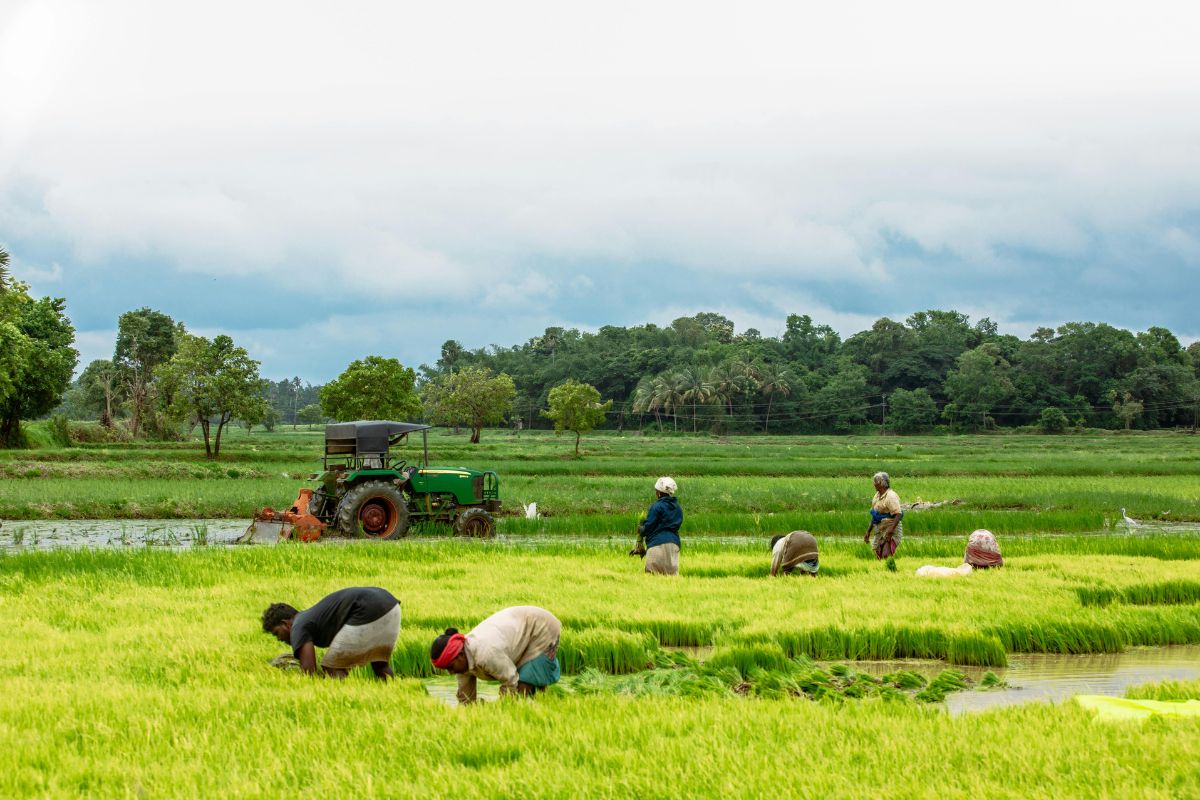
Despite decades of irrigation expansion, millions of Indian farmers still depend almost entirely on rainfall for cultivation.
Across large parts of Maharashtra, Madhya Pradesh, Rajasthan, Jharkhand, Chhattisgarh, Odisha, Telangana, Karnataka, and tribal regions of central India, farming remains tied closely to the monsoon. Crops succeed or fail depending on the timing, intensity, and distribution of seasonal rainfall.
Researchers say rainfed farming supports a major share of India’s rural population while producing large quantities of pulses, millets, oilseeds, cotton, and coarse cereals.
Yet these regions remain among the most climate-vulnerable agricultural landscapes in the country.
For generations, farmers planned agricultural cycles around relatively stable seasonal patterns.
Today, those patterns are changing rapidly.
Researchers studying climate systems say monsoon rainfall is becoming increasingly erratic across several Indian regions. Instead of long steady rainfall periods, many areas now experience:
- Sudden heavy downpours
- Long dry spells
- Delayed monsoons
- Early monsoon withdrawal
- Unseasonal rainfall
Agriculture experts warn that rainfed farming systems suffer heavily because they lack irrigation buffers capable of protecting crops during weather instability.
For small farmers, even a short rainfall failure can destroy an entire season’s income.
Heatwaves Are Damaging Crops Faster
Climate change is not affecting rainfall alone.
Extreme heat events are intensifying across India’s farming regions. Researchers say rising temperatures increase evaporation rates, reduce soil moisture, and damage crop growth during sensitive stages.
In rainfed areas, this creates severe stress because crops already operate under limited water conditions.
Agriculture experts report that:
- Pulses wilt faster
- Flowering periods shorten
- Soil dries rapidly
- Fodder availability declines
during prolonged heat periods.
Researchers believe heat stress may become one of the biggest long-term threats facing dryland agriculture across South Asia.
Rainfed farming regions are dominated largely by small and marginal farmers cultivating limited landholdings with fewer financial buffers.
Researchers say many households already operate under:
- Rising debt
- Input cost pressure
- Limited crop insurance access
- Weak irrigation infrastructure
- Market uncertainty
When climate shocks arrive, recovery becomes difficult.
Agriculture experts warn that repeated crop failures often trigger:
- Seasonal migration
- Livestock sales
- Borrowing cycles
- Reduced food security
across vulnerable rural communities.
In irrigated regions, farmers often compensate for weak rainfall through borewells and tube wells.
Many rainfed regions lack that possibility.
Researchers say hard rock geology in parts of central and peninsular India limits groundwater storage naturally. Even where borewells exist, falling water tables make irrigation increasingly unreliable.
Agriculture experts argue that climate adaptation in rainfed regions cannot depend only on groundwater extraction because many areas simply do not possess sustainable aquifer capacity.
This makes rainfall management critically important.
As climate pressure increases, some farmers are returning toward traditional dryland crops once abandoned during commercial agricultural expansion.
Millets, pulses, oilseeds, and mixed cropping systems are slowly regaining attention because they survive uncertain rainfall better than highly water-dependent crops.
Researchers say traditional rainfed agriculture historically depended heavily on diversity rather than monoculture farming.
Farmers cultivated multiple crops together to reduce climate risk across unpredictable seasons.
Agriculture experts increasingly believe future dryland farming may need to rebuild some of those older ecological approaches.
Women Face Hidden Climate Burdens
Researchers studying rural livelihoods say women often experience climate pressure differently inside rainfed farming systems.
During drought periods, women frequently travel longer distances for:
- Water collection
- Fodder gathering
- Fuelwood collection
while also managing household food systems during agricultural losses.
Agriculture experts warn that climate stress increases unpaid labour burdens significantly in rural households already struggling with unstable farming income.
In several regions, male migration toward cities during failed agricultural seasons also leaves women managing farms with fewer resources and support systems.
Governments expanded crop insurance schemes across India during recent years.
Still, researchers say many rainfed farmers continue facing problems related to:
- Delayed compensation
- Damage assessment disputes
- Limited awareness
- Complex claim systems
Agriculture experts argue that climate adaptation requires stronger local support systems beyond insurance alone.
These include:
- Water harvesting
- Seed diversity
- Climate advisories
- Local storage systems
- Drought-resistant farming methods
Without structural support, insurance alone cannot stabilize vulnerable farming systems under repeated climate shocks.
In several rainfed districts, seasonal migration now forms part of rural survival strategies.
After weak monsoons or crop losses, workers travel temporarily toward cities for construction, factory, transport, or informal labour jobs before returning during the next agricultural cycle.
Researchers say climate-linked migration is increasing gradually across vulnerable dryland regions.
Agriculture experts warn that repeated agricultural instability may permanently reshape rural demographics if younger generations lose confidence in farming as a reliable livelihood.
Rainfed India May Decide Agriculture’s Future
Much of India’s climate debate still focuses heavily on irrigated agriculture, groundwater depletion, and large food grain systems.
But researchers increasingly argue that the future of Indian agriculture may depend equally on what happens in rainfed regions supporting millions of vulnerable farmers.
These landscapes already operate close to climatic limits.
Every failed rainfall season now carries higher risk than before.
Agriculture experts say climate adaptation in India cannot succeed without protecting dryland farming systems from ecological and economic collapse.
Because across large parts of rural India, farming still begins with one uncertain question every season:
Will the rains arrive on time?
Also Read: Punarnava Jal – The world’s first organic fertilizer! Know how it is beneficial for farmers?
Contact us – If farmers want to share any valuable information or experiences related to farming, they can connect with us via phone or whatsapp at 9599273766 or you can write to us at “kisanofindia.mail@gmail.com”. Through Kisan of India, we will convey your message to the people, because we believe that if the farmers are advanced then the country is happy.
You can connect with Kisan of India on Facebook, Twitter, and Whatsapp and Subscribe to our YouTube channel.