


With El Niño Strengthening, Can Indian Farmers Prepare for a Drier End to the Monsoon?

is heading into the final month of the monsoon with a weaker rainfall outlook. August recorded a 16 percent rainfall deficit, and the India Meteorological Department has forecast below-normal rainfall for September. The expected shortfall has raised concerns for farmers growing cotton, soybean, maize and pulses, especially in rain-fed areas where crops depend heavily on monsoon moisture.
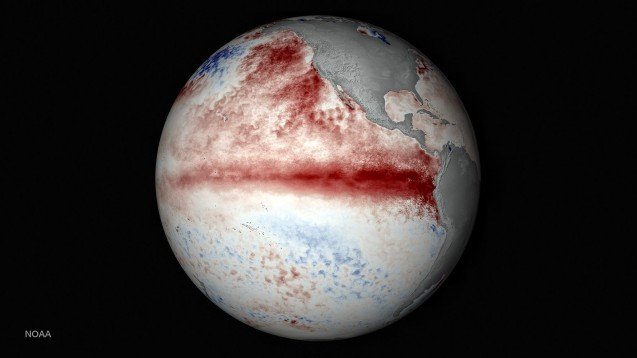
The changing weather pattern has also brought renewed attention to El Niño. IMD has linked the weak monsoon conditions to El Niño in the equatorial Pacific. For farmers, the climate signal matters because it can affect rainfall, temperature and soil moisture at a critical stage of the crop season. But the impact will not be identical across India. Local rainfall and crop conditions will remain the most important factors for farm decisions.
August is normally one of the most important months of the southwest monsoon. But India received 16 percent less rainfall than normal during the month, according to IMD data reported this week. The rainfall deficit was not limited to one part of the country.
The southern peninsula recorded a 27 percent shortfall. Central, eastern and northeastern India received about 16 percent less rainfall. Northwestern India recorded a 10 percent deficit.
By the end of August, 42 percent of India’s 741 monitored districts had received deficient rainfall, while another 5 percent faced large deficiencies. Only 290 districts received normal rainfall, with Odisha standing out as the only state where all districts recorded normal rainfall.
For farmers, this means national monsoon figures can hide local problems. One district may have enough soil moisture. A nearby district may face a prolonged dry spell. Farm decisions should therefore depend on local rainfall and field conditions rather than the national seasonal average alone.
September could add pressure to standing crops
IMD expects September rainfall to remain below 91 percent of the long-period average. This could create further moisture stress for standing kharif crops that are entering important growth stages. Cotton, soybean, maize and pulses are among the crops that could face problems if dry conditions continue for long periods.
The effect will depend on crop stage and irrigation access. A short dry period may not cause serious damage in every field. But extended moisture stress during flowering or grain development can reduce production. Farmers with irrigation may have more options.
Rain-fed farmers have fewer ways to respond. Nearly half of India’s farmland depends on rainfall rather than assured irrigation, making monsoon changes especially important for farm production.
The rainfall problem does not end with kharif crops. The amount of water stored in the soil after the monsoon can influence preparations for the rabi season. A weak end to the monsoon could reduce soil moisture needed for crops such as wheat and rapeseed, according to the latest rainfall outlook.
Farmers may therefore need to review rabi plans based on actual field conditions. The right crop choice can depend on:
- Soil moisture at the end of the monsoon
- Irrigation availability
- Expected temperatures
- Local rainfall forecasts
- Access to suitable seed
Farmers should avoid making major decisions based only on predictions about El Niño. They should combine seasonal forecasts with information from local agriculture departments and Krishi Vigyan Kendras.
Climate-resilient agriculture is often discussed as a long-term response to climate change. But many of its practices can help farmers manage an immediate dry spell. ICAR-CRIDA has recently advised farmers in Karnataka to prepare for anticipated El Niño conditions through measures such as rainwater harvesting, millet cultivation, agroforestry, soil testing and the use of suitable biofertilisers.
These practices cannot guarantee protection from drought. But they can help reduce risk. Rainwater harvesting can improve water availability. Better soil management can support moisture retention.
Crop diversification can reduce dependence on one crop. The most suitable approach will depend on local farming conditions.
Millets are receiving renewed attention
Climate variability is also increasing interest in crops that can perform under lower rainfall conditions. ICAR-IIMR recently trained agricultural stakeholders in Odisha on sustainable and climate-resilient millet production, noting the growing challenge created by changing weather conditions.
Millets are not a universal replacement for every crop. Farmers must consider local markets, consumer demand and available procurement systems before changing their crop plans. But climate conditions are forcing many farmers and policymakers to reconsider the role of crops that require less water than some existing production systems.
The challenge is economic as well as environmental. A farmer will hesitate to change crops if there is no reliable buyer. Climate adaptation needs market support.
A below-normal September can increase pressure on irrigation. Farmers with limited water should avoid unnecessary use. The first step is to assess the crop and soil. Irrigation should match crop needs rather than follow a fixed schedule.
Farmers can also reduce moisture loss through suitable practices such as mulching where appropriate. The larger challenge is long-term planning. A farm that depends entirely on rainfall remains highly exposed when the monsoon becomes irregular.
Where conditions allow, farmers can examine:
- Farm ponds
- Rainwater harvesting
- Drip irrigation
- Sprinkler systems
- Soil moisture conservation
- Drought-tolerant crop varieties
Each option requires local planning.
The cost and suitability will differ between farms.
Climate adaptation will depend on local decisions
The weak August and below-normal September forecast show how quickly monsoon conditions can change. El Niño may influence the larger weather pattern, but farmers experience the impact locally. One village may face drought.
Another may receive enough rainfall. This is why climate adaptation cannot rely on one solution. Farmers need practical choices based on their crops, water resources and local weather. ICAR programmes across different states are increasingly promoting climate-resilient practices, including crop diversification, improved soil management, rainwater harvesting and climate-suitable crop choices.
For Indian farmers, the immediate challenge is not to predict every change in the weather. It is to prepare farms so that one delayed monsoon spell does not immediately become a crop crisis. The coming weeks will show how much moisture India’s farms retain before the monsoon ends. That will also shape decisions for the next crop season.
The bigger question is whether farming systems can adapt fast enough as rainfall becomes less predictable.
Also Read: Punarnava Jal – The world’s first organic fertilizer! Know how it is beneficial for farmers?
Contact us – If farmers want to share any valuable information or experiences related to farming, they can connect with us via phone or whatsapp at 9599273766 or you can write to us at “kisanofindia.mail@gmail.com”. Through Kisan of India, we will convey your message to the people, because we believe that if the farmers are advanced then the country is happy.
You can connect with Kisan of India on Facebook, Twitter, and Whatsapp and Subscribe to our YouTube channel.