



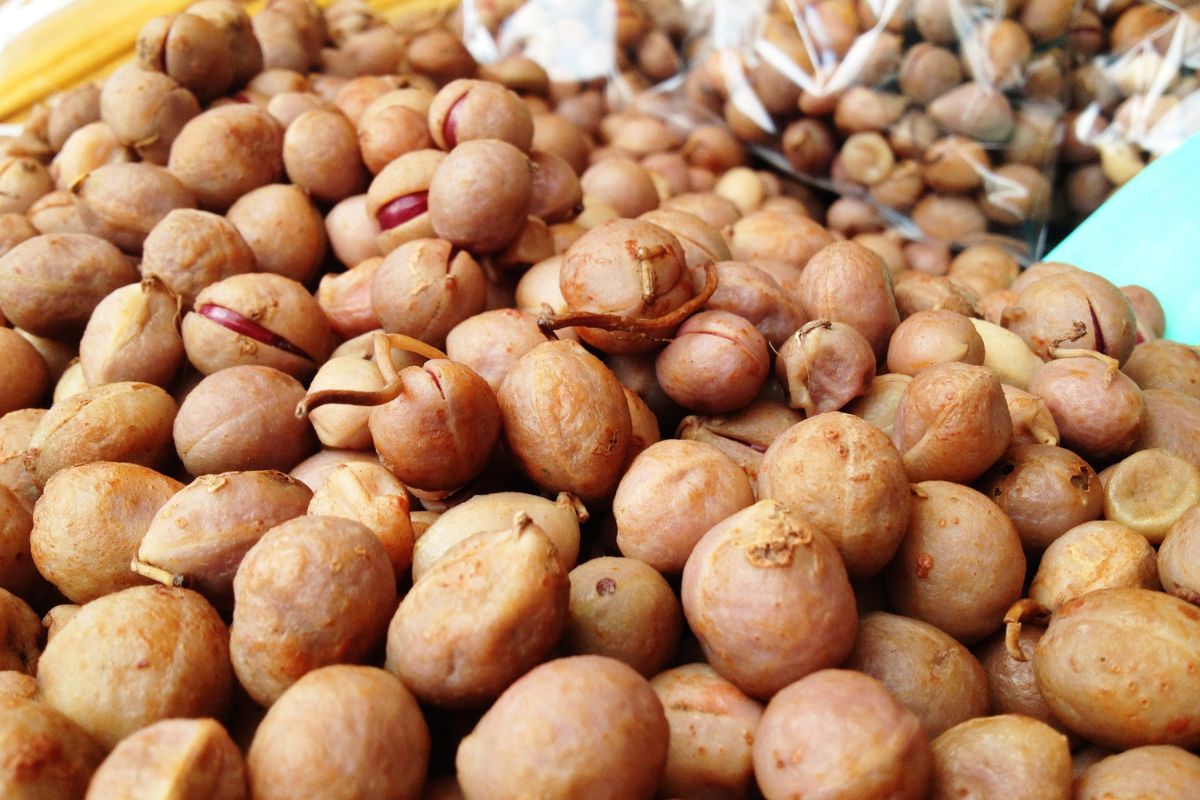
Climate change is forcing farmers to reconsider which crops can withstand rising temperatures, erratic rainfall, and prolonged dry spells. Many traditional crops are becoming more vulnerable to weather extremes, increasing the need for resilient alternatives that require fewer external inputs. One crop attracting growing interest among agricultural researchers is Bambara groundnut, an underutilised legume known for its ability to survive under difficult conditions.
Native to Africa, Bambara groundnut has recently become the focus of international research because of its drought tolerance, nutritional quality, and ability to produce reasonable yields on marginal soils. Indian scientists are also studying underutilised legumes as part of broader efforts to diversify cropping systems and improve climate resilience.
Researchers believe Bambara groundnut could become an important option for dryland agriculture as water scarcity continues to affect farming across many regions.
Performs Well Under Limited Rainfall
One of the biggest advantages of Bambara groundnut is its ability to grow with relatively little water. Unlike several major pulse crops that suffer during prolonged dry spells, Bambara groundnut can continue producing under conditions where rainfall is uncertain.
Its deep root system allows the plant to utilise moisture available below the soil surface, improving survival during periods of water stress. Agricultural scientists consider this characteristic particularly valuable as climate models project increasing rainfall variability across tropical and semi-arid regions.
The crop therefore offers an opportunity for farmers to reduce production risks in rainfed farming systems.
Like other legumes, Bambara groundnut fixes atmospheric nitrogen through a symbiotic relationship with beneficial soil bacteria. This natural process improves soil fertility and reduces the need for synthetic nitrogen fertilisers.
Farmers cultivating the crop can also benefit from improved soil conditions for subsequent crops grown in rotation. Researchers studying regenerative agriculture frequently recommend nitrogen-fixing legumes because they contribute to long-term soil productivity while lowering cultivation costs.
The crop supports both environmental sustainability and farm profitability.
Bambara groundnut is rich in protein, carbohydrates, dietary fibre, and essential minerals. Nutrition experts describe it as a balanced food because it contains significant amounts of both protein and energy, making it valuable for communities seeking nutritious and affordable food sources.
Scientists believe increasing the cultivation of nutrient-rich underutilised crops could strengthen food security while reducing dependence on a limited number of staple crops.
Interest in alternative protein sources is also creating new opportunities for future food processing industries.
Suitable for Low-Input Farming
Many smallholder farmers struggle with rising prices of fertilisers, pesticides, and irrigation. Bambara groundnut performs well under relatively low-input conditions, making it attractive for resource-constrained farming systems.
The crop generally requires fewer external inputs than many commercial crops while remaining capable of producing stable harvests. Agricultural economists note that crops requiring lower investment often reduce financial risks for small and marginal farmers.
This makes Bambara groundnut particularly suitable for regions where access to agricultural inputs remains limited.
International agricultural research organisations are increasing efforts to improve Bambara groundnut through breeding, genetic studies, and agronomic research. Scientists are working to develop improved varieties with better yield potential, disease resistance, and adaptability to different growing environments.
Researchers also see opportunities to integrate the crop into climate-smart agriculture programmes aimed at strengthening resilience against future weather extremes.
Growing scientific interest reflects the increasing recognition of underutilised crops within global food systems.
Bambara groundnut demonstrates that solutions to future agricultural challenges may already exist within traditional crops that have received limited commercial attention. Its drought tolerance, soil-improving ability, nutritional value, and adaptability make it an attractive candidate for climate-resilient farming.
For farmers, the crop offers an opportunity to diversify production while reducing dependence on water-intensive systems. For researchers, it provides another example of how neglected crops can contribute to sustainable agriculture and future food security.
As agriculture adapts to a changing climate, Bambara groundnut is emerging from relative obscurity to become a promising crop for tomorrow’s farming systems.
Also Read: Punarnava Jal – The world’s first organic fertilizer! Know how it is beneficial for farmers?
Contact us – If farmers want to share any valuable information or experiences related to farming, they can connect with us via phone or whatsapp at 9599273766 or you can write to us at “kisanofindia.mail@gmail.com”. Through Kisan of India, we will convey your message to the people, because we believe that if the farmers are advanced then the country is happy.
You can connect with Kisan of India on Facebook, Twitter, and Whatsapp and Subscribe to our YouTube channel.