



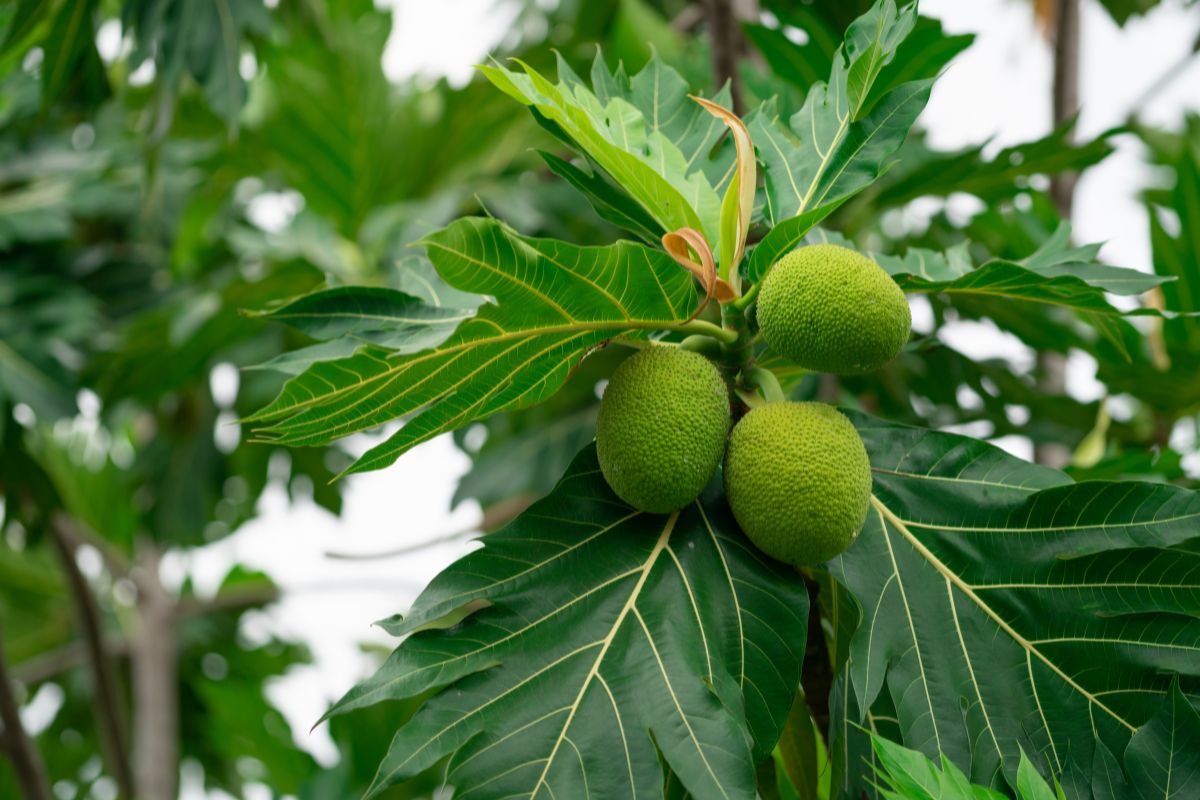
Across parts of Kerala, a tree once found mainly in home gardens is attracting fresh attention from farmers and researchers. Breadfruit, a tropical crop traditionally grown on a small scale, is increasingly being recognised for its potential to contribute to food security and farm diversification.
For decades, many households valued the tree for domestic consumption rather than commercial production. The fruit was often harvested seasonally and used in local dishes, while large-scale cultivation remained limited.
That perception is slowly changing.
Growing interest in climate-resilient agriculture, coupled with rising demand for traditional foods, is encouraging farmers to explore breadfruit as a commercial crop. Researchers believe the tree may have an important role to play in future farming systems.
Its combination of adaptability and productivity is attracting attention.
Breadfruit performs well in warm, humid environments. The crop thrives under conditions common across Kerala’s coastal and midland regions. Once established, trees can remain productive for many years, producing substantial quantities of fruit annually.
Farmers appreciate this long-term productivity.
Unlike seasonal crops that require planting every year, breadfruit provides repeated harvests from the same tree. This reduces recurring establishment costs while creating a dependable source of produce.
Perennial crops often contribute to farm stability.
Breadfruit offers this advantage naturally.
Climate Resilience Supports Interest
Agricultural researchers are increasingly focused on crops capable of adapting to changing weather conditions. Breadfruit is attracting attention because mature trees can tolerate periods of environmental stress better than many annual crops. Their extensive root systems and perennial growth habit provide important advantages.
Climate resilience is becoming a key consideration in crop selection. Farmers are searching for species that remain productive despite rainfall variability and temperature fluctuations. Breadfruit aligns well with these objectives.
Its adaptability strengthens its appeal.
The crop fits emerging agricultural priorities.
Consumer interest in traditional and locally sourced foods is expanding. Breadfruit is benefiting from this trend as entrepreneurs explore opportunities in flour production, snacks, processed foods, and ready-to-cook products. The fruit’s versatility creates multiple marketing possibilities.
Processing can significantly increase value.
Rather than relying solely on fresh fruit sales, producers can participate in growing value-added markets. Researchers note that processing often determines whether alternative crops achieve commercial success.
The sector is gradually moving in this direction.
Market opportunities continue to develop.
Breadfruit integrates well into mixed farming systems. Farmers can cultivate the tree alongside spices, vegetables, medicinal plants, and other crops. This flexibility makes it suitable for agroforestry models that combine productivity with environmental benefits. Agricultural experts frequently promote diversified farming systems because they improve resilience and resource efficiency.
Breadfruit contributes to these goals while generating additional income opportunities. The tree supports both ecological and economic objectives. Its role extends beyond fruit production alone.
Farmers Explore Diversification
Dependence on a limited number of crops increases vulnerability to market fluctuations and weather-related risks.
Diversification helps address this challenge by creating multiple sources of income. Breadfruit is becoming one option within this broader strategy.
Several farmers are planting the crop alongside existing enterprises rather than replacing them entirely.
The approach allows gradual expansion while reducing risk. Diversification remains one of the most effective tools available to smallholders.
Breadfruit fits comfortably within this framework.
Its flexibility encourages adoption.
Breadfruit has been part of Kerala’s agricultural landscape for generations. What is changing today is the recognition of its broader potential. A tree once valued primarily for household consumption is emerging as a climate-resilient crop with commercial possibilities.
Farmers, researchers, and entrepreneurs are increasingly exploring how breadfruit can contribute to future food systems. Its productivity, adaptability, and versatility make it an attractive candidate for diversified agriculture.
As interest continues to grow, breadfruit may become far more visible across Kerala’s farms.
Sometimes the crops best suited for the future are the ones that have been growing quietly for decades.
Also Read: Punarnava Jal – The world’s first organic fertilizer! Know how it is beneficial for farmers?
Contact us – If farmers want to share any valuable information or experiences related to farming, they can connect with us via phone or whatsapp at 9599273766 or you can write to us at “kisanofindia.mail@gmail.com”. Through Kisan of India, we will convey your message to the people, because we believe that if the farmers are advanced then the country is happy.
You can connect with Kisan of India on Facebook, Twitter, and Whatsapp and Subscribe to our YouTube channel.