


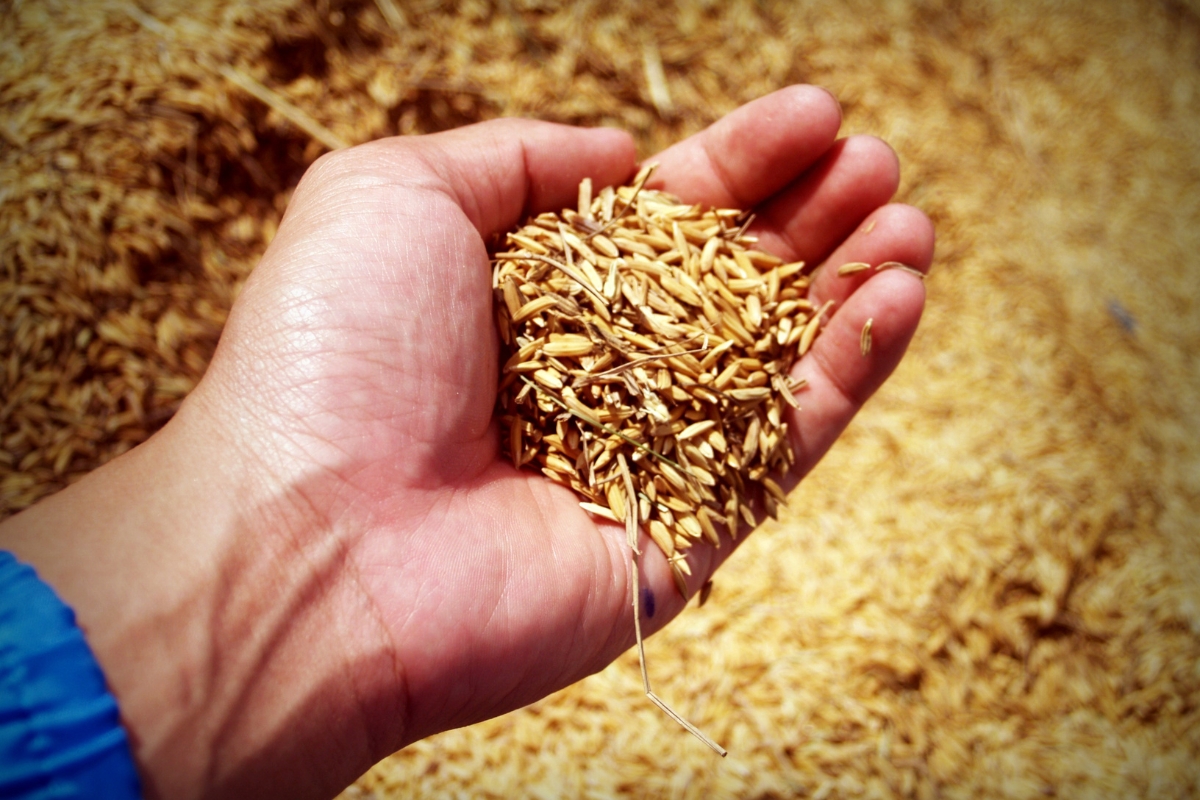
Goa Dhan-5 is being prepared for wider cultivation after years of testing in coastal farming areas. Developed by ICAR-Central Coastal Agricultural Research Institute, the rice variety is designed for fields where salinity, flooding and lodging can damage crops. Its performance is drawing attention before the next kharif season.
Unlike ordinary rice varieties, Goa Dhan-5 combines tolerance to saline conditions with better performance during temporary waterlogging and submergence. Earlier field trials reported that the crop can withstand complete or partial submergence for around 10 to 15 days, giving farmers another option in flood-prone coastal areas.
The variety also has a strong stem, which helps reduce lodging when heavy rain and wind push mature plants down. Lodging can make harvesting difficult and cause grain losses. A stronger plant can support timely harvesting and may also make the crop more suitable for mechanised operations.
Field results reported during trials showed yields of about six tonnes per hectare under normal conditions and roughly four to 4.5 tonnes per hectare in saline conditions. These figures are trial results, not guaranteed farm yields. Farmers should assess local soil, water, seed and management conditions before adoption.
What The Field Trials Show
ICAR records show Goa Dhan-5 was tested alongside Goa Dhan-4 in on-farm trials involving farmers’ fields. The trials focused on salt-tolerant paddy varieties, showing the effort to match rice breeding with difficult coastal growing conditions. Such testing helps scientists observe performance beyond controlled research plots.
Goa has a history of developing rice varieties for khazan lands and other areas affected by salinity and Goa Dhan-1 and Goa Dhan-2 were released in 2017, followed by Goa Dhan-3 and Goa Dhan-4 in 2019. Goa Dhan-5 builds on this breeding work with added flood tolerance.
More than 40 farmers had been reported cultivating Goa Dhan-5 in demonstration fields across villages including Amona, Chorao, Neura, Shiroda and Cumbarjua. Earlier reports also said ICAR-CCARI distributed seed to farmers for broader testing, allowing researchers to gather field-level evidence across different locations.
Why does this matter for farmers? Coastal agriculture faces a difficult combination of saline soil, excess water and intense rainfall. A variety that can tolerate more than one stress may reduce the chance of complete crop failure when weather or water conditions change quickly during the growing season.
Why Climate Resilience Matters
Climate change adds another reason to watch such varieties closely. Rising temperatures, intense rainfall and coastal flooding can increase pressure on rice fields. Climate-resilient seeds cannot solve every farm problem, but varieties matched to local stresses can become one part of a wider adaptation strategy.
Farmers should not treat salt tolerance as a reason to ignore soil and water management. Salinity levels can vary sharply between fields and seasons. Soil testing, suitable drainage, timely planting, balanced nutrition and proper water management remain important even when farmers choose a stress-tolerant rice variety.
Seed availability will also matter if Goa Dhan-5 moves from trials to wider cultivation. New varieties must complete testing and approval procedures before large-scale distribution. Farmers should therefore buy seed through authorised channels and check official recommendations instead of planting unverified seed sold under similar names.
The variety could be particularly useful in low-lying paddy areas where flooding repeatedly affects crop establishment or maturity. Its strong stem may also help where heavy rain and wind increase lodging. Still, farmers need local demonstrations and extension advice to understand how the variety performs under their specific field conditions.
What Farmers Should Check Before Planting
Goa Dhan-5 also shows why crop breeding needs to focus on several risks at once. A rice plant may face salinity early in the season, flooding after heavy rain and lodging near harvest. Breeding for combined tolerance can help farmers manage these overlapping stresses without changing the crop itself.
For farmers considering future kharif choices, the main lesson is to match varieties with field conditions rather than selecting seed only for yield. Coastal growers should compare salinity, flooding history, maturity period, expected market demand and seed cost before deciding whether a new variety fits their farm.
Goa Dhan-5 is not a complete answer to climate risks, and its reported trial performance should not be treated as a guarantee. Its value will become clearer as larger farmer trials and official evaluations continue. If results remain strong, the variety could give coastal rice growers another tool for difficult fields.
Also Read: Punarnava Jal – The world’s first organic fertilizer! Know how it is beneficial for farmers?
Contact us – If farmers want to share any valuable information or experiences related to farming, they can connect with us via phone or whatsapp at 9599273766 or you can write to us at “kisanofindia.mail@gmail.com”. Through Kisan of India, we will convey your message to the people, because we believe that if the farmers are advanced then the country is happy.
You can connect with Kisan of India on Facebook, Twitter, and Whatsapp and Subscribe to our YouTube channel.