
Fertilizer Supply Remains Strong: Government Data Shows Adequate Availability

Farmers across the country can breathe easy. Government data confirms that fertilizer supplies have remained adequate during both the Kharif 2025 and ongoing Rabi 2025-26 seasons. Concerns about forced use of alternatives due to shortages appear unfounded, according to official figures released by the Ministry of Chemicals and Fertilizers.
Strong Supply Exceeds Demand
The numbers tell a reassuring story. During the current Rabi season (till December 11, 2025), availability has consistently exceeded requirements across all major fertilizer categories.
For Urea, farmers needed 98.76 lakh metric tonnes, but the government made 127.85 LMT available. After sales of 82.46 LMT, a comfortable closing stock of 45.39 LMT remains. DAP availability stood at 50.38 LMT against a requirement of 38.89 LMT, leaving a closing stock of 16.46 LMT. MOP and NPKS fertilizers also show similar patterns of adequate supply.
The Kharif 2025 season showed the same trend. Urea requirement was 185.39 LMT, but availability reached 230.54 LMT. The season closed with a buffer stock of 37.33 LMT.
Nano Urea Production Growing
Nano Urea, the innovative liquid fertilizer developed by Indian Farmers Fertiliser Cooperative Limited (IFFCO), has seen varying production over the past three years. The fiscal year 2022-23 recorded the highest production at 475.12 lakh bottles. Production dipped to 90.71 lakh bottles in 2023-24 but recovered to 388.15 lakh bottles in 2024-25.
Sales figures show steady adoption by farmers. The product sold 326.8 lakh bottles in 2022-23, 207.43 lakh bottles in 2023-24, and 273.55 lakh bottles in 2024-25.
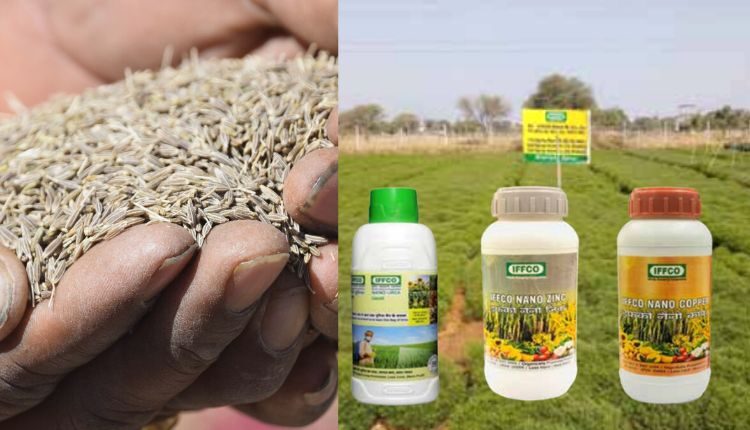
Importantly, farmers use Nano Urea by choice, not compulsion. With conventional urea supplies remaining adequate, farmers who prefer traditional fertilizers have full access to them. Nano Urea offers an alternative for those seeking to reduce application volume while maintaining nitrogen supply.
Crackdown on Black Marketing
The government takes fertilizer malpractices seriously. Fertilizers are declared essential commodities under the Essential Commodities Act, 1955, and regulated under the Fertilizer Control Order, 1985. State governments have the power to prosecute offenders involved in black marketing, hoarding, diversion, and overpricing.
Between April 2025 and November 2025, state enforcement teams conducted massive monitoring operations. The data reveals the scale of vigilance across the country.
Inspection Drive: State teams carried out 3,40,076 inspections and raids across India. Maharashtra led with 44,059 inspections, followed by Telangana with 1,15,321 inspections. These regular checks ensure retailers follow regulations and sell fertilizers at controlled prices.
Action Against Black Marketing: Authorities issued 5,258 show cause notices for black marketing and registered 442 FIRs. Uttar Pradesh took the strongest action with 2,043 notices and 165 FIRs. Bihar issued 1,035 notices and filed 77 FIRs.
Quality Control Measures: Officials issued 3,811 show cause notices for substandard quality fertilizers. Maharashtra topped the list with 1,155 notices, while Madhya Pradesh issued 606 notices. This protects farmers from ineffective products.
Preventing Diversion: States issued 3,058 show cause notices for fertilizer diversion—when fertilizers meant for agriculture get misused for other purposes. Madhya Pradesh and Odisha took particularly strong action in this category.
License Actions: Authorities suspended or cancelled 5,835 licenses of dealers involved in malpractices. Maharashtra cancelled 1,212 licenses, Uttar Pradesh cancelled 3,018 licenses, and Bihar cancelled 607 licenses. These actions send a strong message to dishonest dealers.
Criminal Prosecution: States registered 649 FIRs across all categories of violations. Uttar Pradesh led with 197 FIRs, followed by Madhya Pradesh with 91 FIRs and Rajasthan with 103 FIRs.
State-Wise Enforcement
Different states showed varying levels of enforcement activity. Uttar Pradesh demonstrated the most aggressive action with 29,401 inspections and comprehensive enforcement across all violation categories. Bihar focused heavily on black marketing, while Maharashtra and Madhya Pradesh cracked down on quality issues and diversion.
Some states like Himachal Pradesh, Arunachal Pradesh, and Dadra & Nagar Haveli reported no inspections during this period. This could indicate either excellent compliance or the need for more active monitoring.
What This Means for Farmers
The data provides several important takeaways for farmers:
Adequate Supply: Fertilizer shortages are not forcing farmers to use alternatives. Traditional fertilizers remain readily available in sufficient quantities. The closing stocks prove the supply chain is working efficiently.
Choice, Not Compulsion: Farmers who want to try Nano Urea or bio-stimulants can do so as innovations in agriculture. Those who prefer conventional fertilizers face no pressure to switch. The market offers options based on farming needs and preferences.
Protected Prices: The extensive enforcement drive protects farmers from exploitation. Black marketers and hoarders face serious consequences. When farmers buy fertilizers at fair market stores, they pay government-controlled prices.
Quality Assurance: Regular quality checks ensure farmers get genuine products. Substandard fertilizers waste money and damage crops. The thousands of inspections help maintain product quality across the supply chain.
Complaint Mechanism: Farmers who encounter fertilizer malpractices can lodge complaints with the Department of Fertilizers. The department forwards these complaints to state governments for action under the Essential Commodities Act.
Direct Benefit Transfer System
The data mentions DBT (Direct Benefit Transfer) sales, which refers to the system where subsidy goes directly to fertilizer companies only after verified sales to farmers. This system has brought transparency to fertilizer distribution and helps track real-time availability and movement.
Farmers buying subsidized fertilizers through point-of-sale devices get the benefit of lower prices while the system captures accurate sales data. This prevents ghost sales and ensures subsidies reach intended beneficiaries.
Looking Ahead
The government’s data demonstrates that India’s fertilizer supply chain is functioning well. Adequate production, strategic imports, sufficient buffer stocks, and strict enforcement against malpractices create a stable environment for farmers.
Farmers planning their Rabi crop activities can proceed with confidence. The fertilizer supply situation remains comfortable, and enforcement agencies actively protect their interests. Whether choosing traditional fertilizers or experimenting with new alternatives like Nano Urea, farmers can make decisions based on agronomic needs rather than supply constraints.
The comprehensive enforcement data also shows that authorities are watching the entire distribution chain. Dealers who play fair have nothing to worry about, while those attempting malpractices face serious consequences—protecting honest farmers and honest businesses alike.
For complaints about fertilizer malpractices, farmers can contact their district agriculture office or file complaints through the Department of Fertilizers’ grievance mechanism.
Also Read: Ankush Giri succeeded in Pearl Farming by learning from failures
Contact us – If farmers want to share any valuable information or experiences related to farming, they can connect with us via phone or whatsapp at 9599273766 or you can write to us at “kisanofindia.mail@gmail.com”. Through Kisan of India, we will convey your message to the people, because we believe that if the farmers are advanced then the country is happy.
You can connect with Kisan of India on Facebook, Twitter, and Whatsapp and Subscribe to our YouTube channel.