



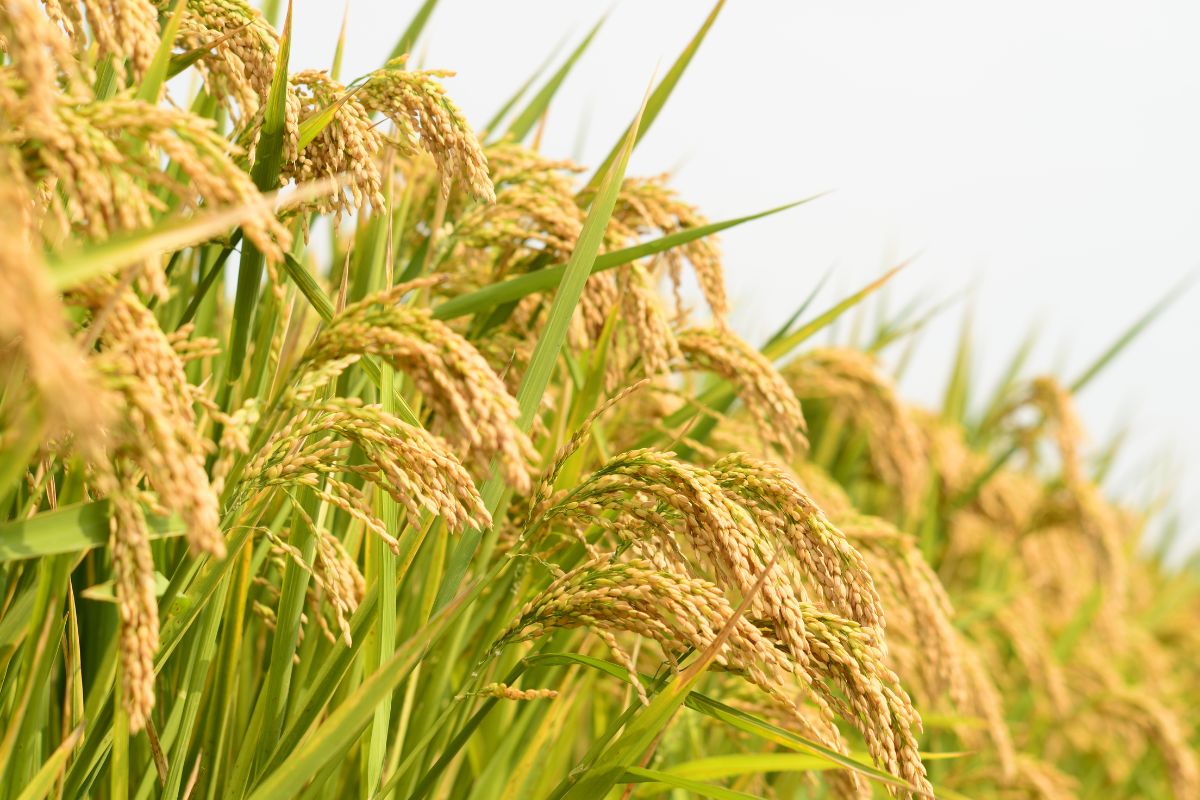
In the villages of central Kashmir, farmers are slowly bringing back one of the Valley’s oldest and most aromatic rice varieties. Known as Mushk Budji, the short-grain rice carries a strong fragrance that once made it famous across Kashmir long before high-yield commercial varieties entered local agriculture.
Older farmers still remember a time when Mushk Budji was considered part of Kashmir’s food identity. The rice was traditionally cultivated in parts of Budgam district, especially around villages such as Sagam and Panzan. Families served it during weddings, festivals, and special meals because of its aroma and texture.
But over time, the crop nearly disappeared.
Today, agriculture scientists and farmers are trying to revive it again.
The decline of Mushk Budji began during the late twentieth century when rice blast disease severely affected cultivation. Agriculture experts say the traditional variety was highly vulnerable to fungal infections, especially under changing weather conditions.
At the same time, high-yield commercial rice varieties started spreading across Kashmir because they produced larger harvests and offered more stable returns. Farmers gradually shifted away from indigenous aromatic rice toward varieties that promised better productivity.
Within years, Mushk Budji cultivation shrank sharply.
Researchers from Sher-e-Kashmir University of Agricultural Sciences and Technology later began working on restoring the variety through disease-resistant selection and conservation programmes.
Farmers Say the Aroma Makes It Different
What makes Mushk Budji unique is its fragrance.
The rice carries a strong natural aroma often compared with traditional aromatic rice varieties found in other parts of South Asia. But unlike long-grain basmati rice, Mushk Budji has short bold grains and a softer texture after cooking.
Farmers say the crop is deeply connected with Kashmiri food culture. Traditional wazwan meals and local rice dishes historically used indigenous varieties adapted to the Valley’s climate and soil conditions.
Agriculture experts say local crops like Mushk Budji represent more than agricultural products. They also preserve regional food history and biodiversity.
Mushk Budji received Geographical Indication status in 2023 along with other traditional Kashmiri products. Agriculture experts say GI recognition helped increase awareness about the rice among consumers and policymakers.
The GI tag links the crop directly with Kashmir’s geography and traditional cultivation system. Researchers believe this may help farmers receive premium prices while protecting the identity of the variety from commercial imitation.
Some Farmer Producer Organizations and local agriculture groups are now promoting Mushk Budji as a specialty heritage crop for niche markets.
Climate Change Is Creating New Risks
Kashmir’s agriculture is also changing under climate pressure. Farmers say snowfall patterns, rainfall timing, and seasonal temperatures no longer behave the way they once did. Agriculture experts warn that traditional crops adapted to mountain ecosystems may face increasing stress under changing climate conditions.
Researchers studying Himalayan agriculture say preserving indigenous crop varieties may become increasingly important because many traditional seeds carry local climate adaptation traits developed over generations.
Some farmers growing Mushk Budji now worry about irregular rainfall and warmer summers affecting crop quality and disease vulnerability.
One surprising shift is the growing interest among younger farmers and urban consumers. Premium rice markets, tourism-linked food branding, and regional food identity are helping traditional Kashmiri products gain attention again.
Restaurants, specialty food stores, and online sellers increasingly market indigenous Kashmiri products linked with authenticity and local heritage. Agriculture experts say this creates opportunities for farmers cultivating small quantities of high-value traditional crops.
Some growers now see Mushk Budji not only as a cultural crop but also as a commercial niche product capable of generating stronger returns than ordinary rice varieties.
The revival of Mushk Budji reflects a larger agricultural trend happening across India. Farmers and researchers are increasingly revisiting indigenous crop varieties that nearly disappeared during the expansion of commercial monoculture farming systems.
Traditional crops are gaining attention because of:
- Climate resilience
- Cultural value
- Premium pricing
- Seed diversity
- Regional branding
Agriculture experts say preserving traditional varieties may become important not only for biodiversity but also for future food security and rural identity.
Kashmir’s Rice Story Is Bigger Than One Crop
Mushk Budji still occupies a small cultivation area compared to mainstream rice production. But its return carries symbolic importance.
For decades, Indian agriculture focused heavily on maximum production through uniform crop systems. Now farmers, scientists, and consumers are beginning to value older crops for different reasons — flavour, identity, biodiversity, and local adaptation.
In Kashmir’s paddy fields, the slow return of an aromatic rice variety once nearly lost is becoming part of that larger story.
Also Read: Punarnava Jal – The world’s first organic fertilizer! Know how it is beneficial for farmers?
Contact us – If farmers want to share any valuable information or experiences related to farming, they can connect with us via phone or whatsapp at 9599273766 or you can write to us at “kisanofindia.mail@gmail.com”. Through Kisan of India, we will convey your message to the people, because we believe that if the farmers are advanced then the country is happy.
You can connect with Kisan of India on Facebook, Twitter, and Whatsapp and Subscribe to our YouTube channel.