


Battery-Powered Tea Harvesters Are Changing Small Tea Gardens in Assam

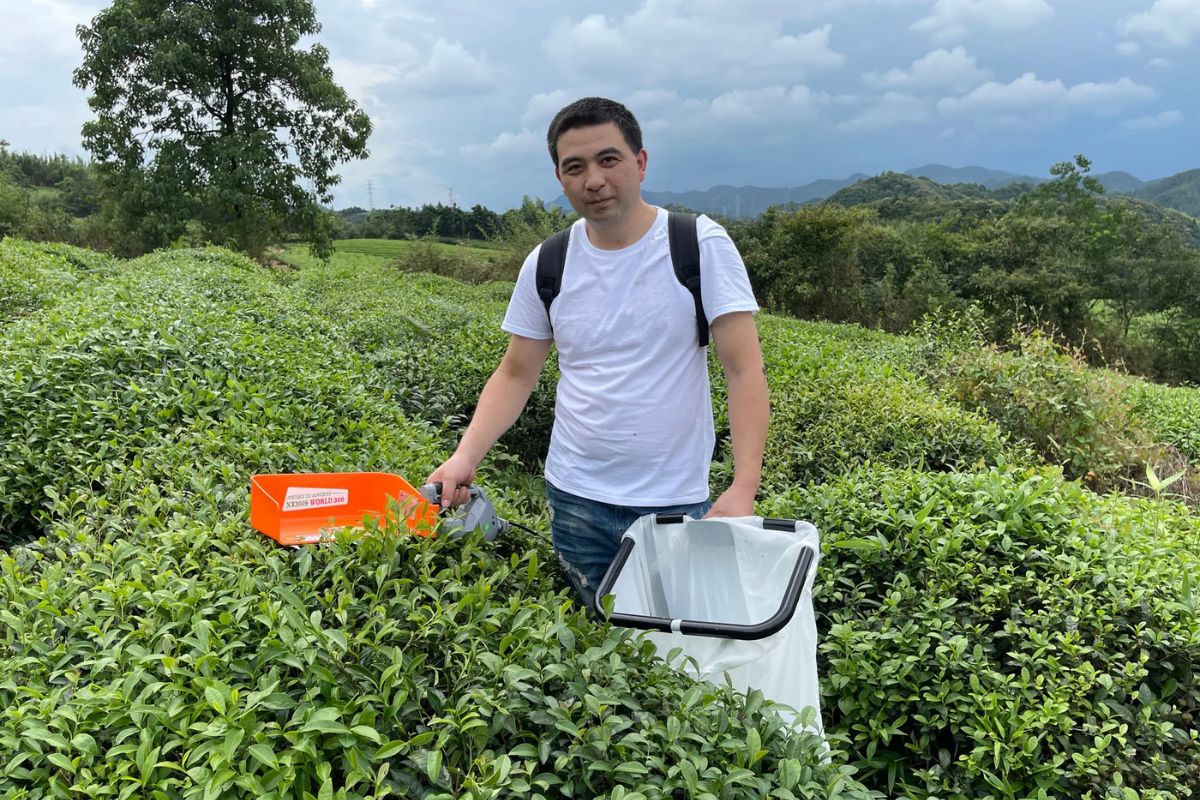
The tea gardens of Assam have long depended on skilled hands. For generations, workers moved through rows of tea bushes carrying baskets on their backs, carefully plucking two leaves and a bud — the combination that determines the quality of tea.
That tradition continues today, but the economics of tea farming are changing.
Across Assam’s rapidly growing small tea sector, farmers are increasingly adopting battery-powered tea harvesters to address rising labour costs and worker shortages. The machines, once used mainly in larger plantations, are now appearing in districts such as Dibrugarh, Tinsukia, Jorhat, Sonitpur, and Golaghat, where thousands of small growers contribute significantly to India’s tea production.
For many farmers, the technology is becoming less of an option and more of a necessity.
The structure of Assam’s tea industry has changed dramatically over the past two decades.
Large estates still dominate public perception of the sector, but small tea growers have emerged as a major force. Today, thousands of farmers cultivate tea on small plots ranging from one to ten hectares, supplying leaves to nearby bought-leaf factories.
These growers often operate with limited financial resources and face intense pressure from fluctuating tea prices, rising input costs, and labour expenses.
Harvesting remains one of the most labour-intensive activities in tea production.
During peak seasons, leaves must be plucked regularly to maintain both quality and yield. Any delay can affect production and reduce earnings.
This is where mechanised harvesting is attracting attention.
Labour Shortages Are Becoming a Serious Challenge
Tea cultivation depends heavily on timely plucking.
In many parts of Assam, growers report increasing difficulty in finding enough workers during critical harvesting periods. Younger people are moving toward other occupations, while wage costs have risen steadily.
Small farmers often struggle to compete with larger estates for available labour.
As a result, some growers face situations where leaves remain unharvested longer than ideal, affecting both quantity and quality.
Battery-powered harvesters help address this problem by allowing a small team to cover larger areas in less time.
For many growers, the machines provide a practical response to a changing rural workforce.
Unlike traditional hand shears, battery-powered harvesters use lightweight electric motors that power cutting blades. Workers guide the machine across tea bushes while collection bags capture harvested leaves.
A task that might require several labourers working throughout the day can often be completed much faster with mechanical assistance.
Farmers say the technology is particularly useful during periods of rapid leaf growth when harvesting schedules become difficult to maintain.
The machines also reduce physical strain compared to fully manual harvesting methods.
For growers managing labour shortages, this improvement can be significant.
Mechanised harvesting is not without controversy.
Tea quality depends heavily on careful plucking. Premium teas often require selective harvesting of only the youngest leaves and buds. Some tea experts argue that machines cannot always match the precision of experienced workers.
As a result, many growers use battery-powered harvesters primarily for mass-market tea production rather than specialty teas that command higher prices.
The debate reflects a broader challenge facing agriculture across India.
Farmers need greater efficiency, but they must also maintain quality standards demanded by buyers.
Finding the right balance remains essential.
Rising Costs Are Driving Mechanisation
The growing popularity of battery-powered harvesters is closely linked to economics.
Tea growers face rising expenses for fertilizers, fuel, transportation, and labour. Many operate on narrow profit margins and constantly look for ways to reduce costs without sacrificing productivity.
The machines require an initial investment, but farmers say savings accumulate over time through reduced labour requirements and faster harvesting operations.
Some producer groups have begun purchasing equipment collectively, allowing members to share costs and improve access.
This cooperative model is helping smaller growers adopt technology that might otherwise be unaffordable.
Tea remains one of India’s oldest agricultural industries, yet it is increasingly embracing modern tools.
Battery-powered harvesters represent a broader trend toward mechanisation in sectors traditionally dependent on manual labour. Digital monitoring systems, weather forecasting tools, and precision agriculture technologies are also beginning to appear across tea-growing regions.
The changes are not replacing workers entirely.
Instead, they are helping farmers adapt to labour shortages and economic pressures that continue to reshape rural industries.
For more than a century, tea harvesting in Assam depended almost entirely on human labour.
That image remains central to the identity of the industry. Yet behind the scenes, technology is slowly changing how tea reaches factories and markets.
Battery-powered harvesters may not replace traditional plucking in every situation, but they are becoming an important tool for thousands of small growers trying to remain competitive.
In the tea gardens of Assam, the future of harvesting increasingly combines old knowledge with new machinery.
And for many farmers, that combination may determine whether tea cultivation remains profitable in the years ahead.
Also Read: Punarnava Jal – The world’s first organic fertilizer! Know how it is beneficial for farmers?
Contact us – If farmers want to share any valuable information or experiences related to farming, they can connect with us via phone or whatsapp at 9599273766 or you can write to us at “kisanofindia.mail@gmail.com”. Through Kisan of India, we will convey your message to the people, because we believe that if the farmers are advanced then the country is happy.
You can connect with Kisan of India on Facebook, Twitter, and Whatsapp and Subscribe to our YouTube channel.