
Farmer’s Forecast: How a Punjab Grower Built a Grassroots Weather Warning System

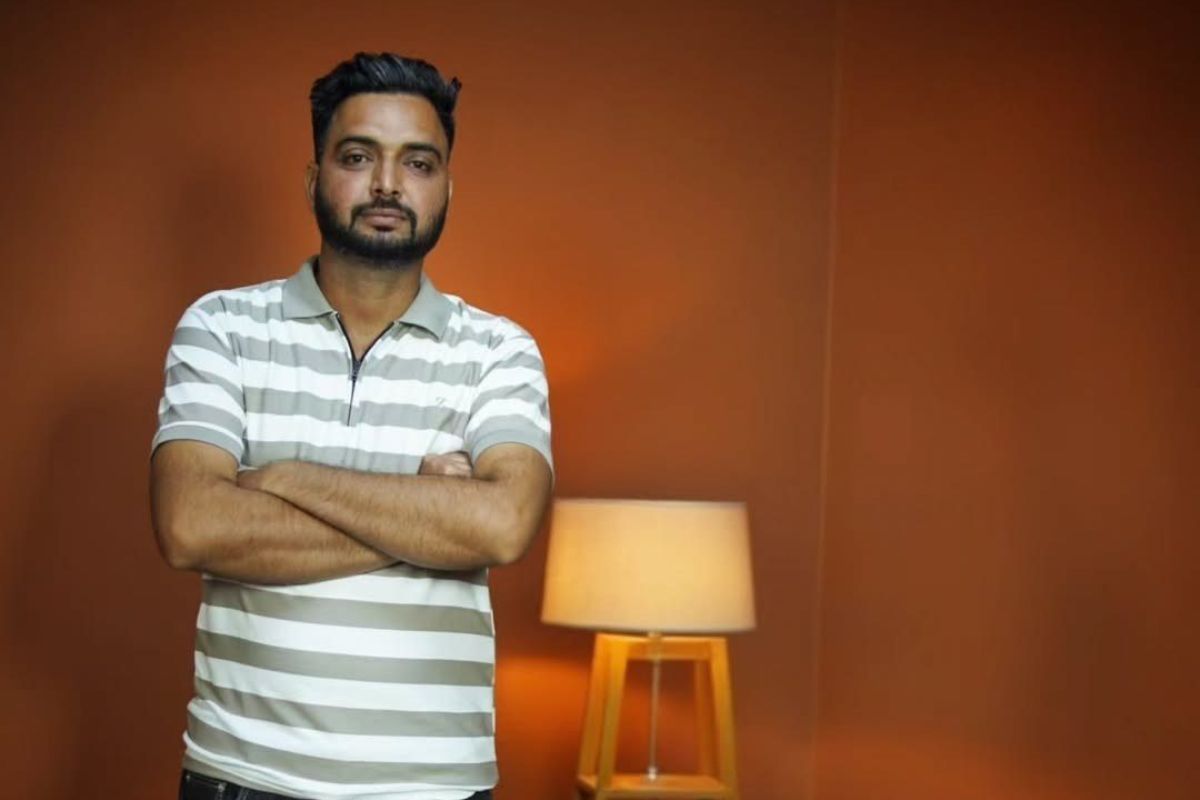
Farmer’s Forecast: When the Union Budget on Sunday stressed digital agriculture, early-warning systems and localised advisories to protect farmers from climate risks, it outlined a forward-looking vision. In parts of Punjab, that vision is already in practice. It is not led by a government body or a formal institutional framework, but by a 30-year-old farmer from Bathinda.
Baljinder Singh Mann, founder of the Punjabi-language digital platform Mausam Punjab Da, has built a grassroots weather-intelligence system tailored to Punjab’s farms. Long before policy documents spoke of technology-led advisories, Bharat VISTAAR or climate-risk mitigation, his work was already guiding farmers through extreme and unpredictable weather.
Why weather intelligence now matters
As highlighted in The Indian Express, the renewed policy focus reflects a growing recognition that agriculture today depends not only on MSP, fertilisers and irrigation, but also on timely and accurate weather information. Climate volatility—hailstorms, heat stress, dense fog, unseasonal rain and flash floods—now directly determines farm incomes.
Generic and centralised forecasts often fail to capture local micro-conditions. Even the India Meteorological Department faces limitations. Punjab has only about 30 to 35 automatic weather stations, many with restricted public access. During last year’s floods, rainfall in dam catchment areas was underestimated, a senior IMD official acknowledged, exposing the need for more precise local forecasting.
A farmer predicting for farmers
Baljinder Singh is not an external expert. He cultivates seven acres of land himself and understands the risks farmers face during sowing and harvesting windows. Without institutional support, he created a Punjab-specific digital advisory system, delivering alerts in simple Punjabi through Facebook, Instagram and YouTube.
His platform now reaches around 2.25 lakh followers on Facebook and 1.78 lakh on Instagram, with a growing audience on YouTube. Many farmers listen to his advisories while working in their fields. The alerts cover unseasonal rain, hailstorms, winter blizzards, dense fog, heat and cold waves, lightning and short spells of intense rainfall.
Baljinder provides short-term nowcasts for the next three to five hours, mid-range forecasts and longer outlooks. This allows farmers to take immediate action and plan operations days in advance.
On June 18, 2025, Baljinder warned several days in advance that monsoon intensity would sharply increase, potentially flooding five to seven districts of Punjab. The advisory was issued even before official agencies declared the monsoon’s arrival. The forecast later proved accurate.
Such early warnings have strengthened farmers’ trust in the platform, especially during periods of extreme weather.
How the system works
Baljinder’s forecasts combine ground-level data with global weather analysis. Over the years, he has invested his own money to install private automatic weather stations in open, pollution-free rural locations. Each solar-powered unit, equipped with rain gauges, air-pressure sensors and mobile data transmission, costs between Rs 20,000 and Rs 25,000.
Data from these stations is merged with global weather models, satellite imagery, cloud-motion analysis, European lightning radar systems and ocean temperature and pressure patterns. This enables nowcasting and 10 to 15-day medium-range forecasts. A small team of fellow farmers helps maintain stations and share local observations, gradually expanding coverage across districts.
The journey began in November 2017 during the wheat sowing season. At 22, Baljinder advised his father to delay sowing due to an approaching rain spell. Most farmers in the village had already sown their wheat. Days later, unseasonal rainfall damaged those fields, forcing re-sowing. Baljinder’s family avoided losses.
Word spread quickly. Farmers began asking him to share forecasts more widely. That same year, he launched Mausam Punjab Da on Facebook, initially keeping his identity hidden and focusing only on accuracy.
Language as the key innovation
Language remains central to his success. “They don’t read forecasts. They listen,” Baljinder says. His advisories avoid technical jargon, charts and English terminology, turning complex meteorological data into practical guidance farmers can use instantly.
Baljinder’s personal investment has grown to nearly Rs 3–4 lakh. His earnings from social media remain modest and are reinvested into weather stations. During a recent visit by Union Agriculture Minister Shivraj Singh Chouhan to Ludhiana, Baljinder sought support to expand the network across Punjab.
Progressive farmer and agriculture author Pargat Singh says he regularly follows Baljinder’s advisories. For now, Punjab’s most effective early-warning system continues to run on a farmer’s phone, driven by the belief that prevention matters more than post-disaster compensation.
Contact us: If farmers want to share information or experiences related to farming with us, then they can do this by calling us on the phone number 9599273766 or by writing an email to kisanofindia.mail@gmail.com or by sending your recording. Through Kisan of India, we will convey your message to the people, because we believe that if the farmers are advanced then the country is happy.
You can connect with Kisan of India on Facebook, Twitter, and Whatsapp and Subscribe to our YouTube channel.