


Punjab Adds 22,000 Farm Machines for Paddy Harvest, Can They Help Farmers Avoid Stubble Burning?

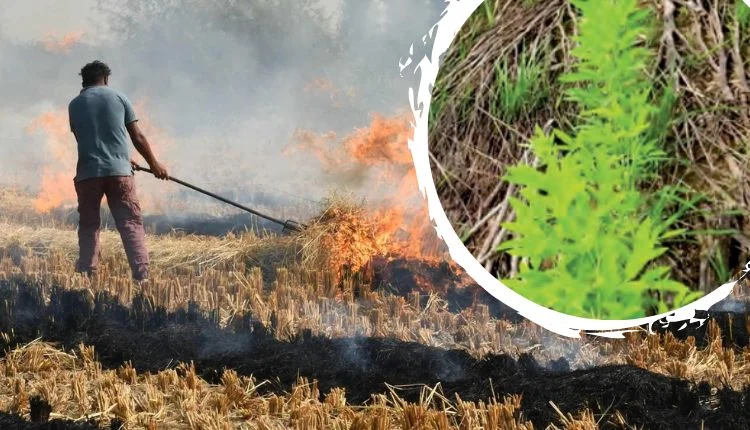
Punjab is adding thousands of crop-residue management machines as paddy harvesting begins. The state expects about 1.25 lakh such machines to be operational this season, while around 22,000 new machines are being added after many older machines reached the end of their useful life.
The timing matters because Punjab has a record paddy area this year. The state has prepared machinery for both in-situ management, where residue stays in the field, and ex-situ management, where straw is collected and moved for other uses.
Farmers have several machines to choose from, but the right equipment depends on how they plan to manage straw and what crop they intend to sow next. Availability at the village level can also determine whether the machinery is useful when harvesting windows are short.
Which machines are being used?
Super Straw Management System, or Super SMS, units attach to combine harvesters. They chop and spread paddy straw behind the combine, making it easier to incorporate residue into the soil or use a seeder that works through the remaining straw.
Super Seeders perform another task. They can manage standing or chopped residue while sowing the next crop, allowing wheat seed and fertiliser to be placed without first completely clearing the field.
Punjab’s 2026 plan includes about 7,500 Super SMS machines and 6,600 Super Seeders. These machines are intended to support in-situ management, particularly when farmers have only a short period between paddy harvesting and wheat sowing.
Balers provide another option. Instead of leaving straw in the field, they collect it and compress it into bales that can be transported for use in biomass plants, compressed biogas facilities or pellet production.
The state expects about 80 lakh tonnes of paddy straw to be used through ex-situ systems this season, including baling. This creates a route for farmers who cannot or do not want to incorporate all their residue into the soil.
Why does machine availability matter?
The challenge is not simply the number of machines purchased. Farmers need equipment at the right place and time. Paddy harvesting and wheat sowing leave a narrow window, so a machine that arrives several days late may not solve the farmer’s problem.
Punjab’s Agriculture Department estimates that nearly 67,000 machines distributed during earlier years have completed around five years of use and are now considered non-functional or scrap. These older machines are separate from the estimated 1.25 lakh operational machines for this season.
This creates a maintenance and replacement issue. Crop-residue machines operate under heavy loads and dusty field conditions. Blades, belts, bearings and other components require maintenance, while tractors must also have sufficient power for particular machines.
Farmers using shared machinery should check its condition before harvesting begins. A machine that repeatedly breaks down during the narrow post-harvest window can increase costs and delay wheat sowing.
Custom Hiring Centres can help address this problem by allowing farmers to rent equipment instead of buying it. Punjab’s current programme also supports Custom Hiring Centres, Farmer Producer Organisations, cooperative societies and Gram Panchayats for machinery procurement.
How much support are farmers getting?
Punjab is offering a 50% subsidy to individual farmers and up to 80% for eligible Custom Hiring Centres, FPOs, cooperative societies and Gram Panchayats under the state’s crop-residue management push.
As of September 25, farmers in Punjab had procured 16,227 crop-residue management machines during the current Kharif season. The state government had released ₹183 crore in subsidy support for procurement, according to the Agriculture Minister.
The Centre has sanctioned ₹576 crore for crop-residue management in Punjab during 2026–27. The programme covers machinery as well as systems for collecting and using straw outside fields.
For a small farmer, buying a machine may not always make economic sense. Hiring can spread the cost across several farms and reduce the burden of maintenance, storage and repairs.
Farmers should compare the hiring charge with the cost of owning the equipment, including fuel, repairs, depreciation and operator charges. The calculation should also include the value of any straw recovered or the savings from faster field preparation.
Can machines reduce stubble burning?
Punjab recorded 5,114 farm-fire cases in 2025, compared with 49,922 in 2022, according to state figures cited by the Agriculture Minister. The decline coincided with expanded residue-management machinery and other measures, though machinery availability alone does not explain every change in burning.
The government is promoting both in-situ and ex-situ options because farmers have different field conditions and market access. Some farmers can incorporate residue, while others may have access to balers and buyers who collect straw.
The environmental benefit extends beyond smoke reduction. Open burning removes organic matter and nutrients from fields and contributes to air pollution. Punjab Agricultural University recently advised farmers that residue burning also affects soil health and causes loss of plant nutrients and organic matter.
Crop-residue management also has a climate connection. Burning releases greenhouse gases and other pollutants, while keeping residue in the soil or sending it for productive use can avoid some emissions. The exact climate benefit depends on the management method, transport and what ultimately happens to the residue.
What should farmers check before hiring?
Farmers should first identify the amount of residue expected from their fields and the next crop they plan to sow. A Super Seeder may suit direct wheat sowing, while a baler may be more useful where a buyer or biomass facility is available nearby.
They should also confirm whether the tractor has enough horsepower for the selected machine. Operators need training because incorrect settings can cause poor residue distribution, blockages, seed-placement problems or unnecessary fuel use.
The timing of the booking matters too. Farmers should contact Custom Hiring Centres or local agricultural offices before harvesting rather than waiting until combines have already entered the fields.
Punjab’s current experience shows that farm machinery can provide alternatives to burning, but the equipment must be available, maintained and matched to local farming conditions. For farmers, the key question is not simply which machine is available, but which machine can manage their residue within the limited time before the next crop is planted.
Also Read: Punarnava Jal – The world’s first organic fertilizer! Know how it is beneficial for farmers?
Contact us – If farmers want to share any valuable information or experiences related to farming, they can connect with us via phone or whatsapp at 9599273766 or you can write to us at “kisanofindia.mail@gmail.com”. Through Kisan of India, we will convey your message to the people, because we believe that if the farmers are advanced then the country is happy.
You can connect with Kisan of India on Facebook, Twitter, and Whatsapp and Subscribe to our YouTube channel.