



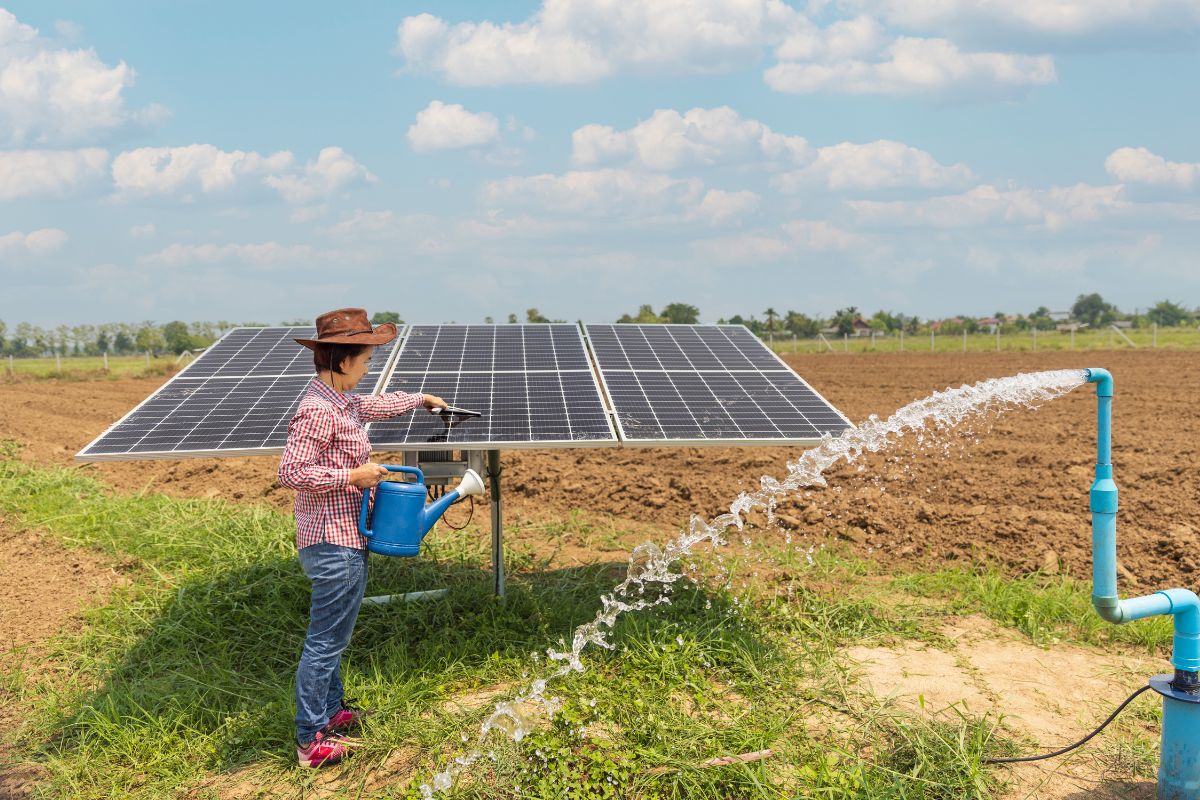
Farmers who depend on diesel or unreliable electricity for irrigation can use solar power under the PM-KUSUM scheme. The programme supports standalone solar pumps, solarisation of existing grid-connected pumps and decentralised solar power plants on farmers’ land.
The scheme is also linked to a wider effort to reduce diesel use in agriculture and increase renewable energy use. As of August 2026, the government reported that more than 21.77 lakh farmers had benefited from PM-KUSUM across India.
For farmers, the main question is not simply whether solar pumps are available. It is whether a solar pump fits the farm’s water requirement, electricity access, land, irrigation system and ability to meet the farmer’s share of the cost.
PM-KUSUM has three main components. Component A supports decentralised grid-connected renewable-energy plants. Component B supports standalone solar agriculture pumps in areas without reliable grid electricity. Component C supports solarisation of existing grid-connected agricultural pumps.
Component B is particularly relevant to farmers using diesel pumps in off-grid areas. Under the scheme guidelines, standalone solar agriculture pumps of up to 7.5 HP can receive central financial assistance, with higher support available in specified hill and northeastern regions.
Jammu and Kashmir falls within the higher-support category. MNRE says farmers in Jammu and Kashmir can receive central financial assistance of 50% of the benchmark or tender cost, whichever is lower, for eligible standalone solar pumps.
The state government provides at least another 30% subsidy under the scheme structure. The remaining farmer contribution can be up to 20%. Bank finance may also be available for the farmer’s share, depending on the applicable arrangements.
How much can a farmer save?
The saving depends on what the farmer currently spends on irrigation. A farmer using diesel regularly may reduce fuel purchases after switching to solar, but the actual saving depends on pump size, irrigation hours, water depth, crop requirements and the cost of the existing system.
Solar pumps also have operating costs, including maintenance and eventual replacement of components. Farmers should therefore compare the full cost of their current irrigation system with the cost of the subsidised solar system before making a decision.
The scheme can also help farmers who face unreliable electricity supply. Solar generation can provide daytime irrigation without depending entirely on grid availability, although water use still needs to be managed carefully.
For farmers in water-stressed areas, cheaper pumping does not mean unlimited pumping. A lower energy cost can encourage more pumping if farmers are not careful. Solar irrigation works best alongside suitable irrigation scheduling, water-saving systems and awareness of local groundwater conditions.
Component C allows farmers with grid-connected agricultural pumps to solarise them. The solar panels can generate electricity for irrigation, while surplus electricity can be sold to the distribution company under the applicable state arrangement.
For individual pump solarisation, the scheme permits solar PV capacity of up to twice the pump capacity in kilowatts, subject to the applicable state rules. The central subsidy is generally 30% of the eligible benchmark or tender cost, with higher central support for specified regions including Jammu and Kashmir.
This component gives farmers a different option from replacing a pump entirely. The existing grid-connected pump remains part of the irrigation system while solar panels provide power for pumping.
The surplus-power provision can also create another possible income source, but farmers need to check the tariff, metering arrangement and procurement terms followed by their state electricity distribution company.
How widely is the scheme being used?
The national PM-KUSUM portal reported 8,39,789 installed standalone solar pumps under Component B as of August 31, 2026. It also reported 10,067 individual pumps solarised under Component C and more than 10.25 lakh pumps covered through feeder-level solarisation.
A separate government factsheet reported nearly 11.49 lakh off-grid solar pumps installed for agricultural use by August 2, 2026. It also reported more than 15.89 lakh agricultural pumps covered through feeder-level solarisation.
The figures come from different reporting dates and components, so they should not be added together as a single pump count. They show the scale of solar irrigation support under the scheme.
The national programme was originally designed to add 34,800 MW of renewable-energy capacity by March 2026, with central financial support of ₹34,422 crore. The original scheme period has since reached its March 2026 end date, so farmers should check current state-level application windows and any subsequent government extension or programme arrangements.
Farmers should first identify which component applies to them. A farmer without grid access may look at Component B, while someone with an existing grid-connected agricultural pump may be eligible under Component C.
The next step is checking the state implementing agency. PM-KUSUM is demand-driven, and beneficiary selection and implementation are handled by state agencies. Farmers should not assume that a national announcement means applications are open in their district.
Farmers should also check the approved vendor list, pump specifications, warranty and maintenance arrangements. MNRE’s national portal provides state-wise vendor information and other scheme details.
The PM-KUSUM portal also warns farmers about fraudulent websites and applications asking for registration fees or advance payments. Farmers should use official government channels and their state implementing agency rather than paying unknown websites.
Can solar irrigation help with climate change?
Solar pumps can reduce dependence on diesel and replace some fossil-fuel use in agriculture. The scheme itself identifies de-dieselisation and reduction of environmental pollution among its objectives.
The climate benefit depends on how farmers use the system. Solar electricity can reduce emissions from diesel-based pumping, but excessive groundwater extraction remains a concern. A climate-friendly irrigation system still needs sensible water management.
Farmers can combine solar pumping with drip irrigation, sprinkler systems, soil-moisture monitoring and irrigation scheduling where these technologies suit the crop and soil. This can help use the available water more carefully.
For farmers in Jammu and Kashmir and other hill states, the higher central assistance can reduce the upfront burden of eligible solar pumps. But farmers should still calculate water requirements, installation costs, maintenance and their own contribution before applying.
PM-KUSUM can make irrigation less dependent on diesel and, in some cases, provide an opportunity to earn from surplus solar power. The practical benefit depends on the farmer’s existing irrigation system, local water conditions, subsidy availability and the rules of the state implementing agency.
Also Read: Punarnava Jal – The world’s first organic fertilizer! Know how it is beneficial for farmers?
Contact us – If farmers want to share any valuable information or experiences related to farming, they can connect with us via phone or whatsapp at 9599273766 or you can write to us at “kisanofindia.mail@gmail.com”. Through Kisan of India, we will convey your message to the people, because we believe that if the farmers are advanced then the country is happy.
You can connect with Kisan of India on Facebook, Twitter, and Whatsapp and Subscribe to our YouTube channel.