



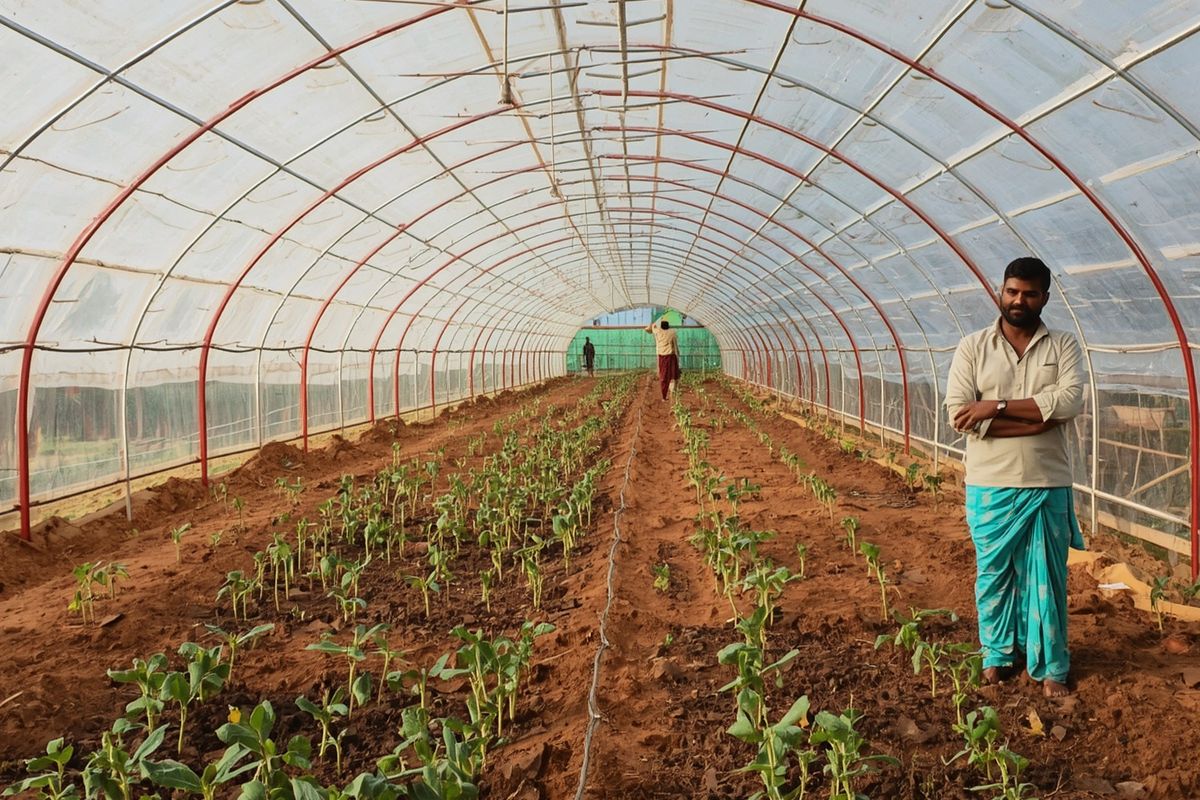
In the vegetable-growing districts of Bihar, harvest season often brings a familiar problem. Farmers may produce a good crop of tomatoes, cauliflower, brinjal, or green chillies, but without access to storage facilities, much of the produce must be sold immediately. When large quantities arrive in local markets at the same time, prices frequently collapse, reducing farmer incomes despite strong production.
A new generation of solar-powered mobile cold rooms is beginning to change that situation. Across districts such as Nalanda, Vaishali, Muzaffarpur, Samastipur, and Patna, farmer groups and rural enterprises are adopting small cold-storage units that allow vegetables to remain fresh for longer periods. The technology is helping farmers reduce waste while improving their ability to negotiate better prices.
The development is attracting attention because post-harvest losses remain one of the biggest challenges facing India’s horticulture sector.
Vegetable cultivation has expanded significantly across Bihar during the past two decades. The state supplies large quantities of fresh produce to eastern and northern Indian markets, creating income opportunities for thousands of farming families.
Yet storage infrastructure has not always kept pace with production growth. Most small farmers harvest crops and transport them directly to local markets because they lack access to refrigeration facilities. During peak production periods, oversupply often forces distress sales.
Many growers report situations where vegetables sold at very low prices in villages are later sold for much higher prices in urban markets. The gap highlights the importance of storage and supply-chain infrastructure.
Without adequate storage, farmers often have little control over when they sell.
Solar Energy Powers Rural Refrigeration
Traditional cold-storage facilities require reliable electricity and substantial investment. Many villages face challenges related to power supply, operating costs, and distance from major storage centres.
Solar-powered cold rooms address some of these obstacles. The units use rooftop solar panels to generate electricity for refrigeration systems, allowing operation even in areas where grid power remains unreliable.
Because the facilities can be established close to production areas, transportation time between harvest and storage is reduced. Farmers can store vegetables immediately after harvest, helping preserve freshness and quality.
The technology is particularly useful for perishable crops that deteriorate rapidly during hot weather.
One reason the technology is spreading is the emergence of community-based ownership models. Rather than purchasing individual units, many farmers access cold rooms through Farmer Producer Organisations, cooperatives, or rural entrepreneurs.
The shared approach reduces costs and improves utilisation rates. Multiple growers can store produce within the same facility while paying usage fees based on quantity or storage duration.
This model has proven attractive because most smallholders cannot justify investing in private cold-storage infrastructure. Collective systems make the technology accessible without creating excessive financial burdens.
Several organisations also provide training on storage management and post-harvest handling.
Better Timing Leads to Better Prices
The greatest benefit for many farmers is flexibility.
When produce must be sold immediately after harvest, growers have little influence over prices. Storage allows them to wait for more favourable market conditions rather than accepting whatever rate is available on a particular day.
Even a delay of a few days can sometimes produce significant differences in returns. This flexibility strengthens farmers’ bargaining power and reduces dependence on local traders during periods of heavy arrivals.
The ability to store produce also helps farmers supply retailers and wholesalers more consistently, improving relationships with buyers.
Rising temperatures across northern India are increasing the importance of cold-chain infrastructure. Heatwaves can accelerate spoilage, particularly for vegetables harvested during warmer months.
Farmers say maintaining product quality has become more challenging as summer temperatures continue to rise. Solar-powered refrigeration offers a practical response because it combines cooling with renewable energy.
Agricultural experts increasingly view post-harvest management as an essential component of climate adaptation. Producing a good crop is only part of the challenge. Preserving that crop after harvest is becoming equally important.
A Technology Built Around Farmer Needs
The success of solar cold rooms reflects a broader shift in agricultural innovation. Farmers are not only seeking technologies that increase production. They are also looking for solutions that improve marketing, reduce losses, and strengthen profitability.
In Bihar’s vegetable-growing regions, storage has emerged as one of those critical needs.
The solar-powered units may not attract as much attention as drones or artificial intelligence, but their impact can be immediate and measurable. Every crate of vegetables saved from spoilage represents additional income that would otherwise be lost.
For many farmers, that practical benefit matters most.
As horticulture production continues to grow, technologies that protect harvests after they leave the field may become just as important as those that help produce them.
Also Read: Punarnava Jal – The world’s first organic fertilizer! Know how it is beneficial for farmers?
Contact us – If farmers want to share any valuable information or experiences related to farming, they can connect with us via phone or whatsapp at 9599273766 or you can write to us at “kisanofindia.mail@gmail.com”. Through Kisan of India, we will convey your message to the people, because we believe that if the farmers are advanced then the country is happy.
You can connect with Kisan of India on Facebook, Twitter, and Whatsapp and Subscribe to our YouTube channel.