



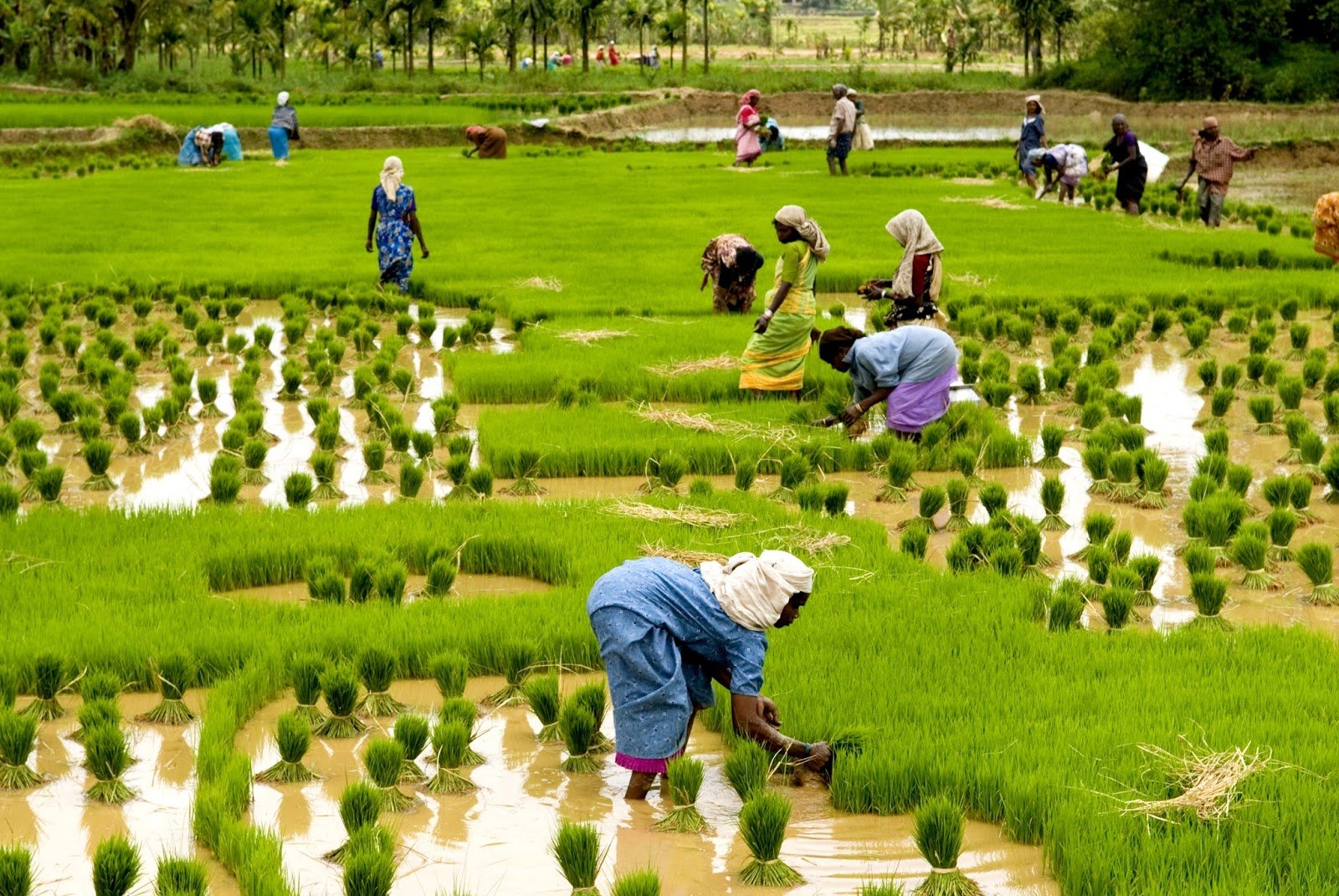
Along the coastal stretches of Ernakulam, Alappuzha, and Thrissur districts, farmers grow a rice variety that would surprise many agricultural experts unfamiliar with Kerala’s unique farming systems.
For part of the year, seawater enters these fields. Yet rice continues to grow.
The crop is Pokkali, one of India’s oldest and most distinctive traditional rice varieties. Cultivated in low-lying coastal areas for centuries, Pokkali has adapted to conditions that would destroy most modern paddy crops. The farming system is so unusual that it alternates between rice cultivation and prawn farming, creating two sources of income from the same land.
Today, as rising sea levels and soil salinity threaten agriculture in many coastal regions, Pokkali is attracting renewed attention as a model of climate adaptation rooted in traditional knowledge.
Most farmers view salinity as a threat.
Excess salt in soil reduces crop growth and lowers yields. Across many coastal regions of India, seawater intrusion is becoming a growing concern.
Pokkali farmers take a different approach. Rather than attempting to exclude seawater completely, they have developed a system that works with natural tidal cycles. During the rice-growing season, farmers manage water carefully to support crop growth. After harvest, seawater enters the fields and supports traditional prawn cultivation.
The cycle has continued for generations.
This ability to use both fresh and saline water makes the system unique within Indian agriculture.
A Rice Variety Built for Harsh Conditions
Pokkali plants are very different from modern paddy varieties.
The crop can grow more than six feet tall and survives in saline conditions that would severely damage conventional rice. Farmers say the plants become even taller when water levels rise during the monsoon.
The long stalks help the crop remain above water during periods of flooding.
Because the variety evolved under local coastal conditions, it developed natural tolerance to salinity and waterlogging. These characteristics have made it increasingly important for agricultural scientists searching for climate-resilient crop genetics.
Several breeding programmes have studied Pokkali as a source of traits that may help improve future rice varieties.
One reason the system survived for centuries is its economic efficiency.
Farmers do not depend solely on rice. After the paddy harvest, many fields are used for prawn cultivation. Natural tidal movements bring juvenile prawns into the water channels, where they grow before being harvested.
This creates a second source of income from the same land.
In years when rice prices are weak, prawns help support farm earnings. When seafood markets fluctuate, rice continues to provide value.
The diversification reduces risk and makes better use of limited coastal land.
Few farming systems generate two distinct harvests from one field in such a natural way.
Despite its importance, Pokkali cultivation has declined over the years. Rapid urbanisation around Kochi and neighbouring regions has increased pressure on agricultural land. Some former Pokkali fields have been converted for housing, infrastructure, and commercial development.
Labour shortages have also affected cultivation. The farming system requires specialised knowledge and careful water management. Younger generations often pursue opportunities outside agriculture, making it difficult for some families to continue traditional practices.
As a result, the total area under Pokkali cultivation is far smaller than it was several decades ago.
Climate Change Is Renewing Interest
Ironically, the same environmental pressures threatening coastal agriculture are also increasing interest in Pokkali.
Sea-level rise, saline intrusion, coastal flooding, and extreme rainfall events are becoming more common concerns across India’s coastline.
Agricultural scientists argue that traditional systems capable of functioning under such conditions deserve greater attention. Pokkali demonstrates that farming can remain productive even in landscapes where salinity poses a major challenge.
Its lessons may prove valuable far beyond Kerala. Countries across Asia face similar concerns about coastal agriculture and rising sea levels.
Many discussions about climate adaptation focus on future technologies. The Pokkali system offers a reminder that some solutions already exist.
For centuries, farmers along Kerala’s coast have managed water, soil, crops, and fisheries through a system perfectly adapted to local environmental conditions.
The fields may not resemble conventional rice farms, but they continue producing food and income in one of the most challenging agricultural landscapes in India.
As climate pressures increase, the experience of Pokkali farmers shows that resilience is not always created in laboratories. Sometimes it is preserved in traditions that have survived for generations.
Also Read: Punarnava Jal – The world’s first organic fertilizer! Know how it is beneficial for farmers?
Contact us – If farmers want to share any valuable information or experiences related to farming, they can connect with us via phone or whatsapp at 9599273766 or you can write to us at “kisanofindia.mail@gmail.com”. Through Kisan of India, we will convey your message to the people, because we believe that if the farmers are advanced then the country is happy.
You can connect with Kisan of India on Facebook, Twitter, and Whatsapp and Subscribe to our YouTube channel.