



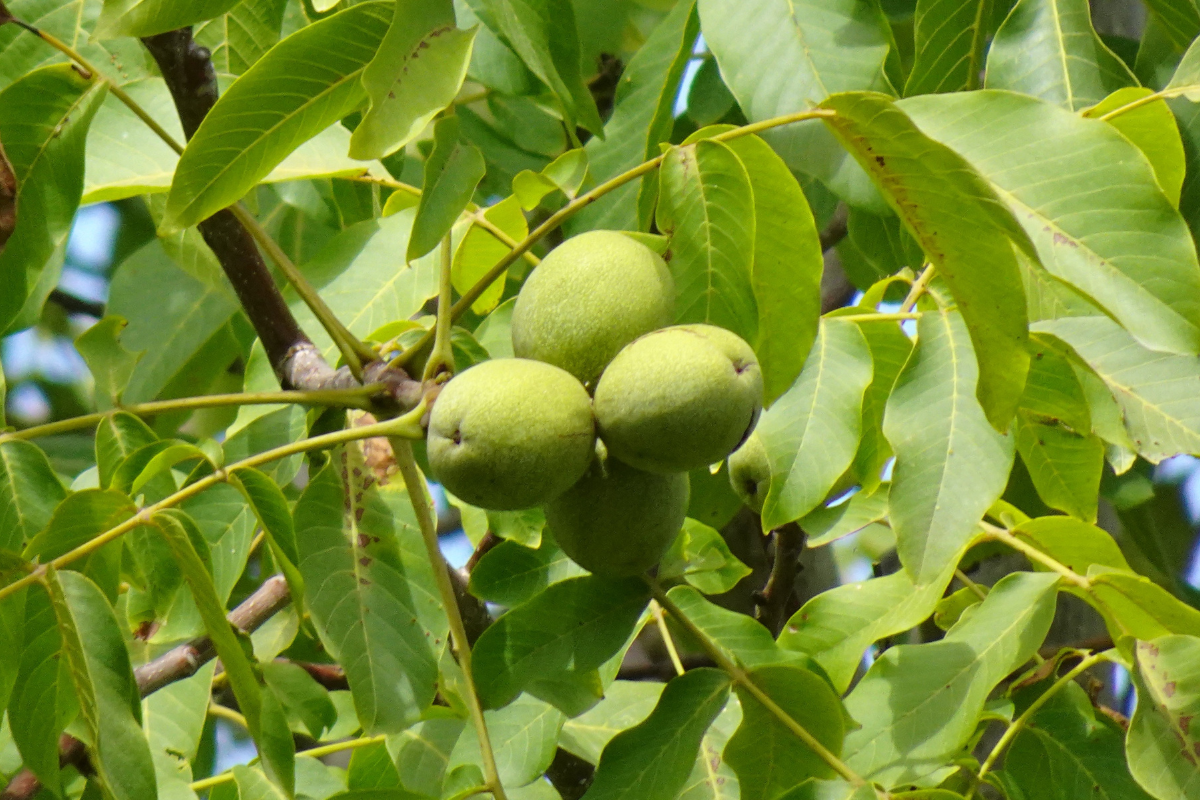
When people talk about Kashmir farming, they think of saffron and apples. But Kashmir also grows some of the finest walnuts and almonds in Asia. These two crops have fed and supported Kashmiri families for centuries. Yet today, they receive far less attention from policymakers and agricultural researchers than they deserve.
Walnut Farming
Kashmir grows Juglans regia — the Persian or English walnut. The trees grow naturally across the valley and in the hill districts of Anantnag, Baramulla, and Kupwara. Some trees in Kashmir are over 200 years old, and families treat them as ancestral property. Fathers pass orchards to sons the way others pass land.
Farmers harvest walnuts in September and October. They shake the branches or knock the nuts down with long poles. The green husks split open as the nuts fall. Workers then remove the husks by hand, wash the shells, and dry them in the sun for several days.
Dried walnuts sell well in local markets and in cities across India. Kashmiri walnuts are prized for their thin shells, large kernels, and rich taste. Traders export them to Pakistan, Afghanistan, Central Asia, and Europe.
But walnut farming faces a quiet crisis. Most of the trees in Kashmir grew naturally or from seeds without any scientific selection. These seedling trees produce inconsistent yields — some give large kernels, others give small, bitter ones. Farmers cannot predict their income from year to year.
The other problem is that nobody is planting new walnut trees at scale. Young trees take seven to ten years to produce a good harvest. Farmers prefer crops that give returns faster. As old trees die or get cut for timber — walnut wood is extremely valuable for furniture and handicrafts — the total number of bearing trees falls.
Almond Farming
Almond farming in Kashmir concentrates in Budgam, Baramulla, and parts of the Jhelum valley. Kashmir almonds are soft-shelled and have a distinct sweet flavour. Local varieties like “Makhdoom” and “Waris” are well known among buyers who appreciate quality.
Farmers harvest almonds in late August. They pick the fruit when the hull splits open naturally. After harvesting, they dry the almonds and either sell them in-shell or crack them open and sell the kernels separately. Kernels fetch much higher prices.
Almonds from Kashmir historically supplied the royal kitchens of the Mughal emperors. Today, they reach markets across India, but they compete with cheaper, machine-harvested almonds from California that dominate supermarket shelves.
The Shared Challenges
Both walnut and almond farmers deal with similar problems.
First, there is no organised marketing system. Farmers sell to local traders who travel from village to village during harvest. These traders fix the price, and farmers have little choice but to accept it. There is no public mandi for nuts the way there is for apples.
Second, quality varies widely. Because most trees grow from seeds rather than grafted plants, quality is unpredictable. Buyers who want consistent quality for export find it difficult to source large quantities from Kashmir.
Third, pests and diseases are growing problems. The walnut husk fly has spread in recent years, damaging the outer husk and reducing kernel quality. Farmers do not always have access to the right pesticides or the knowledge to use them correctly.
What Can Be Done
Agriculture departments need to supply grafted planting material of proven walnut and almond varieties. Grafted trees produce fruit in three to five years instead of seven to ten, and their quality is predictable and consistent. This encourages farmers to plant new trees.
Farmers also need training in post-harvest handling. Proper drying, grading, and packaging can raise the price of Kashmiri walnuts and almonds significantly. Buyers in premium markets in Europe and the Gulf pay high prices for well-packaged, certified nuts.
Cooperatives can solve the marketing problem. When farmers pool their produce, they have enough volume to negotiate with large buyers and exporters. They can also invest in shared processing equipment — crackers, graders, packaging machines — that individual farmers cannot afford.
Kashmir’s walnuts and almonds deserve the same attention and investment that saffron and apples receive. These crops grow on hillsides where nothing else prospers. They require little water and no intensive inputs. They provide income to families in remote villages where other livelihood options barely exist.
With better planting material, fair markets, and simple processing facilities, walnut and almond farming in Kashmir can grow into a major industry that benefits hundreds of thousands of farming families across the valley.
Also Read: Punarnava Jal – The world’s first organic fertilizer! Know how it is beneficial for farmers?
Contact us – If farmers want to share any valuable information or experiences related to farming, they can connect with us via phone or whatsapp at 9599273766 or you can write to us at “kisanofindia.mail@gmail.com”. Through Kisan of India, we will convey your message to the people, because we believe that if the farmers are advanced then the country is happy.
You can connect with Kisan of India on Facebook, Twitter, and Whatsapp and Subscribe to our YouTube channel.