


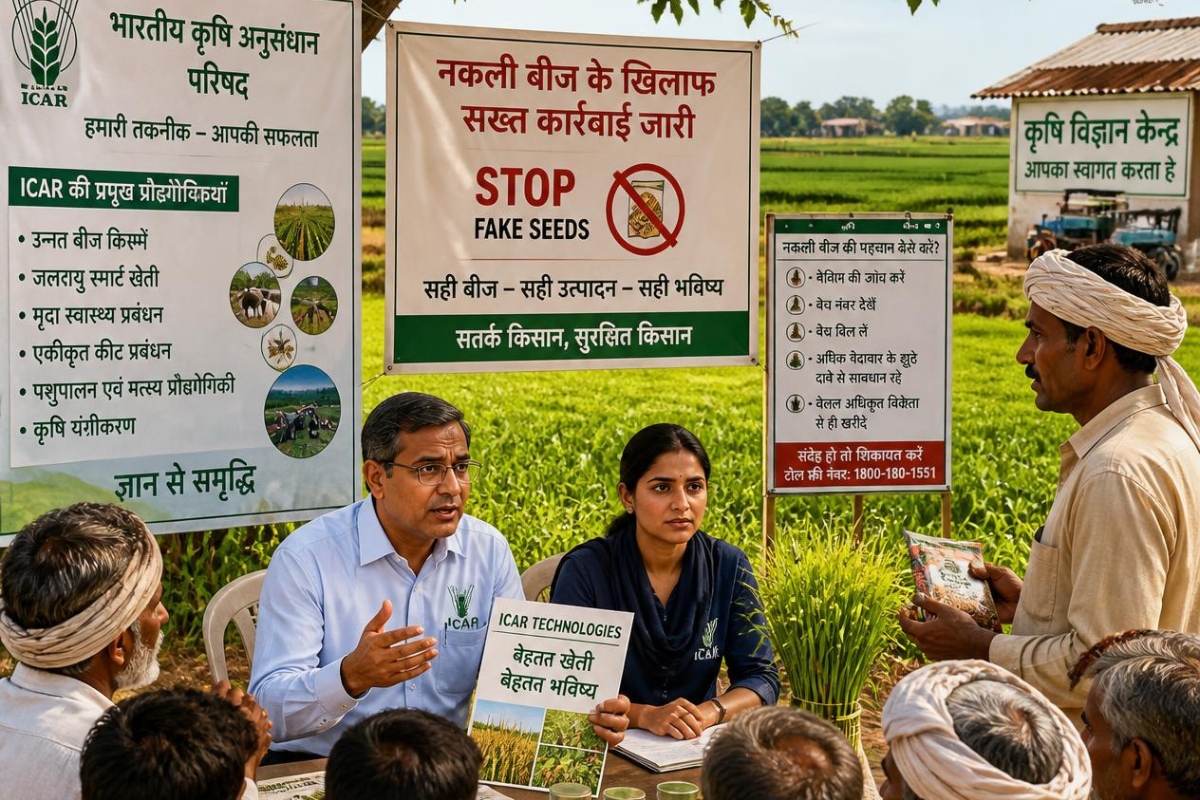
A new seed law being prepared by the Centre could change how seeds are registered, tracked and sold in India. The proposed legislation includes mandatory registration, QR codes on seed packets, tougher penalties for fake seeds and a compensation mechanism for farmers facing crop losses.
The government held a consultation with around 20 farmer organisations on September 10 to gather views before moving ahead with the legislation. Agriculture Minister Shivraj Singh Chouhan said the government would continue consultations and had not fixed a deadline for finalising the law.
India’s existing Seed Act dates to 1966, while the Seeds Control Order came into force in 1983. The Agriculture Ministry says changes in farming, seed markets and technology have created gaps that the existing framework does not fully address.
The government says around 70% of seeds currently fall outside the scope of the existing Seed Act. It also says seed-related procedures vary between states and existing penalties are not sufficient to address the sale of fake or poor-quality seeds. The proposed law follows a wider public consultation held on the draft Seed Bill, 2025. The ministry says it received around 18,000 suggestions from farmers and farmer organisations during the November-December 2025 consultation process.
One major proposed change is mandatory registration of seeds and planting material. The government says all seeds would have to be entered into a national register before being sold. Each seed packet would also carry a QR code. Farmers could use the code to trace information such as the seed’s origin, manufacturer, laboratory clearance and movement through the supply chain.
The proposed system is intended to make it easier to identify responsibility when a seed fails. The government says the existing system can make it difficult to establish where a problem originated after seeds reach farmers.
How tough would the penalties be?
The proposed law divides violations into different categories. Minor violations could attract a warning for the first offence and a penalty of up to ₹50,000 for the second offence. For deliberate violations such as failing to provide required information, incorrect branding or not affixing a QR code, the proposed penalty is ₹1 lakh for the first offence and ₹2 lakh for the second.
Serious offences, including selling fake seeds, operating without registration or deliberate fraud, could attract a penalty of up to ₹30 lakh along with imprisonment. These are proposed provisions and could change before the legislation is finalised.
The proposed law includes a Seed Security Fund in every state. The government says penalties and recoveries collected under the law would be deposited into these funds. If a farmer suffers a loss because of seed failure, a verification committee would assess the case. The proposed framework says compensation should reach the farmer within 15 days after verification.
Farmers would also retain the right to seek compensation under the Consumer Protection Act.
The government says the proposed law will not remove farmers’ existing rights over traditional and farmers’ varieties. Farmers would continue to be able to use, exchange and sell traditional and farmers’ seeds. Registration would not be mandatory for traditional seeds, while farmers could voluntarily register their varieties if they choose.
A farmer producing seed for personal use or distributing it within the village would not be required to undertake the proposed digital registration process.
The proposed legislation would give state governments greater authority to release new seed varieties through state-level committees while following national standards. The government says this could allow varieties suited to specific regional and climatic conditions to be released more quickly. Details of how this system would work would depend on the final law and subsequent rules.
A single national online register would also record seed varieties, allowing both the Centre and states to access the same information.
Why does seed traceability matter?
A farmer normally buys a seed packet through a dealer rather than directly from the producer. If the crop performs poorly, identifying where the problem occurred can require tracing several stages of the supply chain. A QR-based system could connect the packet with information about its production and testing. The proposed framework is intended to create a record that can help authorities identify the manufacturer, laboratory and other parties involved.
Traceability alone would not establish that a particular seed caused crop failure. Farmers would still need to report the problem and go through the proposed verification process.
The September 10 consultation brought representatives of farmer organisations from several states together with the Agriculture Ministry. The government said the organisations submitted their experiences and suggestions on the proposed legislation.
The consultation was part of an ongoing process rather than a final approval of the draft. The Agriculture Minister said further suggestions from farmers and other stakeholders would be examined before the government moves ahead.
Farmers should preserve the seed packet, purchase receipt, batch or lot details and other documents linked to the purchase. They should also record the crop condition and contact the relevant agriculture or seed authorities when a serious problem emerges. Photographs, field records and details of sowing dates and farm conditions can also help establish what happened. Farmers should not discard the remaining seed if authorities may need samples for testing.
Farmers should buy seed from authorised sellers and check the packet carefully before purchase. Important details include the crop and variety name, lot number, production information, germination details and validity. Farmers should also ask whether the variety is recommended for their region and sowing conditions. Keeping the bill or receipt is important because it provides evidence of the transaction if a complaint is later filed.
When could the new law take effect?
The proposed Seed Act is not yet a final law. The government says consultations are continuing and no deadline has been fixed for finalising the legislation. The September consultation took place after the draft Seed Bill, 2025 received around 18,000 submissions during its earlier public consultation. Further changes could be made before the government presents the final version to Parliament.
For farmers, the proposed changes could matter most when seed quality problems lead to crop losses. Mandatory registration, QR-based traceability, stronger penalties and a proposed compensation process could change how responsibility is established.
Until the legislation becomes law, farmers should treat these provisions as proposals rather than current requirements. For now, keeping seed purchase records, buying from authorised sources and reporting suspected seed failures remain important steps for protecting their interests.
Also Read: Punarnava Jal – The world’s first organic fertilizer! Know how it is beneficial for farmers?
Contact us – If farmers want to share any valuable information or experiences related to farming, they can connect with us via phone or whatsapp at 9599273766 or you can write to us at “kisanofindia.mail@gmail.com”. Through Kisan of India, we will convey your message to the people, because we believe that if the farmers are advanced then the country is happy.
You can connect with Kisan of India on Facebook, Twitter, and Whatsapp and Subscribe to our YouTube channel.