



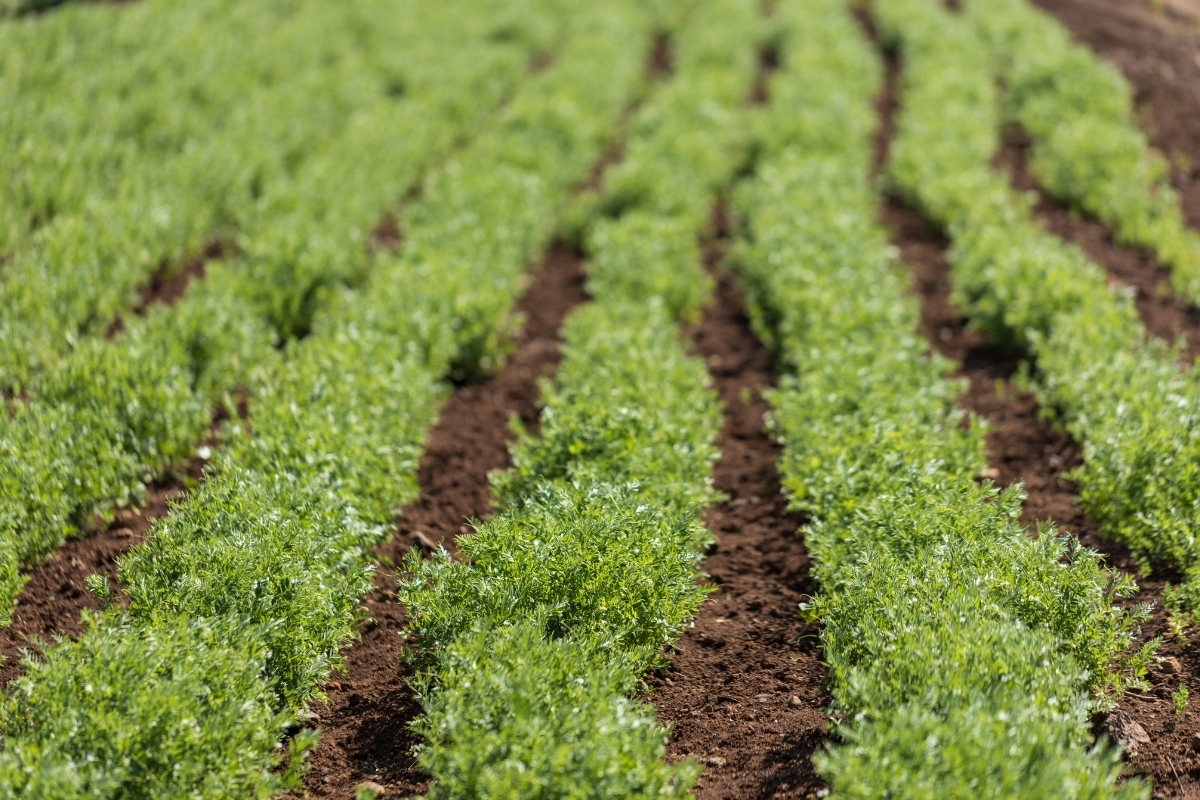
Lentil, locally known as masoor, is an important Rabi pulse grown across several parts of India. It provides protein for consumers and can fit into cropping systems where farmers want to include pulses. Good crop establishment depends on suitable seed, timely sowing, adequate moisture and careful weed management.
The Indian Council of Agricultural Research’s Indian Institute of Pulses Research develops and evaluates lentil varieties for different production environments. Farmers should select varieties recommended for their region instead of choosing seed only on the basis of yield claims from another location.
7 Steps for Better Lentil Production
1. Choose a locally suitable variety
Farmers should select certified seed from a reliable source and check whether the variety is recommended for their district. Lentil varieties differ in maturity period, seed size, yield potential and response to diseases. A suitable variety can help farmers match the crop with their available growing season.
ICAR-IIPR lists several improved lentil varieties developed for different agroclimatic conditions. Farmers should consult their local agriculture department or Krishi Vigyan Kendra before purchasing seed and confirm the recommended sowing window and seed rate for their chosen variety.
2. Prepare a well-drained field
Lentil does not perform well in fields where water remains stagnant for long periods. Before sowing, farmers should check whether the field drains properly after rainfall or irrigation. Excess moisture around the roots can increase disease problems and affect plant establishment.
A fine, reasonably firm seedbed can help achieve uniform seed placement. Farmers should avoid unnecessary tillage that increases costs and may disturb soil moisture. The appropriate preparation method depends on the previous crop, soil texture and available machinery.
3. Sow at the right time
Timely sowing helps lentil complete its growth before temperatures become too high. The recommended date varies between regions and varieties, so farmers should follow the local agricultural advisory. Delayed sowing can shorten the crop’s growing period and expose the plants to warmer conditions during reproductive development.
Farmers should check soil moisture before sowing, especially in rainfed areas. If the soil is too dry, germination may become uneven. If it is excessively wet, machinery and field operations can damage the soil structure and create poor conditions for seedling emergence.
4. Treat seed before sowing
Seed treatment can help protect young plants from some seed-borne and soil-borne diseases. Farmers should use only treatments recommended for lentil by agricultural authorities and follow the prescribed dose. Biological inoculants such as suitable Rhizobium cultures may also be recommended in particular production systems.
Do not mix seed-treatment products without checking compatibility. If farmers use a biological culture, they should follow the application instructions carefully. Treated seed should be handled and sown according to safety guidance, with unused material stored or disposed of properly.
5. Manage nutrients carefully
Lentil needs balanced nutrition for healthy growth, but fertiliser requirements depend on soil fertility and the production system. Farmers should use soil-test information and local recommendations before applying nutrients. Excessive fertiliser increases production costs and may not provide additional yield.
Phosphorus and other nutrients may be recommended according to soil conditions. Farmers should not assume that a fertiliser schedule used for wheat or another Rabi crop is automatically suitable for lentil. A KVK or agriculture officer can help interpret soil-test results and recommend appropriate doses.
6. Control weeds early
Young lentil plants can face strong competition from weeds for moisture, nutrients and sunlight. Farmers should inspect the field soon after emergence and control weeds using methods recommended for their region and production system.
Mechanical weeding can be useful where field conditions allow it. If herbicides are used, farmers should select products officially recommended for lentil and follow the label for dose, timing and safety precautions. Spraying an unsuitable herbicide can damage the crop and create avoidable losses.
7. Watch for diseases and pests
Farmers should regularly inspect lentil fields for symptoms such as yellowing, wilting, leaf damage and abnormal plant growth. Wilt and rust are among the diseases that can affect lentil, while insect pests may also cause damage during different growth stages.
Do not spray pesticides simply because symptoms appear. First identify the problem and seek advice from a KVK, agriculture officer or plant-health specialist. Integrated pest management can combine monitoring, resistant varieties, field hygiene and targeted treatments rather than relying on routine chemical applications.
Manage Irrigation Carefully
Lentil can be grown under rainfed conditions in many areas, but irrigation may be used where water is available and local recommendations support it. Excessive irrigation can create waterlogging and disease risks, while moisture stress during sensitive stages can reduce crop performance.
Farmers should monitor soil moisture and weather conditions before irrigating. The amount and timing of irrigation should depend on soil type, rainfall, crop stage and local recommendations. Avoid treating irrigation as a fixed schedule when weather and field conditions are changing.
Lentil pods and plants gradually dry as the crop approaches maturity. Farmers should harvest when the crop reaches the recommended maturity stage to reduce losses from shattering, weather damage or delayed harvesting. The exact timing varies with variety and local conditions.
After harvest, dry the produce properly before storage and protect it from moisture and pests. Clean, dry storage can help maintain grain quality. Farmers should also keep records of seed cost, fertiliser, labour, irrigation, harvesting expenses and sale price to calculate the crop’s actual return.
Lentil farming can fit well into Rabi production, but good results depend on local conditions rather than a single formula. Farmers should select an appropriate variety, sow on time, maintain suitable soil moisture and monitor weeds, pests and diseases throughout the season.
Also Read: Punarnava Jal – The world’s first organic fertilizer! Know how it is beneficial for farmers?
Contact us – If farmers want to share any valuable information or experiences related to farming, they can connect with us via phone or whatsapp at 9599273766 or you can write to us at “kisanofindia.mail@gmail.com”. Through Kisan of India, we will convey your message to the people, because we believe that if the farmers are advanced then the country is happy.
You can connect with Kisan of India on Facebook, Twitter, and Whatsapp and Subscribe to our YouTube channel.