


The Science of Timing: Why One-Day Delay in Irrigation Matters ?
How hours not just days decide crop health, flowering success, and final yield ?

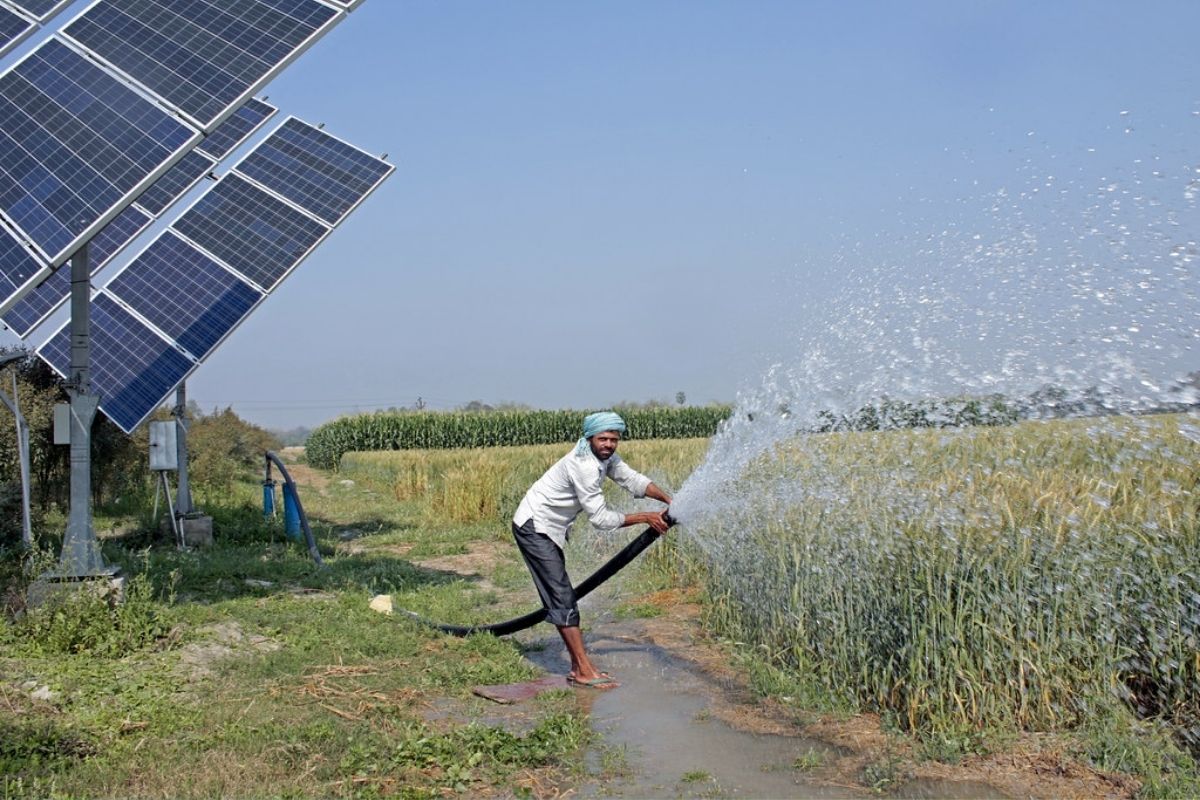
Irrigation Matters: Indian farmers often say, “पानी समय पर मिले तो फसल बोलती है” if water comes on time, the crop responds. Modern plant science now confirms what experience has long suggested: irrigation timing can matter as much as irrigation quantity. In many crops, even a one-day delay at a critical stage can cause irreversible yield loss, poor grain filling, flower drop, or reduced quality.
This is not superstition or over-caution. It is plant physiology.
Plants Run on Internal Clocks, Not Farmer Calendars
Every crop operates on a tightly regulated biological schedule. Growth, flowering, pollination, grain filling, and maturation are controlled by internal signals hormones, enzymes, and water pressure inside plant cells.
Water is not just a nutrient carrier; it is the medium that keeps this internal clock running smoothly.
When irrigation is delayed, even briefly:
• cell expansion slows
• hormone balance shifts
• nutrient transport is disrupted
• stress signals activate
Once certain signals are triggered, the plant cannot simply “go back” when water finally arrives.
Why One-Day Delay Hurts More Than We Think
From a farmer’s view, one day may seem minor. From a plant’s view, it can be the difference between:
• pollen surviving or dying
• flowers holding or dropping
• grains filling or shrinking
Plants respond to water stress in hours, not days.
Even short-term moisture stress causes:
• stomatal closure (leaf pores shut to save water)
• reduced photosynthesis
• increased respiration loss
• diversion of energy from growth to survival
This survival mode protects the plant but at the cost of yield.
Critical Growth Stages Where Timing Is Everything
1. Germination and Early Establishment
At sowing, soil moisture must be continuous.
A delay of even one day can lead to:
• uneven germination
• weak root systems
• patchy crop stand
In crops like wheat, mustard, maize, and vegetables, early stress permanently limits root depth, making the crop more sensitive later.
2. Tillering Stage (Cereals like Wheat, Rice)
Tillers are potential yield units.
Moisture stress during tillering causes:
• fewer productive tillers
• thinner stems
• reduced leaf area
Research shows that delayed irrigation at tillering can reduce final yield by 10–15 percent, even if later irrigations are perfect.
3. Flower Initiation and Flowering (Most Sensitive Stage)
This is where one-day delay causes the highest damage.
During flowering:
• pollen formation is extremely water-sensitive
• flowers need turgor pressure to stay attached
• nutrient flow must be uninterrupted
A brief moisture deficit can cause:
• pollen sterility
• flower drop
• poor fruit set
This is common in:
• pulses (chana, arhar, moong)
• oilseeds (mustard, groundnut)
• vegetables (tomato, chilli, brinjal)
Once flowers drop, no irrigation can bring them back.
4. Grain Filling and Fruit Development
After flowering, crops shift focus to filling grains or fruits.
Delayed irrigation here leads to:
• shrivelled grains
• lower test weight
• reduced oil or sugar content
• poor market quality
In wheat and rice, moisture stress during grain filling shortens the filling period, directly cutting yield.
Why Yield Loss Is Often Invisible Until Harvest
Farmers may not notice immediate damage after a delayed irrigation. The crop may appear green again once water is applied. But internally:
• fewer grains are being formed
• grains are smaller
• plant metabolism has already adjusted downward
This is why farmers sometimes say:
“फसल दिखने में ठीक थी, पर पैदावार कम निकली”
The damage happened silently, days or weeks earlier.
Water Stress and Plant Hormones
Delayed irrigation triggers stress hormones like abscisic acid. This hormone:
• closes stomata
• signals the plant to reduce growth
• promotes flower and fruit drop
Once activated, these hormonal changes can persist even after irrigation resumes. The plant prioritises survival over productivity.
Soil Type Makes Timing Even More Critical
Irrigation timing cannot be the same for every field because soil behaves differently under moisture stress. Understanding soil type helps farmers decide how urgent irrigation really is.
Sandy soils have large particles and wide pores. Water drains quickly, and the root zone dries out within hours. In such fields, even a short delay in irrigation can cause sudden wilting and stress, especially during flowering or grain filling. Crops on sandy soils need frequent, timely watering, and postponing irrigation by even half a day during hot weather can reduce yield.
Loamy soils offer a balance. They hold moisture better and allow roots to breathe, giving farmers a slightly wider window for irrigation. However, this buffer is limited. If irrigation is delayed beyond a day at sensitive stages, loamy soils also dry out enough to trigger plant stress signals that affect flowering and yield.
Clay soils retain water for longer periods, but they come with a different risk. When dry, clay shrinks and forms cracks that break fine roots and restrict nutrient uptake. Delayed irrigation here can damage root systems, and sudden heavy watering may not fully repair the loss.
This is why irrigation timing must follow soil behaviour, not just the crop calendar. Knowing how fast your soil loses moisture helps protect yield with smarter, well-timed irrigation.
Why Crops Cannot “Compensate” Later
A common belief among farmers is that if irrigation is delayed once, the crop can recover with heavier watering later. Plant science shows that this compensation rarely works, especially during sensitive growth stages.
Plants do not grow in a straight line. Their development follows fixed physiological windows. During flowering, pollination, and early grain formation, the plant decides how many grains or fruits it can support. If water is missing during this decision window, the plant permanently lowers its yield target. Even if abundant water is supplied later, the plant cannot increase grain numbers again because the biological switch has already been turned off.
Excess irrigation after stress may even cause additional problems. Sudden water availability can lead to nutrient imbalance, root suffocation, or lodging in cereals. In vegetables and fruits, it can cause uneven fruit size, cracking, or increased disease pressure.
Field experiments in wheat, pulses, and vegetables show that crops stressed at flowering recover only 30–50 percent of their potential, even with perfect later irrigation. The rest of the loss is permanent.
For farmers, this means recovery irrigation is not a substitute for timely irrigation. The real insurance is preventing stress at critical stages, not correcting it afterward. Timing protects yield more effectively than volume.
Why “Light Irrigation Tomorrow” Is Often a Mistake
Farmers sometimes delay irrigation thinking:
• rain may come
• electricity will improve
• one more day won’t matter
But partial or late irrigation can be worse than timely irrigation because:
• roots remain shallow
• stress signals already activate
• uneven wetting confuses root growth
Plants respond best to timely, adequate irrigation, not delayed adjustments.
Modern Science Confirms Traditional Wisdom
Agrometeorology studies show:
• yield loss increases sharply when irrigation misses critical windows
• recovery is incomplete even with later heavy watering
This validates traditional practices where elders insisted on fixed irrigation days, especially during flowering.
How Farmers Can Use This Science Practically
• Prioritise irrigation during flowering and grain filling, even if water is limited
• Adjust crop choice to match water availability
• Use mulch to buffer short delays
• Combine irrigation with soil moisture conservation
• Treat “one day delay” seriously at sensitive stages
Farming Is About Timing, Not Just Inputs
Farming success is not decided only by how much water, fertiliser, or seed is used but when they are used.
A one-day delay in irrigation may look small on the calendar, but inside the plant it can mean:
• lost flowers
• lost grains
• lost income
In Indian agriculture, where margins are thin and climate uncertainty is rising, respecting crop timing is one of the cheapest and most powerful tools farmers have.
Water on time is not just irrigation.
It is yield protection.
It is risk management.
It is science working in the farmer’s favour.
Contact us: If farmers want to share information or experiences related to farming with us, then they can do this by calling us on the phone number 9599273766 or by writing an email to kisanofindia.mail@gmail.com or by sending your recording. Through Kisan of India, we will convey your message to the people, because we believe that if the farmers are advanced then the country is happy.
You can connect with Kisan of India on Facebook, Twitter, and Whatsapp and Subscribe to our YouTube channel.