


How India’s Shrinking Grazing Lands Are Pushing Pastoral Communities Toward Crisis

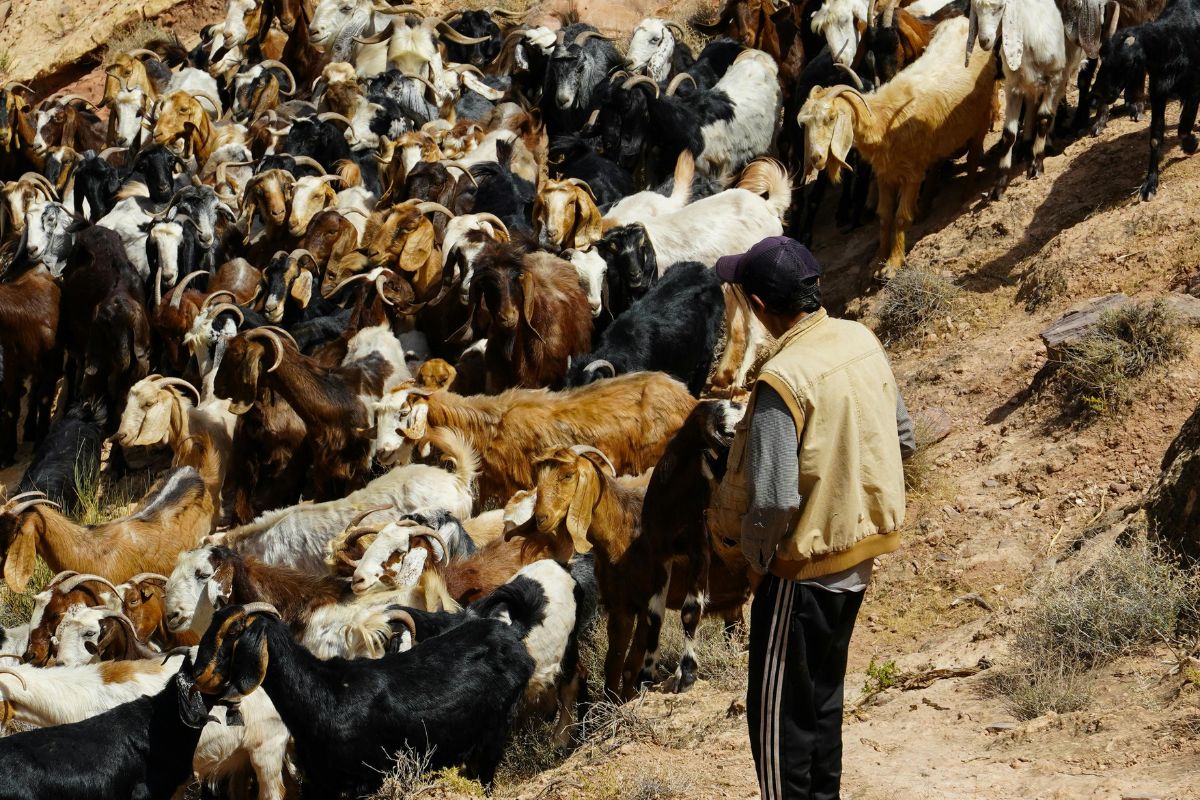
For centuries, pastoral communities moved livestock across forests, grasslands, deserts, riverbanks, and mountain corridors following seasonal grazing cycles shaped by rainfall, water availability, and ecological balance.
In Rajasthan, camel and sheep herders crossed dry desert landscapes during seasonal migration routes. In Gujarat, Maldhari pastoralists moved cattle and buffalo across grasslands and forest edges. Himalayan communities shifted goats and sheep between mountain altitudes depending on snowfall and vegetation growth.
These systems were not random movement.
Researchers studying pastoral economies say migration routes developed over generations through deep ecological understanding of landscapes, climate, fodder cycles, and animal behaviour.
Today, many of those grazing pathways are disappearing.
Across India, common grazing lands have reduced sharply due to:
- Urban expansion
- Industrial projects
- Highways
- Mining
- Fencing
- Commercial plantations
- Real estate growth
Researchers say village commons once used collectively for livestock grazing are increasingly fragmented or converted into other land uses.
Agriculture experts warn that this decline affects millions of pastoral and small livestock-dependent households relying on open grazing systems rather than stall-fed commercial dairy models.
In several states, herders report travelling much farther than earlier generations simply to find adequate fodder.
Pastoral Communities Are Losing Migration Routes
Traditional migration corridors allowed pastoralists to move livestock seasonally without exhausting one single grazing zone.
Now many of those routes face interruptions from:
- Expanding cities
- Railway lines
- Solar parks
- Industrial fencing
- Restricted forest access
Researchers studying pastoral mobility say fragmentation creates severe ecological and economic pressure because livestock cannot graze naturally across wider landscapes anymore.
Agriculture experts believe mobility itself was the foundation of many sustainable grazing systems.
Once movement becomes restricted, overgrazing increases in remaining accessible areas.
Climate instability is worsening the crisis further.
Researchers say heatwaves, prolonged droughts, and erratic rainfall are reducing fodder availability across several dryland regions. Grasslands dry earlier than before in some areas while sudden rainfall events damage seasonal vegetation cycles in others.
Pastoral communities increasingly report:
- Water scarcity
- Fodder shortages
- Longer migration periods
- Rising livestock stress
Agriculture experts warn that climate change affects livestock systems not only through temperature increases but also through shrinking ecological space for grazing economies to survive.
Many indigenous cattle, camel, goat, and sheep breeds evolved specifically within mobile grazing systems.
Researchers say these animals adapted over centuries to survive local climates, long-distance movement, seasonal fodder variation, and difficult terrain. Stall-fed commercial systems cannot easily replace those ecological relationships.
Agriculture experts believe shrinking grazing lands threaten:
- Indigenous livestock breeds
- Traditional veterinary knowledge
- Seasonal migration systems
- Community-based resource management
all at the same time.
Some pastoral groups now reduce herd sizes because maintaining large migratory systems is becoming economically impossible.
Young Herders Are Leaving Livestock Economies
Across several pastoral communities, younger generations increasingly migrate toward cities for wage labour, driving jobs, construction work, or service-sector employment.
Researchers say livestock migration has become physically exhausting and economically uncertain compared to urban employment opportunities.
Older herders often continue pastoral work while younger family members leave permanently.
Agriculture experts warn that once generational continuity breaks, traditional grazing knowledge disappears rapidly because much of it survives through oral learning and practical movement across landscapes.
Researchers say grasslands receive far less policy attention compared to forests or agricultural land despite supporting major livestock economies.
Many grasslands are officially categorized as wasteland even though they sustain:
- Grazing systems
- Biodiversity
- Groundwater recharge
- Carbon storage
- Rural livelihoods
Agriculture experts argue that India’s livestock future cannot be separated from grassland conservation.
Without grazing ecosystems, pastoral economies weaken regardless of dairy or livestock policy support.
In several pastoral households, women manage:
- Milking
- Fodder collection
- Animal care
- Wool processing
- Dairy work
As grazing distances increase, labour burdens also rise.
Researchers studying rural livelihoods say women often travel longer distances for fodder and water when local grazing systems collapse. Livestock decline also affects household nutrition and dairy-based income in many communities.
Agriculture experts believe pastoral crises remain underreported partly because they unfold gradually across dispersed rural landscapes rather than through sudden disasters.
India’s Livestock Future Faces a Difficult Choice
India’s livestock economy is increasingly shifting toward commercial dairy systems, feed-based production models, and mechanised farming structures.
Yet millions still depend on grazing-based livestock systems surviving outside industrial agriculture.
Researchers say future policy debates will increasingly confront difficult questions:
- Can pastoral mobility survive modern land-use pressure?
- Who controls common landscapes?
- How should grasslands be protected?
- Can climate adaptation happen without grazing ecosystems?
These questions affect not only pastoral communities, but also the future ecological balance of Indian agriculture itself.
Unlike floods or droughts, grazing land loss rarely becomes national headlines.
There are no dramatic visuals when migration routes disappear slowly behind highways, factories, fenced projects, and expanding settlements.
But researchers warn the consequences may reshape rural India deeply over coming decades.
Because when grazing systems collapse, entire relationships between livestock, landscapes, biodiversity, and rural communities begin disappearing with them.
Also Read: Punarnava Jal – The world’s first organic fertilizer! Know how it is beneficial for farmers?
Contact us – If farmers want to share any valuable information or experiences related to farming, they can connect with us via phone or whatsapp at 9599273766 or you can write to us at “kisanofindia.mail@gmail.com”. Through Kisan of India, we will convey your message to the people, because we believe that if the farmers are advanced then the country is happy.
You can connect with Kisan of India on Facebook, Twitter, and Whatsapp and Subscribe to our YouTube channel.