



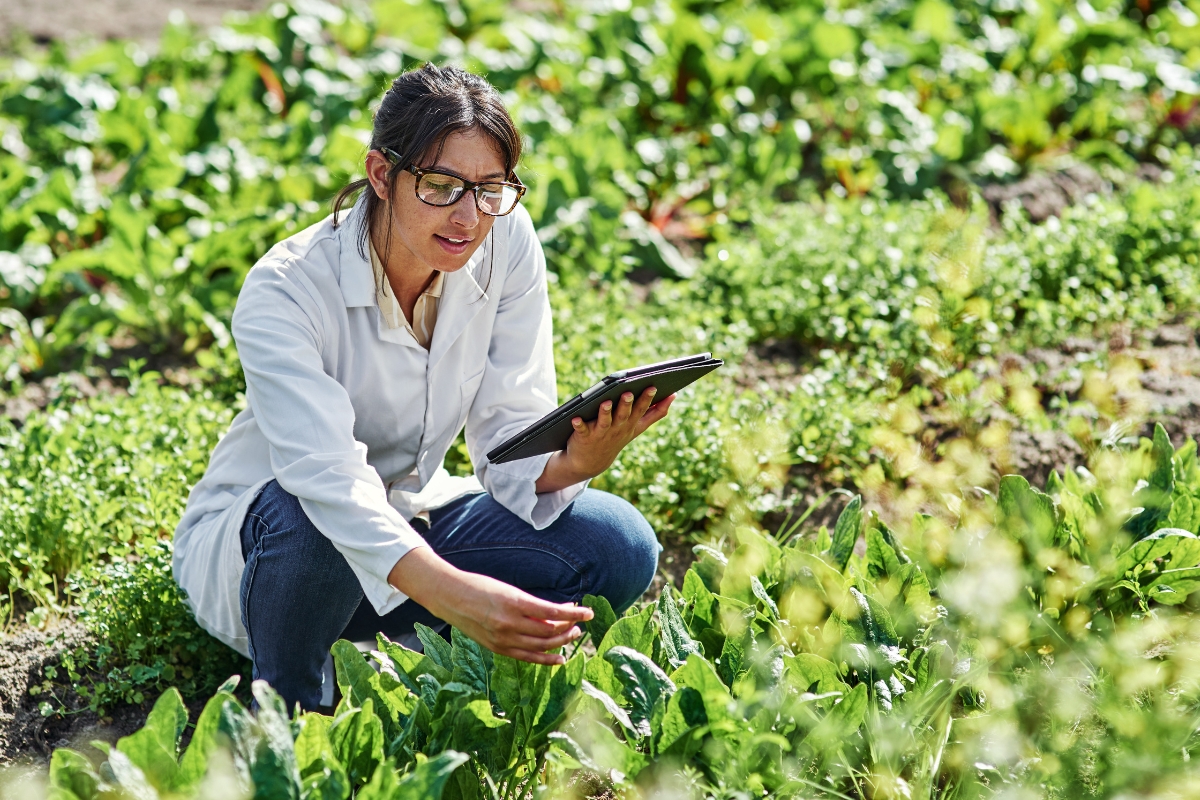
A disease can spread through a field before farmers have enough time to identify the problem manually. Artificial intelligence is now being tested as a tool to recognise crop diseases from plant images and provide quicker information for farm decisions.
India’s agricultural research system is increasingly using artificial intelligence, machine learning, remote sensing and digital platforms to improve crop monitoring. The government has also identified AI as an important technology under the Digital Agriculture Mission and other agricultural technology programmes.
For farmers, the attraction is simple: a photograph of a diseased leaf could potentially provide an early indication of what is affecting a crop. But AI should support, rather than replace, field observation and expert diagnosis.
How Can AI Detect Crop Diseases?
AI disease-detection systems are trained using large collections of crop images. The system learns visual patterns associated with particular diseases, pests or nutrient deficiencies and compares a new image with those patterns.
The technology can potentially identify symptoms such as leaf spots, discolouration, lesions, wilting or unusual growth. Some systems can also classify different levels of disease severity, helping farmers decide whether further inspection is needed.
ICAR institutions are working on digital agriculture applications that use artificial intelligence and image-based technologies for crop monitoring. These efforts are part of a wider move towards using data and digital tools at farm level.
The quality of the diagnosis depends heavily on the data used to train the system. An image captured under good lighting may produce a different result from a blurred photograph taken in a field. Disease symptoms can also look similar to nutrient deficiencies, insect damage or weather stress.
Can Farmers Use A Phone Camera?
Smartphones make image-based agricultural tools more accessible because farmers do not necessarily need specialised equipment to capture plant photographs. A clear image can be uploaded to an application or digital platform designed for crop diagnosis.
But farmers should follow the application’s instructions carefully. Photographs should normally show the affected plant part clearly, with enough detail to identify symptoms. Multiple images from different plants can provide more information than a single photograph.
Connectivity can remain a challenge in rural areas. An application that depends completely on continuous internet access may be less useful where network coverage is poor. Offline or low-bandwidth systems could make digital diagnosis more practical for farmers in such locations.
Language is another important issue. Farmers are more likely to use technology when instructions and recommendations are available in local languages and presented in simple terms rather than technical agricultural terminology.
Can AI Reduce Crop Losses?
Early detection can give farmers more time to respond. If a disease is identified before it spreads widely, farmers may be able to isolate affected areas, change irrigation practices or seek expert advice before applying any treatment.
This can also support more targeted pesticide use. Instead of treating an entire field immediately, farmers could inspect affected areas first and confirm the cause. This approach can reduce unnecessary chemical applications when combined with proper agricultural advice.
The technology should not be treated as a substitute for laboratory testing or agricultural experts. A wrong diagnosis could lead to unnecessary pesticide use, delayed treatment or additional crop damage.
Farmers should therefore use AI results as an early warning. When the disease is serious, unfamiliar or spreading quickly, confirmation from a KVK, agriculture department, plant pathologist or other qualified expert is important.
What Are The Main Limitations?
AI systems do not automatically recognise every disease. Their accuracy can fall when the crop, variety, disease stage or environmental conditions differ from the images used during training.
A photograph may also fail to capture symptoms occurring on roots, stems or inside plant tissues. Some diseases produce similar symptoms, making visual identification particularly difficult during early stages.
Farmers should also check who developed the application and where its recommendations come from. A tool connected to an agricultural university, ICAR institution or government programme may provide stronger technical backing than an unknown application making unsupported treatment claims.
Data privacy is another consideration. Farmers should understand what information an application collects, particularly if it requests farm location, photographs, personal details or other information beyond what is necessary for diagnosis.
Is AI Disease Detection Worth Trying?
AI-based disease detection can become useful for farmers when it is accurate, simple and supported by agricultural experts. Its biggest value may be early identification, helping farmers decide when a problem requires closer examination.
Farmers should not spray pesticides solely because an application identifies a disease. First confirm the diagnosis when possible, then follow recommended treatment, dose and safety instructions from a reliable agricultural source.
The technology is best viewed as an additional tool in integrated crop management. Combined with regular field scouting, weather information, soil testing and expert advice, AI could help farmers detect crop problems earlier and make better-informed decisions.
Also Read: Punarnava Jal – The world’s first organic fertilizer! Know how it is beneficial for farmers?
Contact us – If farmers want to share any valuable information or experiences related to farming, they can connect with us via phone or whatsapp at 9599273766 or you can write to us at “kisanofindia.mail@gmail.com”. Through Kisan of India, we will convey your message to the people, because we believe that if the farmers are advanced then the country is happy.
You can connect with Kisan of India on Facebook, Twitter, and Whatsapp and Subscribe to our YouTube channel.