



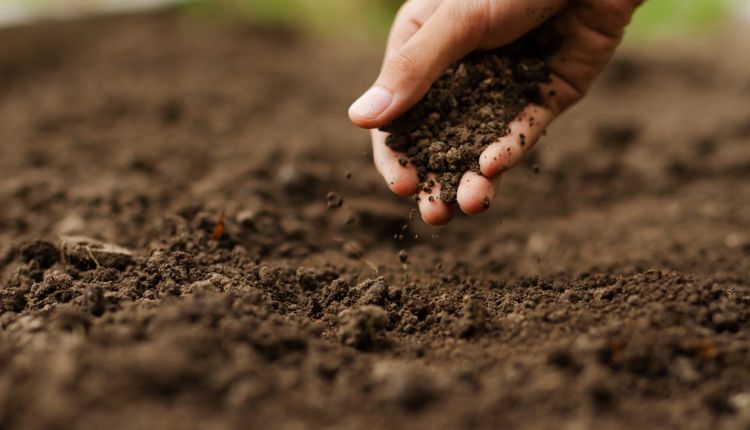
Farmers often decide how much fertiliser to apply based on previous crops, local practice or advice from input sellers. Soil testing offers a more precise option. New portable devices and digital systems are making it easier to test soil and connect results with crop-specific fertiliser recommendations.
The government says more than 25.89 crore Soil Health Cards have been generated under the Soil Health Card programme. During 2025-26, 97.53 lakh soil samples were collected and 92.87 lakh were tested. The cards provide information on nutrient status and recommendations for fertiliser application.
The technology is also moving closer to farms. ICAR has developed portable systems such as the Pusa Soil Test Fertilizer Recommendation Meter, which can test multiple soil parameters and provide crop-specific recommendations. This could reduce the time farmers spend waiting for conventional laboratory results.
How Does Portable Soil Testing Work?
The Pusa STFR Meter is designed to provide rapid soil testing and fertiliser recommendations at the farmer’s doorstep. ICAR says the device can assess soil parameters and generate recommendations based on the crop being grown. It is being promoted through training programmes involving Farmer Producer Organisations and other groups.
In March 2026, ICAR-IARI trained women leaders from FPOs in operating the Pusa STFR Meter. The programme included practical sessions on soil sampling, nutrient management and crop cultivation. Such training matters because a device is only useful when users collect samples correctly and understand what the results mean.
ICAR has also developed the Mridaparikshak portable soil test kit. The institute describes it as a low-cost mini laboratory that can support soil testing services and Soil Health Card generation. These technologies show how soil analysis is gradually moving from large laboratories towards smaller and more accessible testing systems.
The main benefit is not simply faster testing. It is better fertiliser decisions. Farmers can identify deficiencies of nutrients such as nitrogen, phosphorus, potassium, sulphur and micronutrients instead of applying the same fertiliser combination to every field.
ICAR has been repeatedly advising farmers to follow soil-test-based nutrient management. During its Khet Bachao Abhiyan in 2026, scientists stressed that farmers should test their soil before purchasing fertilisers. The aim is to improve nutrient-use efficiency and reduce unnecessary expenditure.
A soil test does not mean farmers should stop using fertilisers. If a crop needs a particular nutrient, the recommendation may still call for its application. The difference is that the decision is based on measured soil conditions rather than a general assumption.
A 2025 NITI Aayog evaluation cited by the government found that the Soil Health Card programme helped address nutrient imbalances, including excessive urea use. In the survey, 68.5% of farmers reported significant improvement in soil health after adopting recommended practices.
What Can FPOs Do?
Portable testing devices could be especially useful for FPOs and farmer groups. Instead of every farmer purchasing equipment, an FPO can train operators and provide soil-testing services to its members. This can make the cost of testing more manageable while creating another service for the organisation.
The FPO can collect samples, conduct tests and help farmers understand the recommendations. It could also maintain records of soil results over several seasons. This would allow farmers to see whether nutrient levels are improving or declining after changes in fertiliser and manure use.
Such data can also support crop planning. If soil tests show a particular nutrient deficiency across several farms, an FPO can organise suitable inputs collectively. It could also work with agricultural scientists or KVKs to develop nutrient-management plans for specific crops.
But farmers should not treat a portable device as automatically accurate simply because it is digital. Sample collection, calibration, testing conditions and interpretation all matter. Farmers should use approved equipment and trained operators and compare results with laboratory testing when needed.
What Should Farmers Check Before Using a Device?
The first step is proper soil sampling. A sample should represent the field accurately. Taking soil from only one unusual patch can produce a result that does not reflect the wider field. Farmers should follow the recommended sampling depth and method for their crop and soil type.
Farmers should also check whether the device or testing service provides recommendations for their particular crop. A nutrient result without a suitable crop recommendation may not tell the farmer how much fertiliser to apply.
If a result appears unusual, farmers should not immediately change their entire fertiliser programme. They can seek advice from a KVK, agriculture department or soil-testing laboratory. Laboratory testing can also be used when a more detailed assessment is required.
The technology is most useful when testing becomes part of regular farm planning. Farmers can test soil, follow recommendations, observe crop performance and test again after a suitable period. This creates a feedback loop instead of treating soil testing as a one-time activity.
Is Digital Soil Testing Ready for Small Farmers?
The technology is becoming more accessible, but its success will depend on local services. Small farmers may not need to own a testing device. Village-level operators, FPOs, KVKs and mobile soil-testing services can bring the technology closer to farms.
The government already has thousands of soil-testing laboratories, including static, mobile, mini and village-level facilities. Portable devices can complement these laboratories rather than replace them completely.
For farmers, the practical message is simple: test the soil before spending money on fertilisers. A digital or portable test can make the process faster, but the quality of the sample and the reliability of the recommendation matter just as much as the device.
As farming costs rise and nutrient imbalance becomes a concern, better information can itself become a farm input. Soil testing cannot guarantee higher yields, but it can help farmers avoid applying nutrients they do not need and identify nutrients their crops actually require.
The future of soil management may therefore involve both laboratory testing and portable field technology. If these systems reach farmers through trained local operators and reliable advisory services, soil testing could become a regular part of farm decisions rather than something farmers use only when a problem appears.
Also Read: Punarnava Jal – The world’s first organic fertilizer! Know how it is beneficial for farmers?
Contact us – If farmers want to share any valuable information or experiences related to farming, they can connect with us via phone or whatsapp at 9599273766 or you can write to us at “kisanofindia.mail@gmail.com”. Through Kisan of India, we will convey your message to the people, because we believe that if the farmers are advanced then the country is happy.
You can connect with Kisan of India on Facebook, Twitter, and Whatsapp and Subscribe to our YouTube channel.