



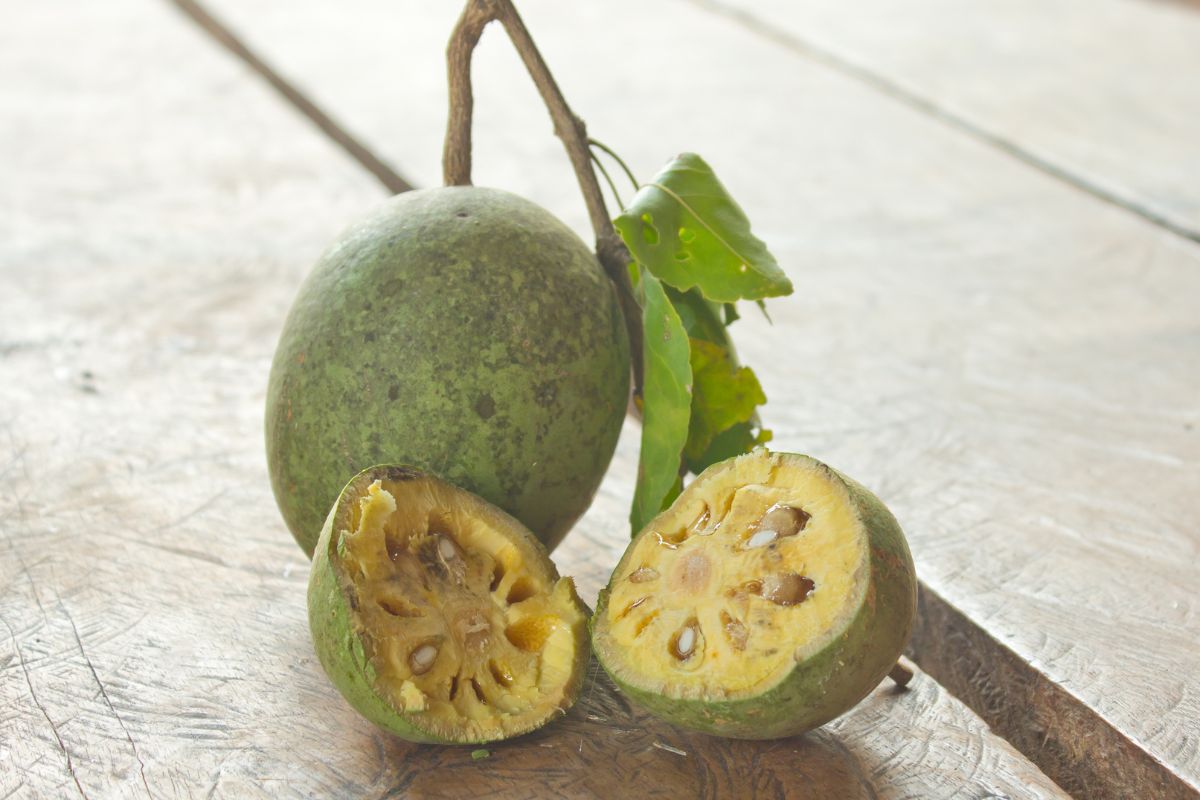
Across many districts of Uttar Pradesh, bael trees have been part of farms, village commons, and homestead gardens for generations. The hardy fruit tree thrives in hot conditions, requires relatively little maintenance, and continues producing even in challenging environments.
Despite its widespread presence, bael remained largely underutilised for many years.
Most fruits were consumed locally or sold in small quantities during the harvest season. Farmers often struggled to realise the crop’s full commercial value because fresh bael has limited market channels compared with more established fruit crops.
That situation is beginning to change.
A growing number of rural enterprises are processing bael into beverages, powders, candies, pulp, and health products. This shift is creating new income opportunities while helping farmers benefit from a crop long considered secondary within farming systems.
The fruit is gradually moving into organised value chains.
Consumer interest in traditional foods and natural products has increased significantly in recent years. Bael is widely recognised for its use in beverages and traditional food preparations. This reputation has helped create demand among consumers seeking products linked to wellness and natural nutrition.
Food companies and small processors are responding by introducing a variety of bael-based products.
Ready-to-drink beverages, concentrates, fruit powders, and packaged foods are becoming more common in urban markets.
The expanding customer base is encouraging investment.
Demand is creating new business opportunities.
Processing Increases Farmer Returns
Fresh bael fruit often commands modest prices in local markets. Processing changes the economics considerably. Converting fruit into pulp, beverages, and packaged products extends shelf life and significantly increases market value.
Farmers supplying processors gain access to more stable demand.
The value-addition process also creates opportunities for entrepreneurs operating small and medium-scale processing units. Rather than selling raw produce alone, rural businesses participate in multiple stages of the value chain.
The result is greater income retention within producing regions.
Value addition strengthens local economies.
Processing units require labour for fruit collection, cleaning, grading, pulp extraction, packaging, and marketing. As a result, bael-based enterprises are creating employment opportunities in rural areas. Women’s self-help groups are increasingly participating in these activities, particularly in product preparation and packaging operations.
The growth of processing industries helps diversify rural income sources.
Communities benefit not only from cultivation but also from downstream business activities linked to the crop.
Employment opportunities expand alongside market development.
The benefits extend beyond farm households.
Bael possesses characteristics increasingly valued in modern agriculture. The tree tolerates heat, dry conditions, and variable rainfall better than many fruit crops. Farmers appreciate its ability to remain productive even under environmental stress.
Researchers studying climate-resilient agriculture frequently highlight hardy perennial species as important future resources.
Bael fits well within this category. Its adaptability reduces production risks while providing long-term economic opportunities.
The crop’s environmental resilience supports commercial growth.
These advantages are attracting attention from planners and farmers alike.
Farmer Groups Strengthen Market Access
Several producer organisations are helping farmers coordinate production and connect with processors.
Collective marketing improves bargaining power and helps ensure more consistent supplies for commercial buyers. Organised groups also facilitate training and quality improvement initiatives.
Agricultural economists often note that market access determines whether promising crops achieve commercial success.
Farmer groups are helping address this challenge in the bael sector.
The supply chain is becoming more structured.
Better organisation supports long-term growth.
The story of bael processing reflects a broader trend occurring across Indian agriculture. Traditional crops once valued mainly for local consumption are finding new relevance in modern markets. Processing, branding, and changing consumer preferences are creating opportunities that barely existed a generation ago.
For farmers in Uttar Pradesh, bael offers a combination of resilience, familiarity, and commercial potential.
The fruit’s transformation from an overlooked resource into a growing agri-business opportunity demonstrates how value can emerge from crops already present in rural landscapes.
Sometimes agricultural progress comes not from introducing something new.
It comes from recognising the potential of what has been there all along.
Also Read: Punarnava Jal – The world’s first organic fertilizer! Know how it is beneficial for farmers?
Contact us – If farmers want to share any valuable information or experiences related to farming, they can connect with us via phone or whatsapp at 9599273766 or you can write to us at “kisanofindia.mail@gmail.com”. Through Kisan of India, we will convey your message to the people, because we believe that if the farmers are advanced then the country is happy.
You can connect with Kisan of India on Facebook, Twitter, and Whatsapp and Subscribe to our YouTube channel.