


Can One Farmer’s Pomegranate Orchard Show How Drip Irrigation Changes Returns?

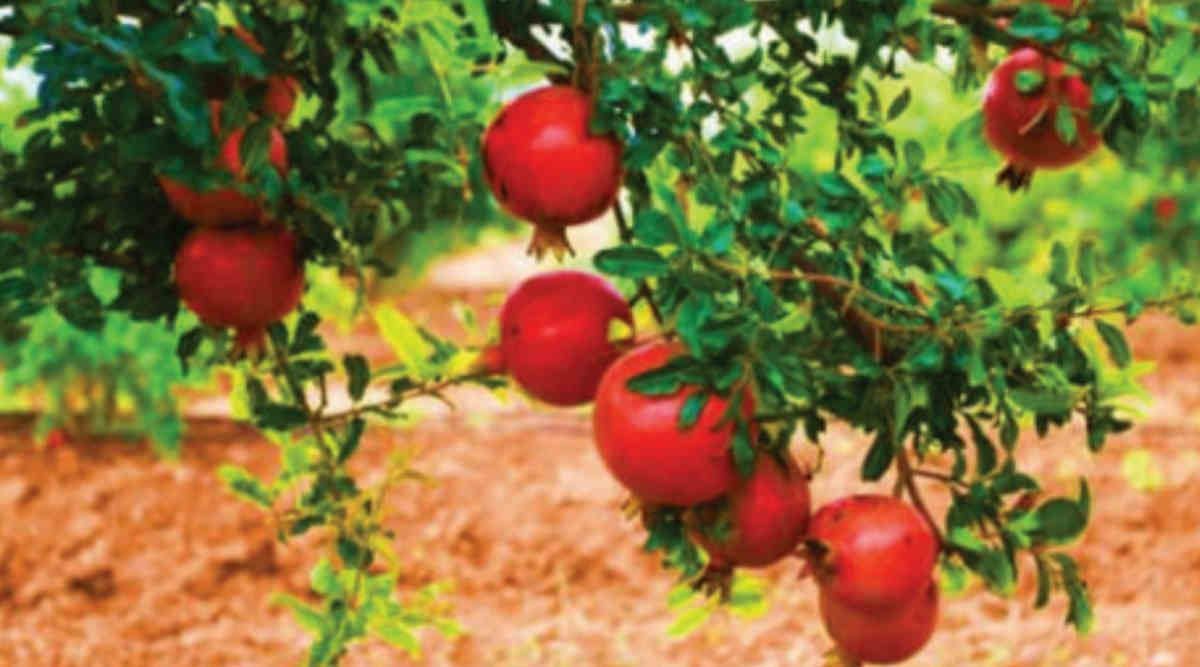
Uppunootula Nandan Goud, a farmer from Hissan Nagar village in Telangana’s Kamareddy district, adopted drip irrigation and timely pruning in his five-acre pomegranate orchard. Government records show the practices helped him obtain 18 tonnes of pomegranates, or 3.6 tonnes per acre.
The farmer grew the Bhagwa variety in red soil under the Mission for Integrated Development of Horticulture. His case shows how irrigation and orchard management can affect production, but the figures apply to his farm and should not be treated as a guaranteed return for other growers.
The two interventions recorded in the government success story were drip irrigation and timely pruning. These were used as part of the orchard’s management rather than as standalone measures.
Drip irrigation delivers water closer to the root zone, while pruning helps farmers manage plant growth and canopy structure. ICAR research has also found that micro-irrigation can improve water distribution and nutrient uptake in pomegranate orchards.
Goud cultivated pomegranate on five acres. The government record identifies Bhagwa as the variety and red soil as the soil type. The size matters when looking at the income figures. A five-acre orchard requires a larger investment in irrigation, labour and crop management than a small household plot, so the reported returns cannot simply be multiplied across farms without considering costs.
The government record reports a total yield of 18 tonnes from the five-acre orchard. That works out to 3.6 tonnes per acre. The same record compares this with a reported previous yield of six tonnes per acre under the traditional method. The difference in the published record appears unusually large, so farmers should treat the figures as a documented case rather than a general yield benchmark.
What was the reported expenditure?
The farmer’s total expenditure was recorded at ₹4 lakh for five acres. That comes to ₹80,000 per acre.
The figure covers the expenditure reported under the government success-story record. Farmers planning their own orchard should calculate current costs separately because labour, fertiliser, irrigation, plant-protection products and market expenses can differ between locations and seasons.
The government record lists a market price of ₹48,000 per tonne. At the reported production of 18 tonnes, the gross income was ₹8.64 lakh. After the reported expenditure of ₹4 lakh, the recorded net income was ₹4.64 lakh for the five-acre orchard. That works out to ₹92,800 per acre under the figures provided in the government record.
Pomegranate plants need controlled water management, particularly in areas where water availability is limited. Drip systems can deliver smaller quantities of water directly around the root zone. ICAR’s National Research Centre on Pomegranate has reported that micro-irrigation can reduce evaporative losses and improve irrigation uniformity. Its research has also examined different emitter arrangements for improving water distribution.
Pruning is part of orchard management because it influences the number and position of branches that produce new growth and fruit. Timely pruning can help farmers manage canopy development and maintain suitable fruit-bearing wood. The Telangana success story specifically identifies timely pruning alongside drip irrigation as the interventions adopted by Goud. It does not separately quantify how much of the reported yield came from either practice.
What about the Bhagwa variety?
Bhagwa is an important commercial pomegranate variety in India. ICAR research has examined Bhagwa under different irrigation systems, including surface and subsurface drip arrangements.
In one three-year ICAR field experiment, a system using six emitters on double laterals produced better water distribution in the root zone and higher fruit yield than the other tested emitter arrangements.
Farmers can consider the practices, but the exact results will depend on local conditions. Soil, water availability, orchard age, variety, pruning schedule, disease pressure and market prices can all change the economics. ICAR has noted that western Rajasthan’s pomegranate growers using Bhagwa under ferti-drip systems have achieved average yields of 12–15 tonnes per hectare in well-maintained orchards from the fourth year onward.
Farmers considering a pomegranate orchard should calculate establishment costs, irrigation expenses, planting material, labour, fertilisers, plant protection and expected market prices. The Telangana case had a reported expenditure of ₹80,000 per acre and gross income of ₹1.728 lakh per acre. These figures came from one documented farm and should not be used as a fixed cost or income estimate for every orchard.
Installing drip equipment alone does not guarantee better production. Farmers need suitable irrigation scheduling, functioning emitters and regular checks of the system. ICAR research found that emitter arrangement affected water distribution and plant performance in Bhagwa pomegranate. This shows why system design matters, not simply whether an orchard has drip irrigation.
What should farmers learn from the case?
The main lesson from Goud’s farm is the combination of irrigation and orchard management. The government record does not attribute the results to one practice alone.
The case also shows why farmers should track costs and yields after adopting a new practice. Without farm records, it becomes difficult to know whether an intervention actually improved returns.
Goud’s five-acre orchard in Kamareddy provides one documented example of how drip irrigation and timely pruning were linked with higher reported production and income. The farm produced 18 tonnes and recorded ₹4.64 lakh in net income under the figures published by the Telangana government.
The case does not prove that every pomegranate farmer will get the same result. Orchard age, soil, water, variety, management and market prices can change the outcome.
For farmers considering pomegranate cultivation, the practical starting point is to calculate the full orchard cost, check local water availability and get advice on variety, irrigation and pruning before investing.
Also Read: Punarnava Jal – The world’s first organic fertilizer! Know how it is beneficial for farmers?
Contact us – If farmers want to share any valuable information or experiences related to farming, they can connect with us via phone or whatsapp at 9599273766 or you can write to us at “kisanofindia.mail@gmail.com”. Through Kisan of India, we will convey your message to the people, because we believe that if the farmers are advanced then the country is happy.
You can connect with Kisan of India on Facebook, Twitter, and Whatsapp and Subscribe to our YouTube channel.