



In many tribal and rainfed regions of Chhattisgarh, farmers have traditionally depended on monsoon rainfall for crop production. While seasonal rains support cultivation during the kharif season, limited irrigation infrastructure often restricts opportunities for growing crops during the rest of the year.
As a result, large areas remain underutilised after the monsoon ends.
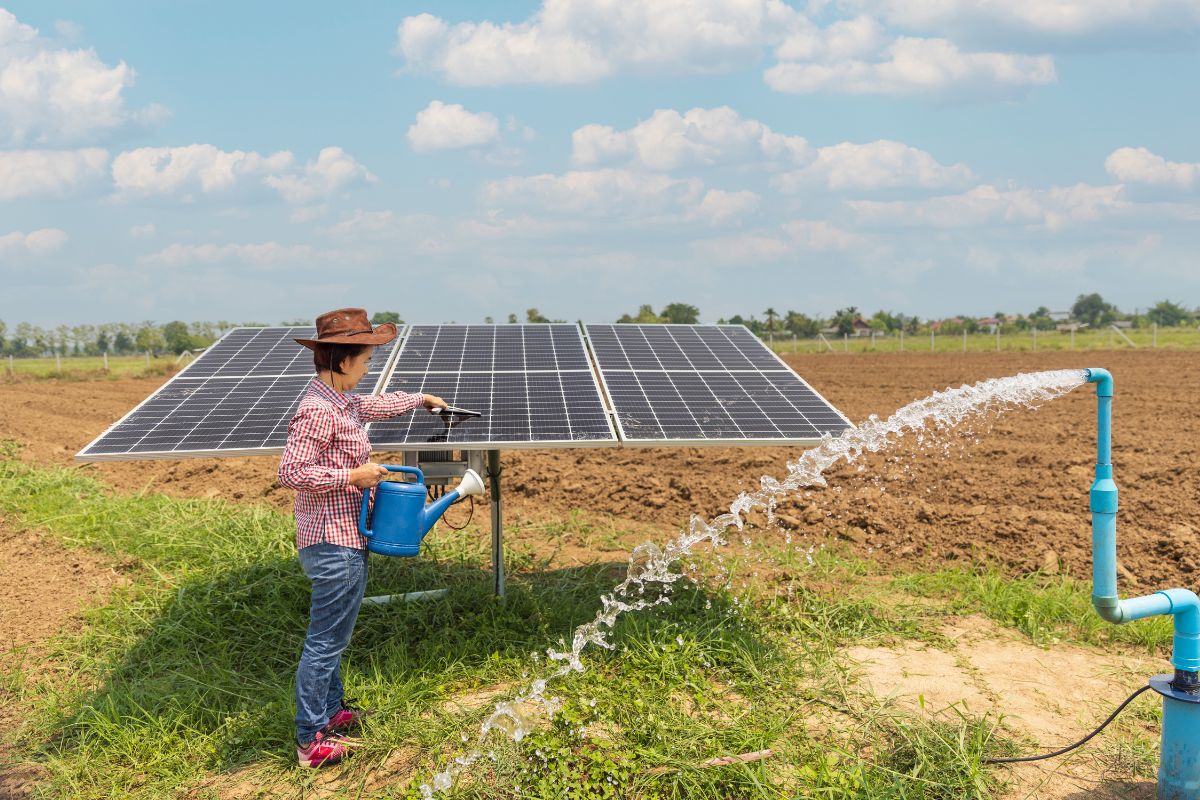
To address this challenge, the state has been expanding solar-powered community lift irrigation projects that use renewable energy to move water from rivers, reservoirs, ponds, and canals to agricultural fields. The initiative is helping farmers gain access to irrigation while reducing dependence on diesel-powered pumping systems.
Officials believe the programme can improve farm incomes by enabling crop diversification and increasing the number of productive farming seasons.
The scheme is becoming an important part of rural development efforts in several districts.
Many villages in Chhattisgarh possess nearby water resources but lack the infrastructure needed to deliver water to fields. Farmers often depend entirely on rainfall despite the presence of rivers, streams, and reservoirs within practical distance. Without irrigation, cultivation opportunities remain limited, especially during dry periods.
This situation affects productivity and income.
Agricultural experts frequently note that access to water is one of the most important factors influencing crop choice, yields, and profitability. Improving irrigation can therefore have effects that extend across the entire farming system.
The challenge has long been finding affordable ways to deliver water.
Solar-powered systems offer a potential solution.
Solar Energy Reduces Operating Costs
Traditional irrigation pumps often rely on diesel fuel or grid electricity. Both options can create challenges. Diesel costs fluctuate, while electricity access may be unreliable in remote areas. Solar lift irrigation addresses these issues by using photovoltaic panels to power water pumps.
Once installed, operating expenses are significantly reduced because sunlight becomes the primary energy source. Farmers benefit from lower pumping costs while communities gain access to a more reliable irrigation system.
The approach aligns with broader efforts to increase renewable energy use in agriculture. Energy and water management are increasingly being addressed together.
A key feature of many projects is collective management. Instead of serving a single farm, community irrigation systems often provide water to groups of farmers. Shared infrastructure allows multiple households to benefit while reducing individual investment requirements.
Village committees frequently participate in managing water distribution, maintenance, and operational decisions.
This collective approach helps maximise the impact of public investment while ensuring that smaller farmers can access irrigation facilities.
Agricultural planners often view community-based models as particularly suitable for tribal and smallholder regions. The system spreads benefits across entire villages.
Access to irrigation changes what farmers can grow. Many producers who previously cultivated only monsoon crops are beginning to explore vegetables, pulses, oilseeds, and horticultural crops during additional seasons. These enterprises often generate higher returns than rainfed cultivation alone.
Farmers also gain greater flexibility when responding to market opportunities. The ability to grow multiple crops throughout the year can improve income stability and reduce dependence on a single harvest.
Officials view diversification as one of the programme’s most important outcomes.
Water access creates new possibilities.
Climate Resilience Gains Importance
Climate variability is increasing concerns about agricultural dependence on rainfall alone. Irregular monsoons, delayed rainfall, and extended dry periods can significantly affect production in rainfed regions. Irrigation systems help reduce vulnerability by providing alternative water sources when weather conditions become unpredictable.
Solar lift projects therefore contribute not only to productivity but also to resilience. Researchers increasingly emphasise the need for infrastructure that helps farmers adapt to changing climatic conditions. Reliable water access is becoming a critical component of climate adaptation strategies.
The importance of irrigation continues to grow. The expansion of solar community irrigation reflects a broader shift in agricultural development priorities.
Rather than focusing solely on production inputs, policymakers are investing in infrastructure that enables long-term growth. Water access influences everything from crop selection to household income and food security.
For farmers in Chhattisgarh, the impact can be substantial. A field that once produced only a single seasonal crop may now support multiple harvests throughout the year. That transformation creates opportunities for higher incomes and stronger rural economies.
As more systems become operational, solar lift irrigation is demonstrating how renewable energy and water management can work together to support agricultural development.
In many villages, the future of farming may depend on that connection.
Also Read: Punarnava Jal – The world’s first organic fertilizer! Know how it is beneficial for farmers?
Contact us – If farmers want to share any valuable information or experiences related to farming, they can connect with us via phone or whatsapp at 9599273766 or you can write to us at “kisanofindia.mail@gmail.com”. Through Kisan of India, we will convey your message to the people, because we believe that if the farmers are advanced then the country is happy.
You can connect with Kisan of India on Facebook, Twitter, and Whatsapp and Subscribe to our YouTube channel.