


India Wants to Grow More Pulses, What Will the New Mission Mean for Farmers?

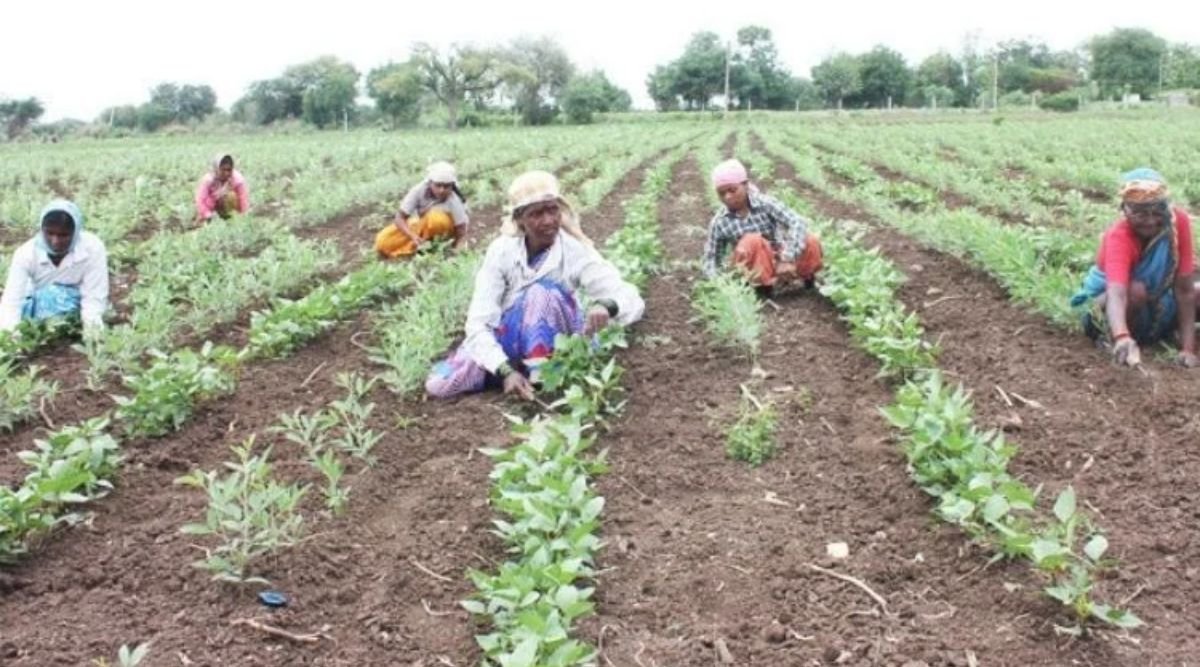
India is trying to grow more pulses at home. The government has launched the Mission for Aatmanirbharta in Pulses with a ₹11,440-crore allocation for 2025–26 to 2030–31.
The mission focuses especially on Tur, Urad and Masoor. It combines better seeds, area expansion, demonstrations, post-harvest infrastructure and procurement support. The government aims to increase pulse production from 242 lakh tonnes to 350 lakh tonnes by 2030–31.
For farmers, the important question is not simply how much money the government has allocated. It is what support will actually reach their fields and markets.
What does the Pulses Mission offer?
The mission has several parts. One is increasing the availability of high-quality and climate-resilient seed varieties.
The government plans to distribute 126 lakh quintals of certified pulse seeds by 2030–31, covering 370 lakh hectares. It has also planned free seed kits to encourage farmers to grow pulses in rice-fallow areas and other suitable land.
During Rabi 2025–26, 10.36 lakh seed kits were allocated to states. The government has set a tentative target of 15 lakh kits for 2026–27, followed by higher allocations in subsequent years.
The exact availability for an individual farmer will depend on state plans, identified districts and eligibility under the local programme.
The mission aims to expand pulse cultivation by another 35 lakh hectares by 2030–31. This includes 24.5 lakh hectares in traditional pulse-growing areas and 10.5 lakh hectares in non-traditional areas.
Rice-fallow areas are one important target. The idea is to use suitable land after the rice harvest for pulse cultivation rather than leaving it unused.
A total of 489 districts have been identified as focus districts for pulse clusters. These districts can be changed later depending on local requirements and changing conditions.
Farmers should therefore check with their state agriculture department or local KVK to find out whether their district is covered and which pulse and variety are recommended.
What about Tur, Urad and Masoor prices?
Price assurance is one of the most important parts of the mission.
NAFED and NCCF are responsible for procuring Tur, Urad and Masoor from registered and willing farmers under the Price Support Scheme of PM-AASHA. The arrangement is intended to provide a market at MSP when procurement conditions are met.
For Rabi 2026–27, the government reported that 1.5 lakh pulse farmers had already been registered through NAFED and NCCF as of March 2026.
This does not mean every farmer automatically receives MSP for every quantity produced. Farmers need to be registered and meet the applicable procurement requirements.
The procurement mechanism also does not apply in exactly the same way to every pulse. Farmers should check the notified crop, procurement period, quality requirements and local procurement centre.
Pulse yields can vary considerably depending on variety, soil, weather, crop management and pest pressure. The mission therefore places emphasis on newer varieties with higher productivity and climate resilience. The government is also supporting seed production and distribution so that improved varieties can reach more farmers.
The mission includes demonstrations of improved production technologies and capacity building through ICAR, KVKs and state agriculture departments.
For farmers, this means the choice of seed should not be based only on what is easily available in the local market. Farmers should check whether a variety is recommended for their region and whether certified seed is available.
The mission also supports processing
The programme is not limited to growing more pulses. It also aims to strengthen what happens after harvest. The government has targeted 1,000 pulse processing and packaging units during the mission period. Financial assistance is available for new pulse processing and packaging units at 33% of project cost, up to a maximum of ₹25 lakh.
As of March 2026, 23 pulse-processing projects had also been approved under the Pradhan Mantri Kisan SAMPADA Yojana, with 18 already completed. These projects together had a processing capacity of 4.44 lakh tonnes per year. This could create opportunities beyond primary farming. Farmer groups, cooperatives and rural entrepreneurs can potentially participate in cleaning, grading, processing and packaging pulses.
Farmers should first check whether pulses fit their soil, water availability and local cropping system. The availability of seed and the recommended sowing period should also be confirmed before planting.
A farmer interested in Tur, Urad or Masoor should ask the local agriculture department or KVK whether the crop is included in the local mission plan. If procurement support is important to the decision, registration requirements should be checked before harvest. Farmers should also understand the quality standards and procurement dates rather than assuming that government procurement will automatically be available after harvest.
Keeping records of seed cost, labour, irrigation, fertiliser, crop protection and yield can also help farmers compare pulses with their existing crop.
Will the mission make pulse farming profitable?
The scheme can reduce some risks by improving access to seed, demonstrations, infrastructure and procurement. But it cannot guarantee a particular income for every farmer.
Pulse production still depends on rainfall, irrigation, soil, pests, yields and local market conditions. Procurement also depends on registration, quality conditions and the applicable procurement system.
The mission’s broader goal is to create a stronger pulse production and marketing system. Government data show that pulse production reached an estimated 274.09 lakh tonnes in 2025–26, up from 242.46 lakh tonnes in 2023–24. Pulse imports also fell from 72.56 lakh tonnes in 2024–25 to 59.64 lakh tonnes in 2025–26.
These are national figures and do not mean every pulse farmer experienced the same change.
A new opportunity, but farmers need local information
The Pulses Mission gives farmers several forms of support: improved seeds, free seed kits in selected programmes, demonstrations, procurement for specified pulses and investment in processing.
But the benefits will depend on how these measures are implemented at the state and district level.
For a farmer, the first step is therefore not simply to switch to pulses because a national mission exists. It is to find out what is available locally.
Which pulse is being promoted? Is certified seed available? Is the district covered? Where is the procurement centre? What are the quality requirements? What is the sowing window?
The mission is designed to expand India’s pulse production. For farmers, its real value will be measured at the field and market level — through better seed access, suitable crop choices, reliable markets and whether the numbers work on their own farms.
Also Read: Punarnava Jal – The world’s first organic fertilizer! Know how it is beneficial for farmers?
Contact us – If farmers want to share any valuable information or experiences related to farming, they can connect with us via phone or whatsapp at 9599273766 or you can write to us at “kisanofindia.mail@gmail.com”. Through Kisan of India, we will convey your message to the people, because we believe that if the farmers are advanced then the country is happy.
You can connect with Kisan of India on Facebook, Twitter, and Whatsapp and Subscribe to our YouTube channel.