



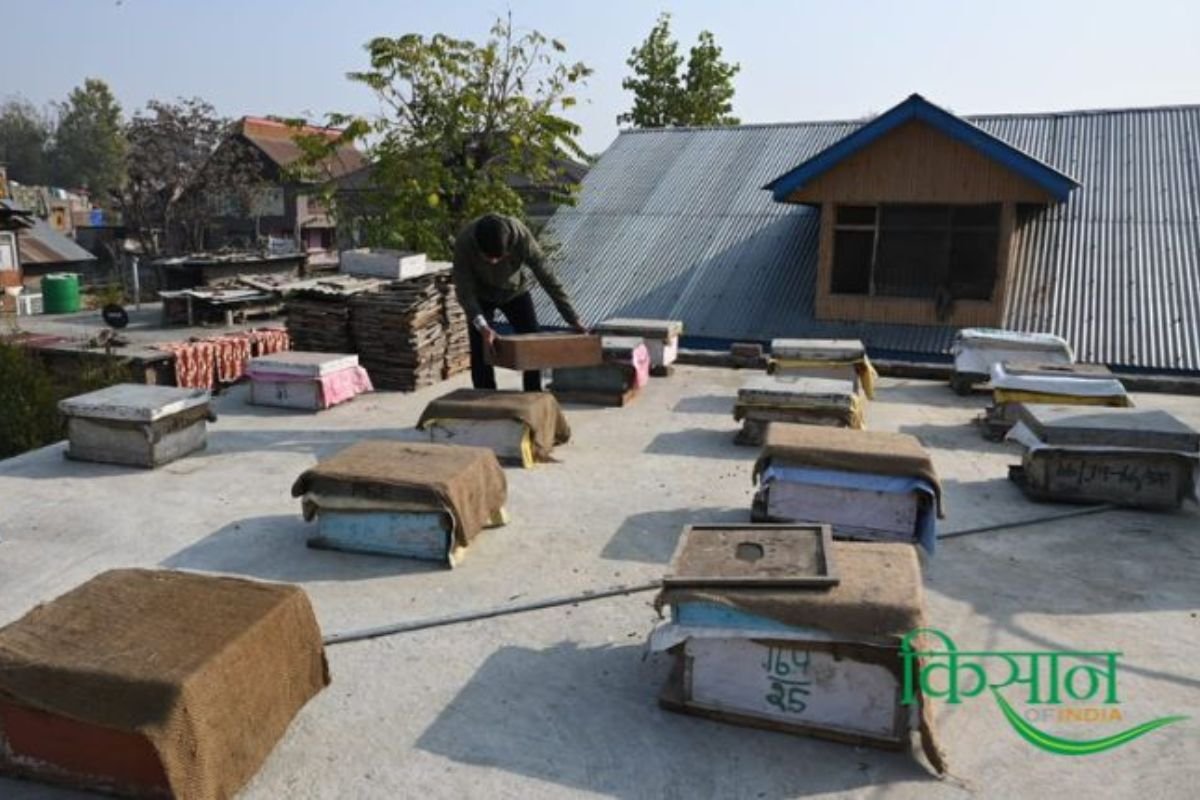
can give farmers another source of income without requiring large areas of land. It can also support pollination in crops and horticulture. The government has been promoting scientific beekeeping through the National Beekeeping and Honey Mission, implemented by the National Bee Board.
The scheme supports more than the purchase of bee colonies. Its activities cover productivity, post-harvest management, training, infrastructure, research and technology. Farmers therefore need to understand which part of the programme applies to their activity before seeking assistance.
What is the National Beekeeping and Honey Mission?
The National Beekeeping and Honey Mission, or NBHM, is a Central Sector Scheme designed to promote scientific beekeeping and the production of quality honey and other hive products.
The mission is implemented through three Mini Missions. Mini Mission-I focuses on production and productivity, Mini Mission-II covers post-harvest management, while Mini Mission-III supports research and technology generation.
The scheme was originally approved with an allocation of ₹500 crore for 2020-21 to 2022-23. It was later extended for 2023-24 to 2025-26, with ₹370 crore remaining from the original allocation.
Support under NBHM is provided through approved projects and activities rather than as one universal payment available to every individual farmer.
The government has supported activities involving bee colonies, beekeeping equipment, training, breeding, infrastructure and other parts of the value chain. The exact assistance depends on the approved activity and implementing agency.
Farmers should therefore avoid assuming that simply buying bees makes them automatically eligible for a fixed subsidy. They need to check the current guidelines and the implementing agency handling applications in their area.
What kind of equipment is involved?
Scientific beekeeping requires more than bee colonies. Depending on the scale and system, beekeepers may need hives, protective clothing, smokers, honey extractors and other equipment.
NBHM guidelines include support for activities related to scientific beekeeping, capacity building and infrastructure. The scheme also supports facilities connected with honey processing and other hive products.
Farmers should first identify the type and scale of beekeeping they want to start. Equipment requirements can differ between a small number of colonies and a commercial apiary.
Training is an important part of scientific beekeeping because farmers need to understand colony management, queen rearing, bee diseases, seasonal movement and honey harvesting.
NBHM includes human-resource development and capacity-building activities for farmers, beekeepers and field-level officials. Integrated Beekeeping Development Centres and Centres of Excellence are also part of the programme.
A farmer starting for the first time should consider training before purchasing a large number of colonies. Basic knowledge can help reduce losses caused by poor hive management or incorrect handling.
Honeybees provide pollination services in addition to producing honey. This can be particularly relevant for fruit, vegetable, seed and other crops that depend on pollinating insects.
The government describes beekeeping as part of an integrated farming system and links scientific beekeeping with pollination support and agricultural production.
The benefit will depend on the crop, bee species, colony strength, flowering period and local conditions. Farmers should not assume that placing hives automatically increases the yield of every crop.
What happens after honey is harvested?
Producing honey is only one part of the business. Farmers also need suitable extraction, filtration, storage, testing, packaging and marketing arrangements.
NBHM’s second Mini Mission focuses on post-harvest management. The programme also supports infrastructure such as honey processing facilities and laboratories as part of the wider honey value chain.
For a small beekeeper, joining a cooperative, producer group or local honey-processing network may be more practical than immediately setting up a complete processing unit independently.
Honey is not the only product obtained from managed bee colonies. Beeswax, bee pollen, propolis and royal jelly are among the other hive products associated with beekeeping.
The government has identified these products as part of the wider beekeeping value chain.
Their commercial value depends on quality, demand, processing and access to buyers. Farmers should therefore treat them as possible additional products rather than assuming that every beekeeper will automatically have a market for all of them.
Some NBHM activities are designed for projects that serve beekeeper communities, value chains and research rather than one individual farmer.
The government has stated that financial assistance under the mission is provided according to scheme guidelines, with some projects covering individual beneficiaries and others supporting communities, value-chain activities or research.
This means farmer groups, cooperatives, producer organisations and other eligible bodies may have opportunities that are different from those available to individual applicants.
Is there an example from Jammu and Kashmir?
The government has previously established an Integrated Beekeeping Development Centre in Jammu and Kashmir as part of the national programme. The centre was among 16 Integrated Beekeeping Development Centres established across different states and Union Territories under the earlier phase of NBHM.
For farmers in Jammu and Kashmir, local agriculture and horticulture departments can help identify current training opportunities, implementing agencies and applicable support under the scheme. The first step is to understand whether beekeeping fits the farm. Farmers should look at flowering crops nearby, seasonal forage availability, water access, labour and the local market for honey.
The second step is training. A farmer who understands colony management can make better decisions about hive placement, feeding, disease management and harvesting. Only after this should the farmer decide how many colonies and how much equipment to purchase. Starting with a manageable number can allow the farmer to learn without taking on unnecessary costs.
Farmers should first identify the current implementing agency and the specific NBHM component relevant to their activity. They should check eligibility, application requirements, project size, eligible items, assistance limits and the farmer’s own contribution, where applicable. These details can vary between activities. Farmers should also keep documents related to identity, land or activity, bank details and training or project requirements ready if the implementing agency asks for them.
Most importantly, they should check the latest official guidelines rather than relying on old subsidy figures shared on social media or by private sellers.
Is beekeeping suitable for every farmer?
No. Beekeeping depends on local conditions and management. A farmer needs sufficient floral resources, suitable weather, healthy colonies and access to markets. Moving colonies between locations can also require additional labour, transport and management. Disease and pest control are other responsibilities that farmers need to understand.
The government support available through NBHM can help develop the sector, but it does not remove the costs and risks of running an apiary. Farmers should calculate expected costs before investing in colonies and equipment. Beekeeping can become an additional farm activity, but government support should be viewed as one part of the business plan. NBHM covers scientific production, training, post-harvest management, infrastructure and research.
Before applying, farmers should identify the exact activity they want to undertake, check the current guidelines and contact the relevant implementing agency. The key question is not simply, “How much subsidy can I get?” It is, “Which part of my beekeeping activity is covered, what do I need to contribute, and where will I sell the honey?” That approach can help farmers assess the real cost and opportunity before buying their first bee colony.
Also Read: Punarnava Jal – The world’s first organic fertilizer! Know how it is beneficial for farmers?
Contact us – If farmers want to share any valuable information or experiences related to farming, they can connect with us via phone or whatsapp at 9599273766 or you can write to us at “kisanofindia.mail@gmail.com”. Through Kisan of India, we will convey your message to the people, because we believe that if the farmers are advanced then the country is happy.
You can connect with Kisan of India on Facebook, Twitter, and Whatsapp and Subscribe to our YouTube channel.