


A Young Farmer in Maharashtra Built a Profitable Dragon Fruit Enterprise on Drought-Prone Land

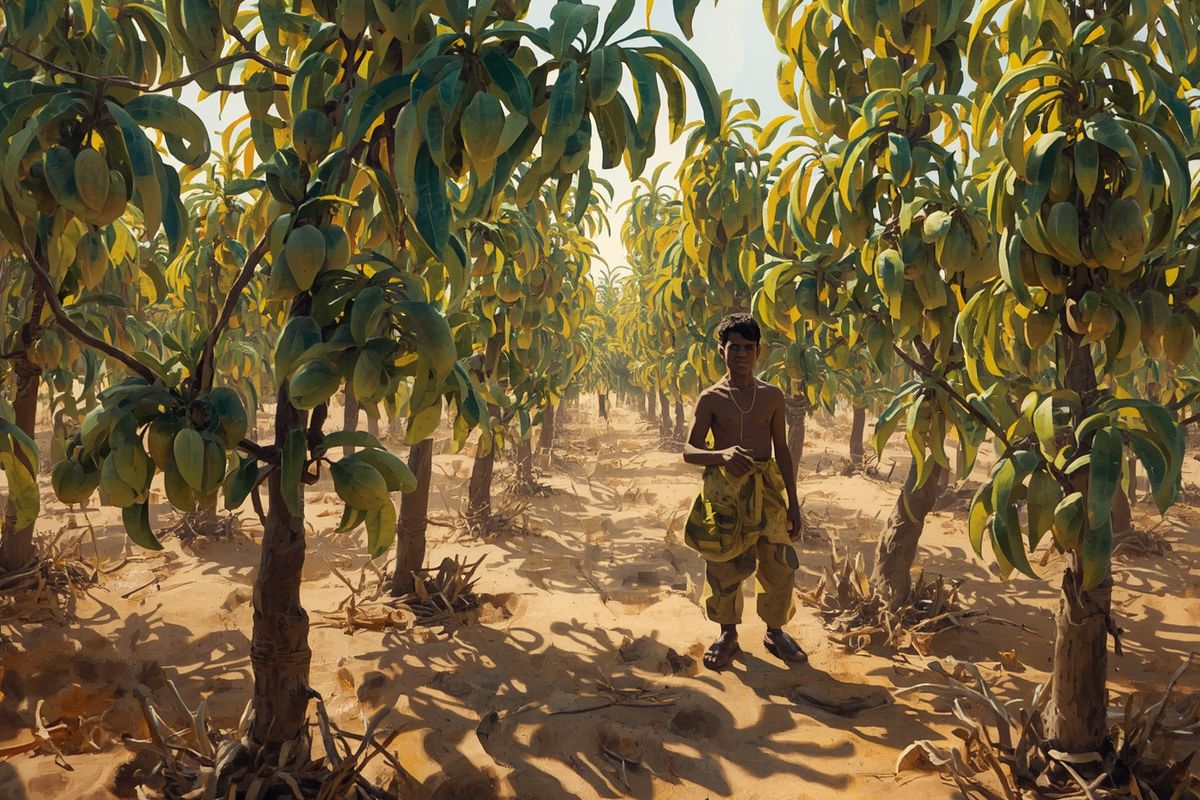
A decade ago, much of the land around Sangola in Maharashtra’s Solapur district was known for recurring droughts, uncertain rainfall, and limited crop options. Farmers depended largely on traditional crops, but fluctuating weather patterns often made income unpredictable.
Among them was 32-year-old farmer Pravin Jadhav, who faced the same challenges as many others in the region. Rising cultivation costs, irregular rainfall, and unstable market prices made it difficult to generate reliable income from conventional farming.
Rather than expanding acreage, Jadhav decided to change what he cultivated.
After studying high-value horticulture crops and visiting farms in Gujarat and Karnataka, he began experimenting with dragon fruit cultivation. Today, his farm has become an example of how crop diversification and market planning can transform agricultural livelihoods in water-stressed regions.
Like many farmers in semi-arid Maharashtra, Jadhav initially cultivated crops that depended heavily on seasonal rainfall. Good monsoons produced reasonable returns, but weak rainfall years often reduced profitability.
He realised that long-term sustainability would require a crop capable of producing higher returns while using water more efficiently.
Dragon fruit attracted his attention because of its drought tolerance, growing consumer demand, and relatively long productive life. Although the initial investment for poles, drip irrigation, and planting material was significant, the crop offered the possibility of stable income over many years.
The decision involved risk because dragon fruit was still relatively unfamiliar to many growers in the region.
Building the Farm Slowly
Instead of converting his entire holding immediately, Jadhav started with a small experimental plot. This allowed him to understand plant management, irrigation requirements, flowering patterns, and marketing challenges before expanding production.
The learning process took time.
Unlike seasonal crops, dragon fruit requires careful orchard management and patience during the establishment phase. Farmers often wait several years before reaching full production. By expanding gradually, he reduced financial risk while gaining practical experience.
The strategy proved valuable because many early growers across India struggled after planting large areas without fully understanding market requirements.
One of the biggest benefits was reduced water consumption. In a region where water availability determines agricultural success, efficient irrigation remains critical. The farm relies on drip irrigation, allowing precise application of water directly to plant roots.
Compared with many conventional crops cultivated in drought-prone regions, dragon fruit requires significantly less irrigation once established. This reduced dependence on water became particularly important during years of below-normal rainfall.
As climate variability increased, the crop’s ability to remain productive under challenging conditions strengthened its economic appeal. The farm demonstrated that profitability and water conservation could work together.
Jadhav quickly discovered that growing fruit was only one part of the business.
Marketing determined profitability. Rather than depending entirely on wholesale markets, he developed relationships with retailers, fruit distributors, and buyers in nearby cities. Direct marketing helped secure better prices and reduced dependence on intermediaries.
He also focused on fruit quality, grading, and packaging. Consumers purchasing premium fruits expect consistency. Meeting those expectations allowed the farm to access higher-value market segments.
Over time, repeat buyers became an important part of the business model.
The experience reinforced a lesson increasingly recognised across Indian agriculture: successful farming requires market planning from the beginning.
Diversification Created Additional Income
As production increased, new opportunities emerged. Visitors began arriving to observe cultivation practices and learn about dragon fruit farming. The farm started supplying planting material and providing guidance to other growers interested in entering the sector.
These activities created supplementary income streams beyond fruit sales. The business gradually evolved from a simple farming operation into a broader horticultural enterprise connected to production, training, and nursery development.
For many modern farmers, diversification is becoming just as important as crop selection. Additional revenue sources help reduce dependence on seasonal harvests alone.
Jadhav’s success did not come from discovering a miracle crop. Dragon fruit cultivation still involves challenges, including initial investment costs, pest management, and market fluctuations.
What made the difference was planning.
He studied the crop carefully, expanded gradually, invested in irrigation efficiency, and prioritised market access alongside production. Agricultural officers often point to such examples because they demonstrate how informed decision-making can improve outcomes even in difficult environments. The focus remained on building a sustainable business rather than chasing short-term trends.
Farming for a Different Future
Across many drought-prone regions of India, farmers are searching for crops that can withstand changing weather patterns while generating reliable income. The experience of this Maharashtra farmer highlights one possible pathway.
By combining water-efficient cultivation, horticultural diversification, and market-oriented thinking, he transformed a challenging piece of land into a profitable enterprise.
The orchards of dragon fruit now stand where uncertainty once dominated farming decisions.
For neighbouring growers, they serve as a reminder that adaptation often begins with a willingness to try something different—and the patience to make it work.
Also Read: Punarnava Jal – The world’s first organic fertilizer! Know how it is beneficial for farmers?
Contact us – If farmers want to share any valuable information or experiences related to farming, they can connect with us via phone or whatsapp at 9599273766 or you can write to us at “kisanofindia.mail@gmail.com”. Through Kisan of India, we will convey your message to the people, because we believe that if the farmers are advanced then the country is happy.
You can connect with Kisan of India on Facebook, Twitter, and Whatsapp and Subscribe to our YouTube channel.