


How a Karnataka Millet Farmer Doubled His Income by Switching to Climate-Resilient Farming

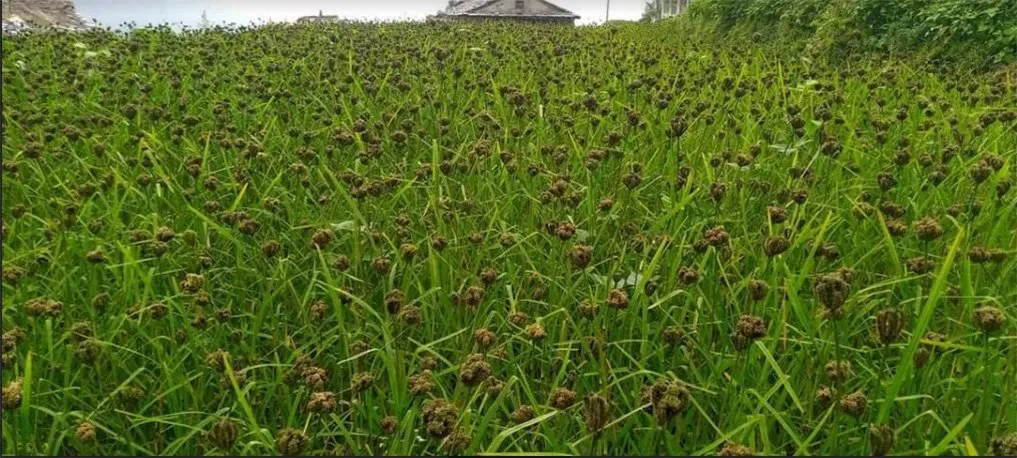
Climate change and rising cultivation costs are forcing many farmers to rethink traditional farming practices. In Karnataka’s Chitradurga district, 72-year-old farmer K. Chikkana has shown how scientific farming can improve both productivity and income. After years of conventional cultivation, he adopted an improved finger millet variety along with better crop management practices recommended by scientists from the Indian Council of Agricultural Research and the ICAR-Indian Institute of Millets Research.
The results were significant. Higher yields, improved grain quality and better market returns turned his farm into a model for climate-resilient millet cultivation. In May 2026, ICAR recognised his contribution by honouring him during a national programme on millet research and innovation.
Like many farmers in the region, Chikkana had been cultivating finger millet using conventional methods for decades.
He later joined the Kusumagiri Farmers Producer Company and began working with scientists who introduced him to the improved finger millet variety HR-13, along with better seed treatment, nutrient management and scientific crop management practices.
Researchers say combining improved varieties with better agronomy often delivers larger benefits than adopting either one alone.
Better Seed, Better Harvest
The improved variety showed stronger field performance under rainfed conditions.
According to ICAR, the crop produced higher yields and better-quality grain while remaining suitable for dryland farming, where rainfall is often uncertain. This helped improve both productivity and farm income.
Scientists continue to develop millet varieties that can withstand drought and changing climatic conditions.
Instead of working alone, Chikkana accessed improved seeds and technical support through his Farmer Producer Organisation.
The FPO connected farmers with research institutions, organised demonstrations and helped spread improved production practices within the community.
Agricultural experts increasingly see FPOs as an effective bridge between research laboratories and farmers’ fields.
ICAR honoured Chikkana not only for achieving higher yields but also for demonstrating that scientific millet cultivation can improve livelihoods in dryland regions.
His success has encouraged neighbouring farmers to adopt improved millet technologies and participate in training programmes organised by agricultural institutions.
What India Can Learn
This story highlights that increasing farm income does not always require switching to a new crop. Sometimes the biggest gains come from better varieties, stronger farmer institutions and scientific crop management.
With the government promoting millets through programmes such as the National Food Security Mission and several state initiatives, more farmers could benefit if improved varieties are delivered through FPOs and backed by regular field support.
Dryland states including Karnataka, Telangana, Maharashtra, Rajasthan and Madhya Pradesh could replicate this approach to improve millet productivity while making farming more resilient to climate change.
K. Chikkana’s journey demonstrates that even experienced farmers can increase productivity by embracing research-backed innovations.
His success is not about adopting expensive machinery or high-cost technology. It is about combining improved seeds, scientific advice and collective action through an FPO. As India works to strengthen climate-resilient agriculture, stories like his show that the future of farming may begin with improving the crops farmers already know best.
Also Read: Punarnava Jal – The world’s first organic fertilizer! Know how it is beneficial for farmers?
Contact us – If farmers want to share any valuable information or experiences related to farming, they can connect with us via phone or whatsapp at 9599273766 or you can write to us at “kisanofindia.mail@gmail.com”. Through Kisan of India, we will convey your message to the people, because we believe that if the farmers are advanced then the country is happy.
You can connect with Kisan of India on Facebook, Twitter, and Whatsapp and Subscribe to our YouTube channel.