


Jute Leaves Became a New Business, Can Farmers Earn More From Every Part of the Crop?

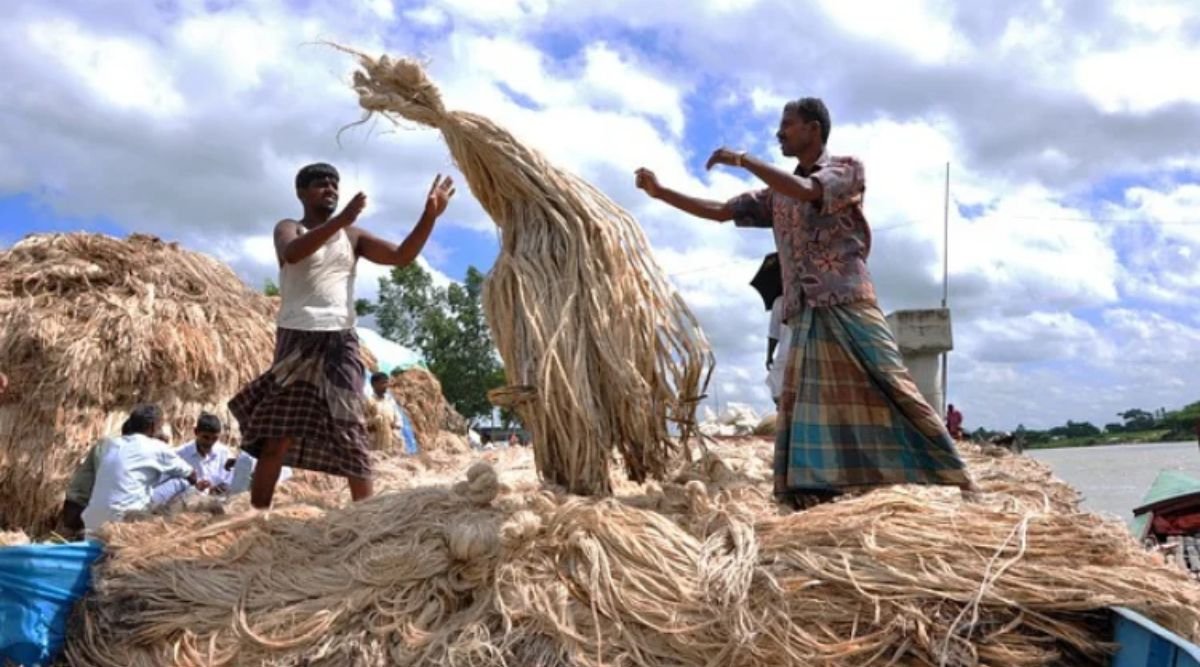
Jute is known mainly for its fibre, but farmers grow much more biomass along with the crop. ICAR estimates that jute cultivation can generate around four to five tonnes of green leafy biomass per hectare. Much of it has remained underused. A new technology is now creating a market for these leaves.
ICAR-National Institute of Natural Fibre Engineering and Technology, Kolkata, developed a product called Amata Moroheiya Infusion from selected jute leaves. The leaves are collected, dried, powdered, flavoured and packed into tea bags or sachets. The product turns an overlooked part of the crop into a marketable food product.
The technology received an Indian patent in July 2026. It has also received ICAR product certification and FSSAI registration. Three companies have taken commercial licences for the technology, showing that the product has moved beyond laboratory research into commercial production.
For farmers, the most important part is the new market for the leaves. ICAR says farmers can sell collected jute leaves through Farmer Producer Companies for around ₹350 to ₹400 per kilogram.
How did the idea create value from jute leaves?
Jute farmers traditionally focus on the fibre because it is the main commercial product. The leaves can be removed during cultivation and may have little direct market value. ICAR-NINFET looked at their nutritional properties and developed a process for using them in a beverage.
The institute found that jute leaves contain carotenoids, dietary fibre, vitamins and minerals. Researchers developed a standardised method for collecting, handling, drying and processing the leaves. Natural flavouring ingredients such as cardamom, ginger and cinnamon are used in the final product.
The technology has also been evaluated for antioxidant activity using scientific measures including DPPH, total phenolic content and ferric reducing antioxidant power. The product is marketed as a herbal beverage rather than simply as dried agricultural biomass.
This distinction matters for farmers. Selling raw leaves creates one type of market. Supplying a standardised raw material to a processor creates another. For the system to work, farmers need to collect suitable leaves at the right stage and handle them properly.
ICAR has conducted 10 rural training programmes on leaf collection, handling and utilisation. More than 1,000 farmers have been reached through awareness programmes. Farmer Producer Companies can help collect leaves from multiple farms and supply them to processors.
Can farmers earn more from the same crop?
The jute leaf model gives farmers an additional income stream without requiring them to grow another crop. The fibre remains the main product, while the leaves can provide a separate source of revenue when there is a functioning buyer and collection system.
ICAR reports that farmers can currently receive around ₹350–400 per kilogram for leaves through FPCs. This does not mean every jute farmer will automatically earn this amount. Income depends on leaf availability, collection costs, quality, transport, buyer arrangements and the operation of the local FPC.
The model also creates work beyond the farm. Leaves need to be collected, handled, transported and processed before reaching consumers. This can create opportunities for rural groups and small enterprises involved in aggregation and processing.
The commercial scale is already significant. One licensee, M/s Divulge, has established a production unit with an installed capacity of about five lakh sachets every month. This gives the technology a potential market for regular supplies of processed jute leaves.
The development also shows why processing facilities matter for farmers. A new agricultural product cannot create income at farm level unless there is a reliable chain connecting growers with processors and consumers.
What can other farmers learn from the model?
The biggest lesson is that farmers do not always need a new crop to create another income source. Sometimes value can come from a part of an existing crop that was previously ignored.
But this requires a buyer and a clear collection system. Farmers should not collect large quantities of jute leaves without first checking whether a processor, FPC or other buyer is available. Perishable biomass can lose quality if it is stored or transported under unsuitable conditions.
Farmer Producer Companies can play an important role because they can aggregate leaves from several growers. This gives processors a more consistent supply and can reduce the difficulty of collecting small quantities from individual farms.
The model also shows how agricultural research can move from a laboratory to a rural enterprise. ICAR developed the processing technology, secured intellectual property protection, obtained certification, transferred the technology to companies and helped create awareness among farmers.
For jute farmers, the opportunity is not about replacing fibre production. It is about getting more value from the crop already being grown. If reliable markets for the leaves expand, farmers could earn from both the traditional fibre and an additional leaf-based value chain.
The Amata Moroheiya story shows that agricultural value addition does not always begin with expensive new machinery or a completely new crop. It can begin by asking a simple question: what part of the crop is being left unused, and can it become useful to someone else?
Also Read: Punarnava Jal – The world’s first organic fertilizer! Know how it is beneficial for farmers?
Contact us – If farmers want to share any valuable information or experiences related to farming, they can connect with us via phone or whatsapp at 9599273766 or you can write to us at “kisanofindia.mail@gmail.com”. Through Kisan of India, we will convey your message to the people, because we believe that if the farmers are advanced then the country is happy.
You can connect with Kisan of India on Facebook, Twitter, and Whatsapp and Subscribe to our YouTube channel.