


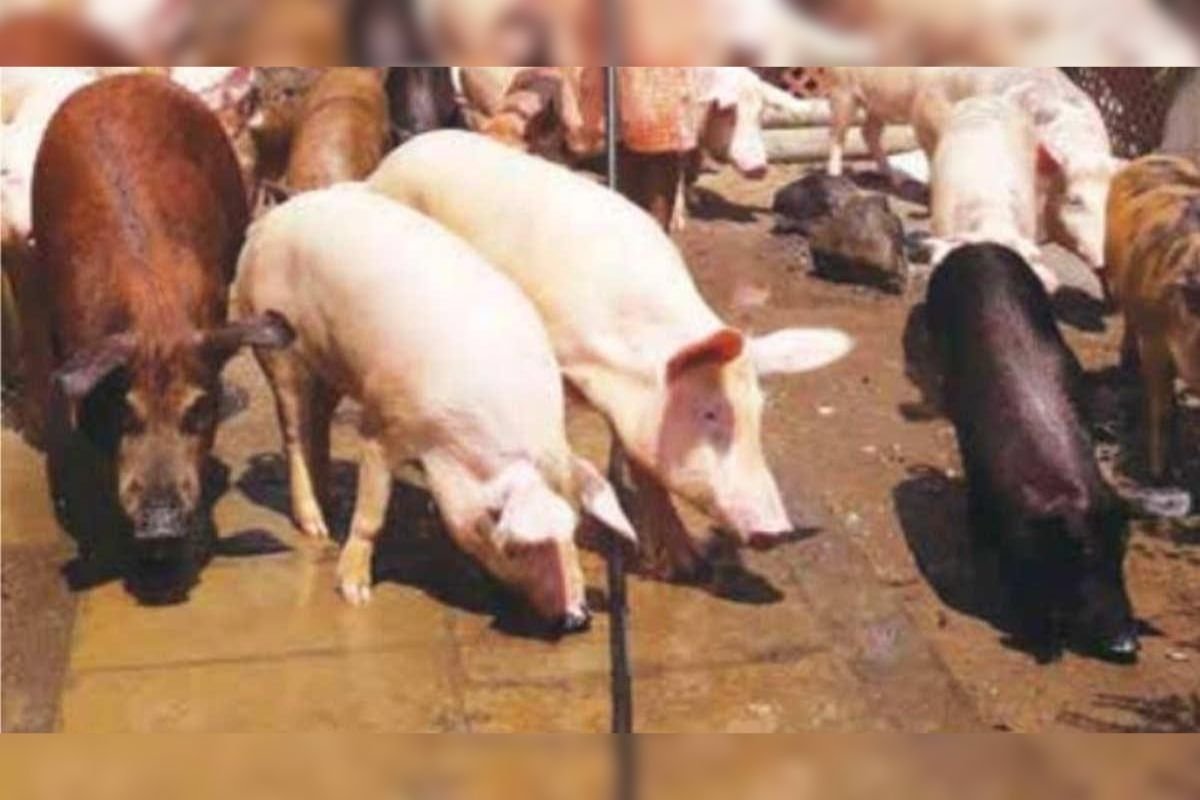
Pig farming is gaining attention in parts of northeast India, where local demand and suitable conditions make it a useful livelihood option. Recent ICAR training programmes in Nagaland and Manipur are focusing on scientific pig production, showing how better housing, feeding, breeding and disease management can help farmers improve returns.
From October 12 to 14, ICAR-Indian Veterinary Research Institute and KVK Phek trained farmers in scientific piggery management under the National Programme for Development of North Eastern Region. The programme focused on improving livestock productivity, increasing farm income and strengthening rural livelihoods through practical knowledge.
In Manipur, ICAR-National Research Centre on Pig organised another two-day training programme at Imphal on October 8 and 9. The training was designed for farmers and covered scientific pig farming practices. Such programmes are important because small management gaps can reduce growth, increase disease risk and cut profits.
Why Scientific Management Matters
Farmers often calculate pig farming costs mainly through the price of piglets and feed. Yet housing, breeding, sanitation, vaccination, disease control and mortality also affect the final return. Scientific management helps farmers identify these costs early and build a production system around healthier animals and predictable growth.
Choosing suitable breeding animals is the first step. Farmers should select healthy pigs with good growth, sound body structure and desirable reproductive traits. Breeding animals should also come from reliable sources with known health status. Keeping basic records of births, breeding and growth can help farmers make better decisions.
Feed is another major cost in pig production. Animals need balanced nutrition according to their age and production stage. Piglets, growing pigs, breeding females and boars do not have identical requirements. Farmers can reduce unnecessary feed expenditure by matching rations to growth needs and avoiding prolonged underfeeding.
Clean housing can directly affect animal health. Pig pens need adequate space, drainage, ventilation and regular removal of waste. Wet and dirty floors can increase disease risks, while poor ventilation can affect respiratory health. Separate areas for sick animals can also help reduce the spread of infection.
Disease Prevention Protects Income
Preventive healthcare is cheaper than dealing with repeated illness across a herd. Farmers should follow veterinary advice on vaccination, deworming, parasite control and treatment. New animals should be monitored before joining the existing herd. Early detection of fever, poor appetite, diarrhoea or breathing problems can prevent larger losses.
Water quality also deserves attention. Pigs require regular access to clean drinking water, particularly during warm weather. Contaminated water can contribute to health problems and lower performance. Farmers should clean drinkers frequently and ensure that water sources are protected from manure, stagnant water and other sources of contamination.
Pig farming can also fit into a diversified farm model. Crop residues and locally available feed resources may be used where nutritionally appropriate, while manure can be composted and used as an organic nutrient source. Such links can reduce waste and create value when hygiene and feed safety are maintained.
Government and research institutions are also expanding support for livestock farmers. Recent ICAR programmes have focused on scientific pig production, while the livestock sector has wider support through training, veterinary services, credit and entrepreneurship schemes. Farmers should check with KVKs and animal husbandry departments for locally available assistance.
Before starting a pig unit, farmers should assess local pork demand, feed availability, water supply, veterinary access and the cost of suitable housing. Starting with a manageable herd can help farmers learn daily management before expanding. A simple record of expenses, mortality, growth and sales can show profitability.
The recent ICAR programmes in the Northeast underline a simple point: pig farming is not only about keeping more animals. Better management can determine whether those animals grow efficiently and survive to market. For small farmers, scientific practices, local training and cost control can make piggery a reliable income source.
Also Read: Punarnava Jal – The world’s first organic fertilizer! Know how it is beneficial for farmers?
Contact us – If farmers want to share any valuable information or experiences related to farming, they can connect with us via phone or whatsapp at 9599273766 or you can write to us at “kisanofindia.mail@gmail.com”. Through Kisan of India, we will convey your message to the people, because we believe that if the farmers are advanced then the country is happy.
You can connect with Kisan of India on Facebook, Twitter, and Whatsapp and Subscribe to our YouTube channel.