



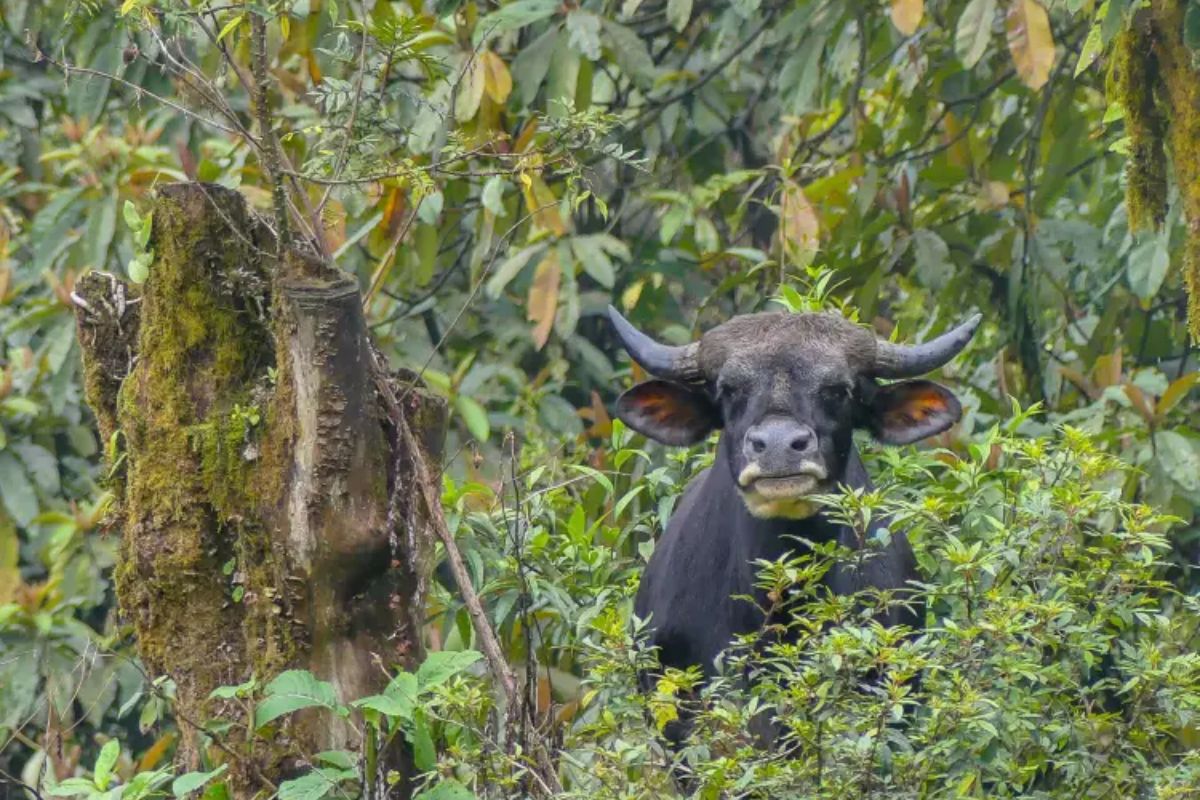
In the hills of Arunachal Pradesh, Nagaland, Mizoram, and parts of Manipur, mithun is much more than livestock. The animal represents wealth, social status, tradition, and economic security for thousands of tribal families. Unlike dairy cattle commonly seen across the rest of India, mithun are primarily raised for meat, breeding, and cultural purposes. In many villages, ownership of mithun remains a symbol of prosperity. Families often measure their assets not by land size but by the number of mithun they possess.
Mithun thrives in the dense forests and rugged hills of the Northeast where conventional livestock farming is often difficult. The animals spend most of their lives grazing freely in forested areas, feeding on bamboo shoots, shrubs, grasses, and natural vegetation. Farmers do not need expensive feed or intensive housing systems.
This makes mithun particularly valuable in remote areas where commercial livestock farming remains costly. Their ability to survive in difficult terrain has helped tribal communities maintain livestock-based livelihoods for generations.
For many households, mithun functions as a living savings account. When families face major expenses such as children’s education, medical treatment, house construction, or marriage ceremonies, they often sell one or two animals to generate income. In some regions, a healthy adult mithun can fetch a substantial price in local markets.
This financial flexibility provides rural families with a level of economic security that few other assets can offer in remote mountain areas where banking services remain limited.
Demand for Mithun Meat Remains Strong Across the Region
Mithun meat enjoys strong demand throughout much of Northeast India. It is widely consumed during festivals, community gatherings, weddings, and traditional celebrations. Because supply remains limited while demand stays consistent, farmers often receive attractive prices for their animals.
Local traders frequently travel to villages looking for quality animals before major festive seasons. This stable market has encouraged many tribal families to continue raising mithun even as other traditional agricultural activities face challenges.
The future of mithun farming depends heavily on healthy forest ecosystems. Since the animals rely on natural grazing, shrinking forest areas directly affect livestock productivity. In some regions, road construction, settlement expansion, and land-use changes have reduced traditional grazing grounds.
Farmers increasingly discuss the need to balance development with forest conservation. Many tribal communities have long protected forests not only for ecological reasons but also because their livestock economy depends upon them.
A growing number of young entrepreneurs in the Northeast are exploring commercial opportunities linked to mithun farming. Better roads, improved market access, and rising demand for indigenous meat products have increased interest in the sector. Some farmers are investing in breeding programmes while others focus on organized marketing. Livestock officials in the region are also working to improve animal health services and breeding support. These efforts are helping transform mithun farming from a traditional practice into a more structured rural enterprise.
Climate Resilience Gives Mithun an Advantage
Many livestock farmers across India are struggling with rising temperatures and changing weather patterns. Mithun, however, remains naturally adapted to the climatic conditions of the Northeast. The species evolved in humid mountain environments and can withstand conditions that challenge several commercial breeds.
This resilience is becoming increasingly important as climate uncertainty affects agriculture and livestock production. For tribal communities, maintaining indigenous livestock often proves more practical than adopting systems designed for completely different environments.
The importance of mithun extends beyond economics. The animal plays a central role in community relationships, cultural traditions, and social ceremonies across many tribal societies. In several communities, mithun are exchanged during marriages, gifted during important events, and used during traditional festivals.
As a result, the livestock system supports not only household incomes but also cultural identity. In the hills of Northeast India, mithun farming continues to strengthen rural livelihoods while preserving one of the country’s most distinctive livestock traditions.
Also Read: Punarnava Jal – The world’s first organic fertilizer! Know how it is beneficial for farmers?
Contact us – If farmers want to share any valuable information or experiences related to farming, they can connect with us via phone or whatsapp at 9599273766 or you can write to us at “kisanofindia.mail@gmail.com”. Through Kisan of India, we will convey your message to the people, because we believe that if the farmers are advanced then the country is happy.
You can connect with Kisan of India on Facebook, Twitter, and Whatsapp and Subscribe to our YouTube channel.