



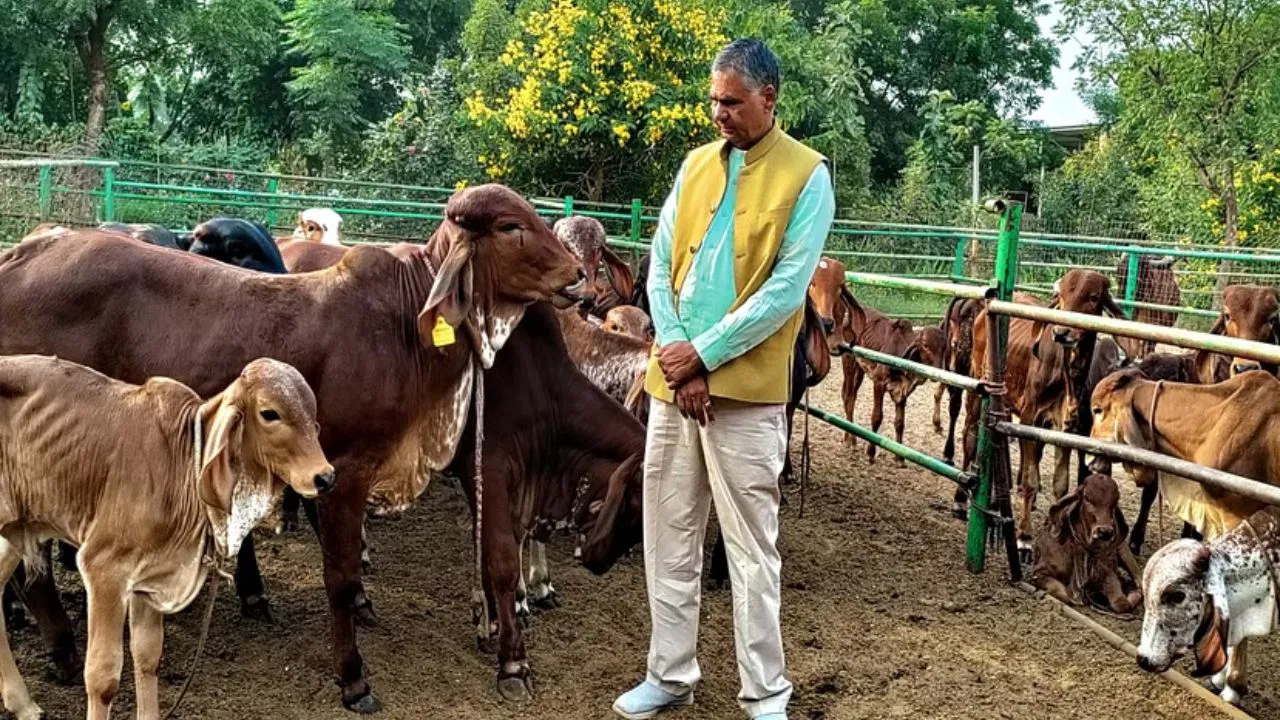
A cow that repeatedly fails to conceive can become a major financial problem for a dairy farmer. The animal continues to need feed and care, but the farmer may not get a calf or the expected milk production cycle. ICAR recently organised a training programme in Goa to help dairy farmers understand repeat breeding and improve reproductive management through nutrition, timely heat detection and better animal care.
Repeat breeding generally refers to a situation where a cow fails to conceive despite repeated breeding attempts. The problem can have several causes. Poor nutrition, missed heat signs, incorrect timing of artificial insemination and reproductive health problems can all affect conception. Farmers may lose money when they repeatedly pay for breeding services without identifying the reason behind the failure.
The ICAR-Krishi Vigyan Kendra in North Goa conducted the training on August 20 in collaboration with the state Department of Animal Husbandry and Veterinary Services. Experts discussed reproductive management along with feeding, fodder production and dairy management. Fifteen participants, including dairy farmers, attended the programme at a dairy cooperative society in North Goa.
Nutrition can affect reproductive performance
A cow needs adequate nutrition not only for milk production but also for reproduction. Poor feeding can affect body condition and reproductive performance. The Goa training highlighted balanced rations, mineral mixtures and suitable nutritional management as important parts of managing repeat breeding problems. Farmers were also advised to improve access to green fodder.
ICAR experts encouraged farmers to consider fodder sources such as hybrid Napier, Azolla, hydroponic fodder and silage, depending on local conditions and farm resources. Feed costs remain one of the biggest expenses in dairy farming. Producing some fodder on the farm or through community resources can help farmers improve feed availability while reducing dependence on purchased feed.
Artificial insemination cannot work properly if farmers fail to identify the right breeding period. Farmers need to observe cows regularly and look for signs of heat. Missing these signs or arranging insemination at the wrong time can reduce the chances of conception. The Goa programme stressed timely heat detection and proper artificial insemination as important parts of reproductive management.
Farmers should maintain simple records for each animal. These can include the date of heat, breeding date, insemination details and any health problems. Records can help farmers and veterinarians understand whether an animal has a recurring reproductive problem. They can also prevent farmers from relying only on memory when managing several animals in the same dairy unit.
Hormonal treatment needs veterinary guidance
The training also discussed nutri-hormonal therapy for repeat breeding cows. Hormonal treatment should not become a routine decision made without professional examination. Different cows may fail to conceive for different reasons. A veterinary professional needs to assess the animal and decide whether hormonal treatment is suitable.
Farmers should first examine basic management issues. Is the animal receiving enough nutrition? Is heat being detected correctly? Was insemination done at the right time? Does the cow have an underlying health problem? Answering these questions can help identify the cause before spending more money on repeated breeding attempts or treatments.
The Goa programme also stressed regular deworming, vaccination, mineral supplementation and hygienic animal management. Healthy animals are more likely to maintain normal production and reproductive functions. Clean housing, suitable feed and regular veterinary care should form part of routine dairy management rather than becoming a response only after a problem appears.
Dairy farmers should also monitor changes in feeding behaviour, body condition and general health. An animal that suddenly eats less or shows other unusual signs may need veterinary attention. Early action can help farmers address health problems before they affect milk production or reproduction.
Fodder can become another farm business
The ICAR programme also discussed fodder production and marketing as possible income opportunities. Farmers who have suitable land may produce fodder for their own animals and, where demand exists, sell surplus fodder to other livestock farmers. The programme highlighted government support schemes for fodder development and dairy infrastructure.
For small dairy farmers, the main lesson is practical. Repeat breeding is not always a single problem with a single solution. Nutrition, breeding timing, animal health and farm management can all affect reproductive performance. Farmers who keep proper records and seek veterinary support early may be able to identify problems before repeated failed breeding attempts increase their costs.
Also Read: Punarnava Jal – The world’s first organic fertilizer! Know how it is beneficial for farmers?
Contact us – If farmers want to share any valuable information or experiences related to farming, they can connect with us via phone or whatsapp at 9599273766 or you can write to us at “kisanofindia.mail@gmail.com”. Through Kisan of India, we will convey your message to the people, because we believe that if the farmers are advanced then the country is happy.
You can connect with Kisan of India on Facebook, Twitter, and Whatsapp and Subscribe to our YouTube channel.