



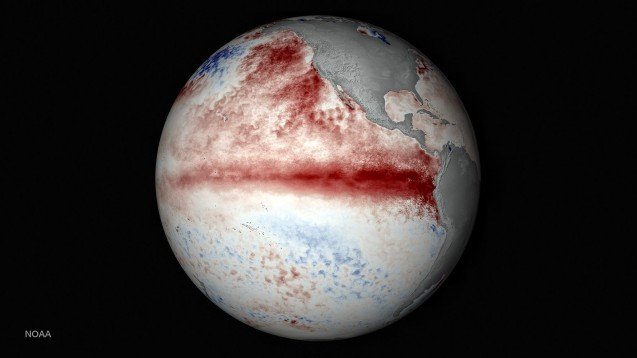
Indian farmers are being encouraged to prepare for possible weather risks linked to El Niño by considering alternative crops and flexible cropping plans.
The Indian Council of Agricultural Research has recently highlighted a workshop for farmers on alternative crops in the wake of El Niño. The focus is on helping farmers adjust their crop choices when rainfall and temperature patterns create uncertainty.
Farmers often make crop decisions before they know how the full season will unfold. A delayed monsoon, uneven rainfall or extended dry spells can affect germination, irrigation needs and crop yields. A crop that performs well in a normal season may face greater risk when weather conditions change.
Alternative crop planning gives farmers more than one option. Instead of depending entirely on a single crop, farmers can consider crops that require less water, have shorter growing periods or are better suited to local soil and expected weather conditions.
The choice must still depend on the region, soil, irrigation and market access.
El Niño can affect farm decisions
El Niño can influence weather patterns, including rainfall and temperature, though its effects do not remain the same across every part of India. For farmers, the key issue is not simply whether El Niño occurs. The practical question is how changing weather conditions may affect sowing, crop growth and water availability in their area.
ICAR has placed increasing focus on weather-related crop planning. Its media updates also highlighted the need for alternative crops as farmers prepare for possible climate-related risks. Farmers may need to revise crop choices when rainfall is delayed or soil moisture remains low.
Short-duration crops can offer another option
Short-duration crops can help farmers adjust when sowing starts late. A delayed monsoon can reduce the time available for a long-duration crop to complete its growth cycle. In such situations, farmers may need to consider varieties or crops that mature earlier.
Pulses and millets can provide options in some regions, depending on local conditions. But there is no single replacement crop for every farmer. Agricultural universities and Krishi Vigyan Kendras develop district-specific recommendations because soil, rainfall and market conditions differ widely.
Farmers should therefore avoid changing crops based only on a general weather forecast.
Growing only one crop can increase financial risk when weather conditions become difficult. Diversification can spread that risk across different crops with different water and growth requirements.
A farmer may combine cereals with pulses, oilseeds or other suitable crops. Integrated farming can also create income from livestock, horticulture or other activities when crop production faces a difficult season. ICAR has stressed the importance of diversified and integrated farming systems for improving the income security of small and marginal farmers.
The right combination will depend on local resources.
Farmers need local weather information
Climate planning works best when farmers receive information for their own district rather than relying only on national forecasts. Local rainfall, soil moisture and temperature conditions can help farmers decide when to sow and which crop to select.
Farmers can use advisories from Krishi Vigyan Kendras, agricultural universities and state agriculture departments. They should also review the availability of irrigation before selecting a water-intensive crop. A farmer with limited irrigation may face greater risk from a crop that needs regular water during critical growth stages.
Farmers cannot control the weather, but they can change some decisions based on expected conditions.
These include:
- Choosing suitable crops and varieties
- Adjusting sowing dates
- Selecting short-duration crops when sowing is delayed
- Conserving available soil moisture
- Using irrigation carefully
- Diversifying farm activities
These steps cannot remove weather risk. They can help farmers prepare for different conditions.
ICAR’s recent focus on alternative crops shows that climate planning is becoming part of everyday agricultural decision-making rather than a subject limited to research centres.
For farmers, the main lesson is practical.
When the weather outlook changes, the cropping plan may also need to change. The best response is not always to continue with the original crop plan.
In a season marked by climate uncertainty, farmers who have access to local advisories and more than one crop option may be better placed to respond before weather losses become unavoidable.
Also Read: Punarnava Jal – The world’s first organic fertilizer! Know how it is beneficial for farmers?
Contact us – If farmers want to share any valuable information or experiences related to farming, they can connect with us via phone or whatsapp at 9599273766 or you can write to us at “kisanofindia.mail@gmail.com”. Through Kisan of India, we will convey your message to the people, because we believe that if the farmers are advanced then the country is happy.
You can connect with Kisan of India on Facebook, Twitter, and Whatsapp and Subscribe to our YouTube channel.