



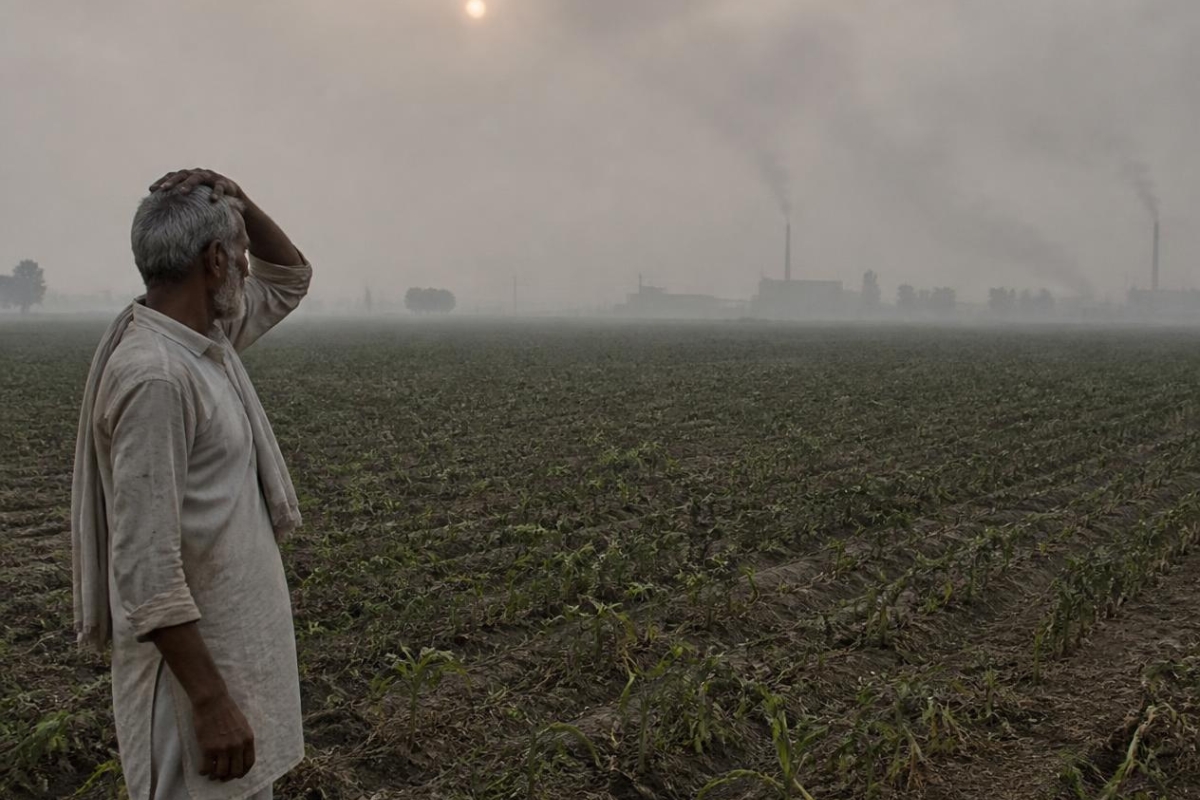
Climate change is affecting agriculture in many ways, but rising temperatures are not the only concern. Scientists are now warning that ground-level ozone pollution is becoming a major threat to crop production. Unlike the protective ozone layer high in the atmosphere, ground-level ozone forms when pollutants from vehicles, industries and power plants react in sunlight. This invisible pollutant damages plant tissues, reduces photosynthesis and lowers crop yields.
A recent international study found that increasing ozone concentrations are already reducing the productivity of major food crops in South Asia, including India. Researchers say the problem is likely to worsen as temperatures rise and industrial emissions continue to increase. The findings highlight the need to treat air pollution as both an environmental and an agricultural issue.
Ground-level ozone enters plants through tiny openings in their leaves during normal gas exchange.
Once inside, it damages plant cells, reduces chlorophyll and slows photosynthesis. Crops may appear healthy from a distance, but scientists say hidden physiological damage can reduce grain filling and final yields. Wheat, rice, soybean and pulses are among the crops most affected by prolonged ozone exposure.
Researchers explain that ozone damage often occurs gradually throughout the growing season. Farmers may blame weather or poor soil conditions without realising that air pollution has also contributed to lower production. This makes ozone one of the least recognised threats to agricultural productivity.
Wheat and Rice Face Higher Risks
India’s major cereal-growing regions frequently experience high ozone levels during critical crop growth stages.
Studies show that wheat is particularly sensitive during grain development, while rice can also suffer significant yield losses under prolonged exposure. As climate change creates hotter conditions, ozone formation is expected to increase, placing additional pressure on food production systems.
Scientists recommend combining cleaner industrial emissions with crop management practices and breeding programmes to reduce future losses. Developing ozone-tolerant crop varieties is becoming an important research priority in several countries.
Although farmers cannot control air pollution directly, they can adopt practices that improve crop resilience.
Balanced nutrient management, adequate irrigation during sensitive growth stages and the use of improved crop varieties help plants tolerate environmental stress better. Agricultural scientists are also evaluating breeding lines that perform well under elevated ozone conditions, offering hope for future adaptation.
Researchers say continued monitoring of ozone levels near agricultural regions will help identify vulnerable areas and support timely advisories for farmers and policymakers. Better coordination between environmental and agricultural agencies will also be essential.
Why This Matters for India
India depends on stable production of wheat, rice and other staple crops to ensure food security for its growing population.
As climate change and air pollution become increasingly linked, protecting crop yields will require action beyond the farm. Reducing industrial and transport emissions, investing in ozone-tolerant crop varieties and strengthening air-quality monitoring in agricultural regions can help safeguard farmer incomes and national food production in the years ahead.
Also Read: Punarnava Jal – The world’s first organic fertilizer! Know how it is beneficial for farmers?
Contact us – If farmers want to share any valuable information or experiences related to farming, they can connect with us via phone or whatsapp at 9599273766 or you can write to us at “kisanofindia.mail@gmail.com”. Through Kisan of India, we will convey your message to the people, because we believe that if the farmers are advanced then the country is happy.
You can connect with Kisan of India on Facebook, Twitter, and Whatsapp and Subscribe to our YouTube channel.