



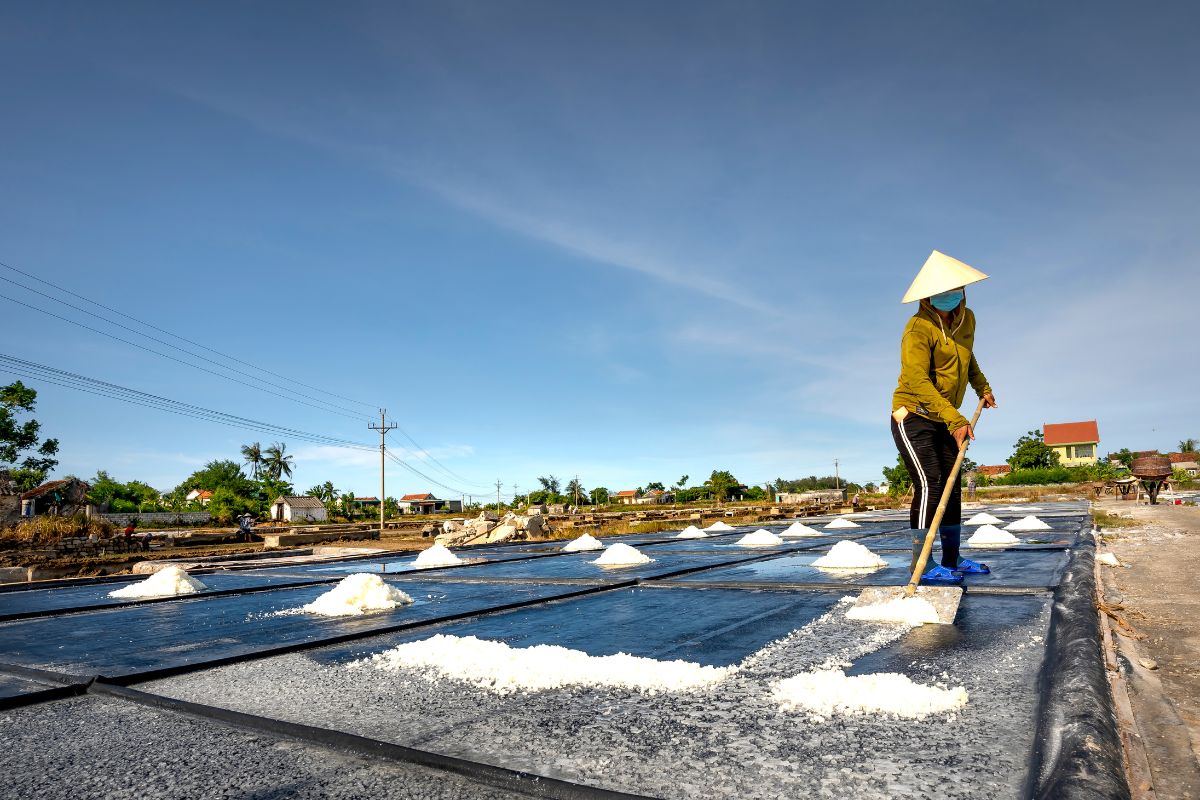
In several coastal villages across India, farmers say the soil no longer behaves the way it once did.
Rice fields that produced crops for generations are turning increasingly saline. Wells taste salty during summer months. Coconut trees weaken. Vegetable cultivation becomes harder each year.
The reason is seawater intrusion.
Climate change, rising sea levels, cyclones, and groundwater over-extraction are pushing saltwater farther inland across coastal regions. Agriculture experts say saline intrusion is becoming one of the biggest hidden threats facing farming communities in states such as West Bengal, Odisha, Gujarat, Tamil Nadu, Kerala, and Andhra Pradesh.
As traditional crops struggle, farmers are slowly shifting toward salt-tolerant agriculture systems.
Rice cultivation is heavily affected by salinity. Even moderate salt concentration damages plant growth and reduces yields sharply.
In the Sundarbans region of West Bengal, repeated cyclones and tidal flooding pushed seawater into agricultural land during recent years. Farmers say many traditional paddy varieties stopped performing after saline water entered fields repeatedly.
Agriculture scientists responded by promoting salt-tolerant rice varieties capable of surviving under brackish conditions. Some local farmers now cultivate climate-resilient paddy strains developed specifically for coastal regions.
Researchers say future coastal agriculture may depend heavily on specialized crop breeding because seawater intrusion is expected to increase further during coming decades.
Farmers Are Switching to New Crops
As salinity rises, many coastal farmers are changing cropping patterns entirely.
In some villages, farmers now grow:
- Saline-tolerant paddy
- Quinoa
- Coconut
- Mangroves
- Casuarina
- Salicornia
- Certain millet varieties
instead of traditional freshwater-dependent crops.
Salicornia, sometimes called a “sea vegetable,” is attracting attention because it naturally grows under highly saline conditions and can be used for edible oil, fodder, and biofuel research.
Agriculture experts say future coastal farming may look completely different from current agricultural systems if sea-level rise accelerates further.
In several coastal regions, farmers are abandoning crop cultivation entirely and shifting toward shrimp farming or brackish-water aquaculture.
Agriculture experts say this transition creates both opportunities and risks.
Shrimp farming can generate high income in some areas, but uncontrolled saline aquaculture may worsen soil degradation and permanently damage freshwater agriculture nearby.
Researchers studying coastal economies say many villages now exist in tension between agriculture, fisheries, and expanding saline ecosystems.
One major shift happening in coastal climate adaptation is renewed attention toward mangrove ecosystems.
For decades, many mangrove forests were cleared for construction, aquaculture, and settlement expansion. Now researchers increasingly view mangroves as natural climate protection systems because they reduce coastal erosion and buffer cyclone impacts.
Some coastal farming programmes now combine:
- Mangrove restoration
- Saline farming
- Integrated fisheries
- Climate-resilient crops
within the same adaptation strategy.
Agriculture experts say future coastal livelihoods may depend heavily on ecological restoration rather than only conventional farming expansion.
Women Farmers Face Growing Challenges
In many coastal villages, women handle large portions of agricultural labour and water collection work. Salinity affects both directly.
Farmers say freshwater sources are shrinking in some coastal belts because wells become brackish during dry periods. This increases household pressure alongside farming losses.
Researchers studying climate migration warn that repeated crop failures and water stress may force more rural families to leave vulnerable coastal regions during coming decades.
Agriculture universities and ICAR institutes are increasing work on salt-tolerant crop breeding programmes.
Scientists are developing:
- Salinity-resistant rice
- Climate-resilient pulses
- Coastal horticulture systems
- Brackish-water farming models
Researchers believe specialized coastal agriculture may become necessary because standard crop systems may not survive rising salinity levels in vulnerable regions.
Some international climate programmes are also studying coastal farming adaptation models from Bangladesh, Vietnam, and other delta regions facing similar threats.
Agriculture experts say seawater intrusion remains under-discussed compared to droughts or heatwaves, even though it may permanently reshape farming across large coastal areas. Unlike temporary floods, salinity can damage soil for years. That means climate change is not only changing weather patterns. In many coastal villages, it is changing the soil itself.
Also Read: Punarnava Jal – The world’s first organic fertilizer! Know how it is beneficial for farmers?
Contact us – If farmers want to share any valuable information or experiences related to farming, they can connect with us via phone or whatsapp at 9599273766 or you can write to us at “kisanofindia.mail@gmail.com”. Through Kisan of India, we will convey your message to the people, because we believe that if the farmers are advanced then the country is happy.
You can connect with Kisan of India on Facebook, Twitter, and Whatsapp and Subscribe to our YouTube channel.