



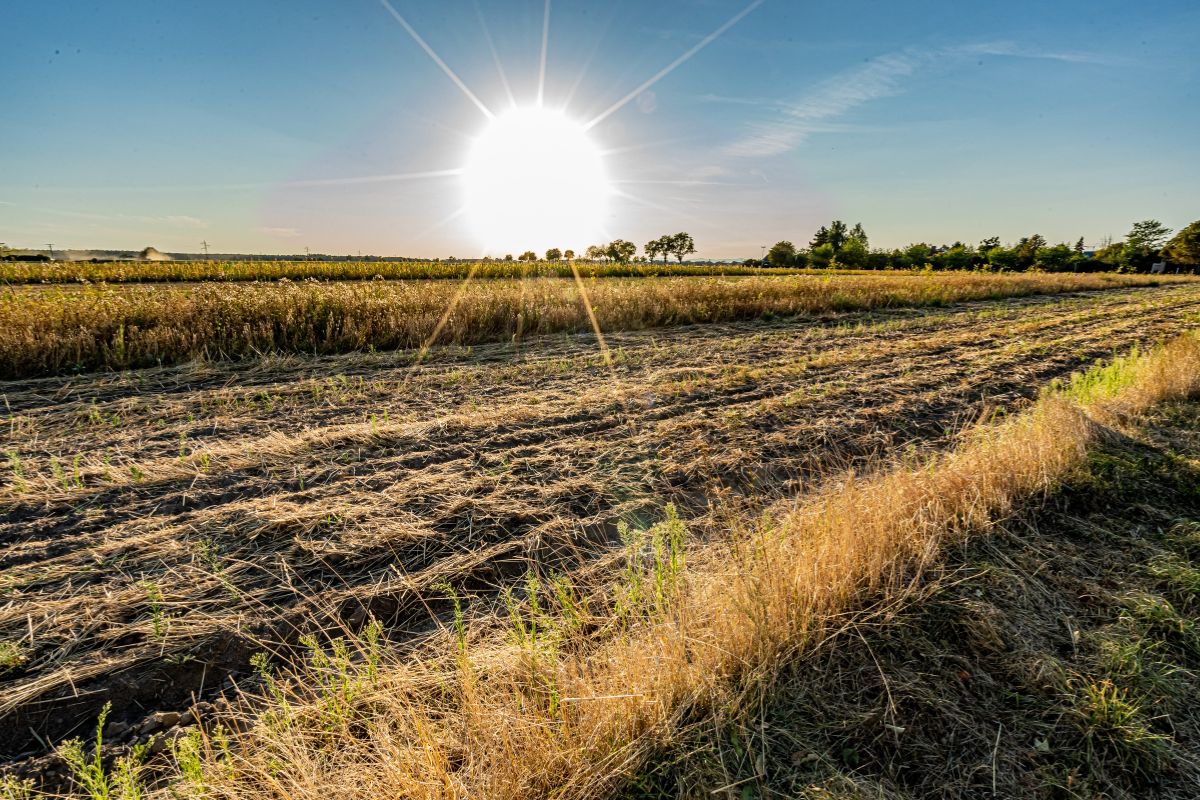
Heatwaves are no longer occasional weather events in India. They are becoming a regular part of the farming calendar. Across several agricultural states, temperatures are rising earlier in the year and remaining high for longer periods. Farmers growing wheat, vegetables, fruits, pulses, and fodder crops say summers now feel harsher than they did even a decade ago.
Agriculture experts warn that heatwaves are becoming one of the biggest long-term threats to Indian farming because extreme temperatures affect almost every part of agriculture. Crops dry faster, soil loses moisture quickly, irrigation demand rises, livestock suffer stress, and labour productivity falls sharply during intense heat periods.
This year again, the India Meteorological Department warned of above-normal temperatures and more heatwave days across large parts of the country during summer months.
Researchers say Indian agriculture may need major adaptation changes because heat stress is no longer a temporary problem.
Wheat has become one of the clearest examples of climate-related heat damage in Indian agriculture. During recent years, early heatwaves arriving in March affected wheat grain formation across several northern states. Higher temperatures during grain-filling stages reduced grain size and lowered yields in parts of Punjab, Haryana, and Uttar Pradesh.
Agriculture scientists say wheat is highly sensitive to sudden temperature spikes during final growth stages. Even a few days of extreme heat can affect productivity sharply.
The government responded by increasing work on heat-tolerant wheat varieties through ICAR research programmes. Researchers are now testing climate-resilient seeds capable of surviving higher temperatures without severe yield decline.
Experts believe future wheat farming may depend heavily on climate adaptation because temperatures are expected to keep rising across South Asia.
Vegetable Farmers Are Facing Heavy Losses
Heatwaves are also creating major problems for vegetable farmers. Tomato, chilli, cucumber, leafy vegetables, and other horticulture crops often suffer from flower drop, fruit damage, and reduced shelf life during extreme temperatures.
Farmers say vegetables now require more frequent irrigation during summer periods because soil dries much faster than before. Agriculture experts warn that rising temperatures may increase production costs sharply as farmers spend more on irrigation, shading systems, and crop protection.
In some regions, growers are shifting planting schedules to avoid peak summer heat entirely. Others are using shade nets, mulching, and drip irrigation systems to reduce crop stress.
Researchers believe controlled-environment farming may expand rapidly in future because climate instability is making open-field horticulture more difficult in several areas.
Heatwaves do not affect crops alone. Dairy farming is facing serious stress as well.
High temperatures reduce feed intake among cattle and increase water demand sharply. Milk production often falls during extreme heat periods because livestock struggle to regulate body temperature. Indigenous cattle breeds generally tolerate heat better, but many commercial dairy systems depend heavily on crossbred animals more sensitive to rising temperatures.
Agriculture experts say dairy farmers are now investing more in:
- Cooling systems
- Shade structures
- Water sprinklers
- Ventilation
- Heat-resistant fodder crops
Researchers studying livestock and climate change warn that rising temperatures may reshape future dairy systems across India.
Water Demand Is Rising Quickly
Heatwaves are increasing pressure on India’s groundwater systems. Farmers now irrigate crops more frequently because evaporation rates rise sharply during extreme heat periods. Agriculture experts say this creates a dangerous cycle where higher temperatures increase water extraction in regions already facing groundwater depletion.
States such as Punjab, Haryana, Rajasthan, Maharashtra, and Karnataka are already experiencing severe groundwater stress. Heatwaves are making irrigation management even more difficult.
Researchers say future farming systems may require:
- Precision irrigation
- Soil moisture monitoring
- Climate-resilient crops
- Water-efficient farming systems
without which agriculture may struggle under repeated summer extremes.
Extreme heat is also affecting rural labour systems. Farm workers often continue working outdoors under temperatures crossing 45 degrees Celsius during harvesting, weeding, and irrigation activities.
Agriculture experts say labour productivity drops sharply during intense heat periods because workers require more breaks and face greater health risks. In some regions, farmers now begin fieldwork before sunrise to avoid afternoon heat exposure.
Researchers believe rising temperatures may eventually reshape agricultural work schedules across India.
Climate Adaptation Is Becoming Urgent
The growing frequency of heatwaves is forcing agriculture scientists to rethink future farming systems. Researchers are working on:
- Heat-tolerant seeds
- Climate-smart irrigation
- AI weather forecasting
- Soil moisture conservation
- Agroforestry systems
- Crop diversification
Experts say climate adaptation is no longer optional because extreme heat is already affecting food production, farmer income, and water availability across several states.
Some farmers are also shifting toward millets and dryland crops because they tolerate heat stress better than water-intensive cereals.
Agriculture experts believe India’s farming future will depend heavily on how quickly farmers adapt to rising temperatures. Heatwaves are becoming longer, more frequent, and more intense under climate change.
The challenge is enormous because Indian agriculture still supports millions of livelihoods and depends heavily on outdoor labour and monsoon systems.
The heat is no longer only a summer inconvenience for farmers.
It is becoming one of the central forces reshaping Indian agriculture itself.
Also Read: Punarnava Jal – The world’s first organic fertilizer! Know how it is beneficial for farmers?
Contact us – If farmers want to share any valuable information or experiences related to farming, they can connect with us via phone or whatsapp at 9599273766 or you can write to us at “kisanofindia.mail@gmail.com”. Through Kisan of India, we will convey your message to the people, because we believe that if the farmers are advanced then the country is happy.
You can connect with Kisan of India on Facebook, Twitter, and Whatsapp and Subscribe to our YouTube channel.