



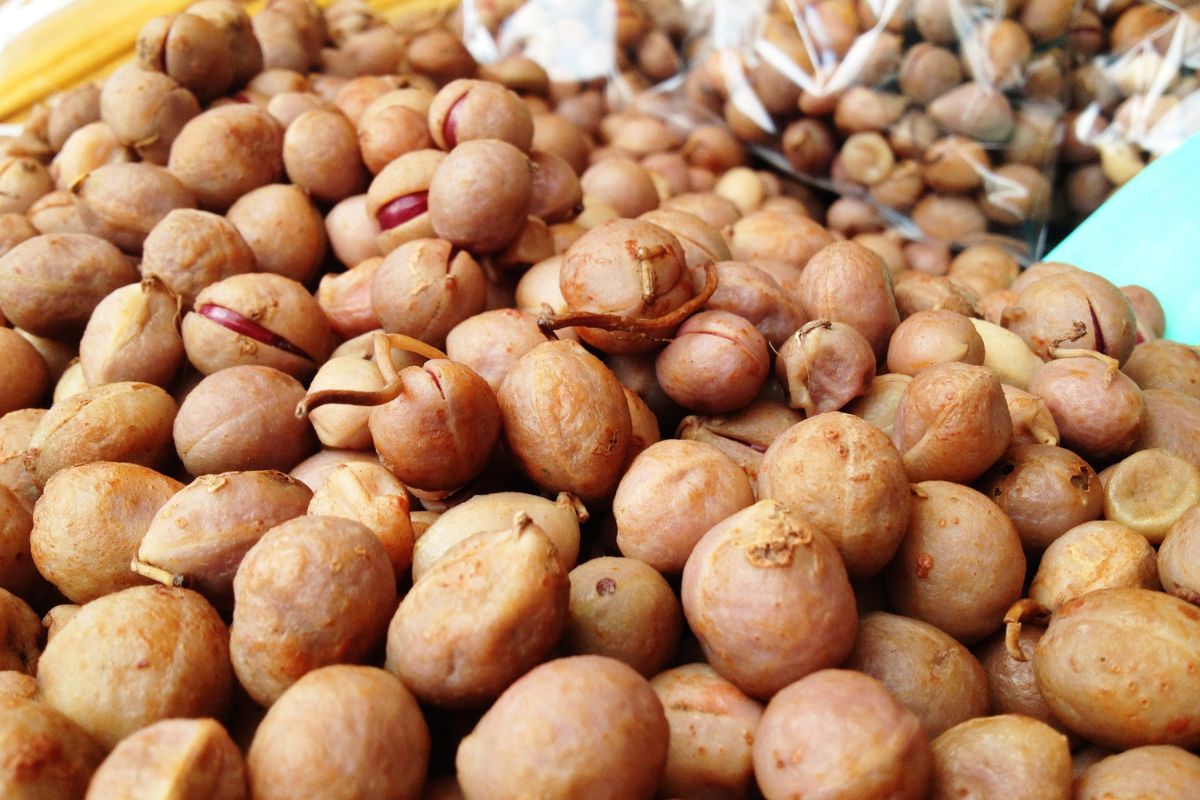
Across several African countries, farmers are rediscovering a traditional legume that survived on the margins of agriculture for decades. Bambara groundnut, one of the continent’s oldest indigenous crops, is attracting growing interest from researchers, policymakers, and farming communities.
For many years, the crop received little investment compared with maize, rice, and other staple crops.
Yet changing weather patterns and increasing concerns about food security are forcing agriculture to look beyond conventional options. Farmers need crops capable of producing reliable harvests under difficult conditions.
Bambara groundnut is emerging as one of those options.
Its ability to grow in poor soils and withstand periods of drought is making it increasingly valuable in regions facing climate stress.
Thrives Where Other Crops Struggle
One of Bambara groundnut’s biggest strengths is its adaptability. The crop can produce harvests in areas with limited rainfall where many conventional crops perform poorly. Farmers appreciate its ability to survive harsh growing conditions without requiring intensive management.
This resilience is becoming increasingly important.
Climate variability continues to affect agricultural production across many parts of Africa. Drought-tolerant crops provide an important safeguard against seasonal uncertainty.
Researchers frequently identify Bambara groundnut as a strong candidate for climate-smart agriculture. Its environmental adaptability stands out.
The crop is valued not only for its resilience but also for its nutritional quality. Bambara groundnut contains protein, carbohydrates, and essential nutrients that contribute to household food security. In many rural communities, it serves as both a food crop and a source of dietary diversity.
Nutrition experts increasingly emphasise the importance of promoting underutilised crops with strong nutritional profiles.
The crop aligns closely with these objectives.
Its contribution extends beyond agricultural production alone. Food security and nutrition both benefit.
Unlike many major commodities, Bambara groundnut has survived largely because of smallholder farmers. Generations of producers maintained cultivation despite limited commercial support. Their efforts preserved valuable genetic resources that are now attracting scientific attention.
Researchers are working to improve production practices and identify varieties suited to different environments. The goal is to increase productivity while maintaining the crop’s resilience. Traditional knowledge remains central to these efforts. Farmers have been its custodians for decades.
Market Opportunities Are Expanding
Growing awareness is creating new commercial possibilities.
Food processors, retailers, and specialty food businesses are exploring products based on Bambara groundnut. Flour, snacks, and packaged foods are among the emerging market segments.
Commercialisation remains at an early stage. Yet demand is gradually increasing as consumers seek nutritious and climate-resilient food sources. Market development could provide additional incentives for farmers to expand cultivation.
The crop’s economic potential is becoming clearer. Interest continues to grow.
Agricultural experts frequently encourage farmers to diversify production systems. Dependence on a limited number of crops increases vulnerability to droughts, pests, and market fluctuations. Alternative species help spread risk across multiple enterprises.
Bambara groundnut contributes effectively to this strategy. Farmers can integrate it into existing systems without major changes to production practices. The crop strengthens resilience while creating additional food and income opportunities.
Diversification remains one of agriculture’s strongest tools.
The crop supports that goal.
A Forgotten Crop Finds New Importance
The renewed interest in Bambara groundnut reflects a broader shift occurring across global agriculture.
Researchers and farmers are increasingly recognising the value of indigenous crops that evolved under difficult environmental conditions. Many of these species possess characteristics that modern agriculture now needs.
For decades, Bambara groundnut remained largely overlooked.
Today, it is being viewed as a potential solution to challenges involving climate resilience, food security, and sustainable production.
Its growing importance demonstrates an important lesson.
Sometimes the crops best prepared for the future are the ones that have been quietly surviving all along.
Also Read: Punarnava Jal – The world’s first organic fertilizer! Know how it is beneficial for farmers?
Contact us – If farmers want to share any valuable information or experiences related to farming, they can connect with us via phone or whatsapp at 9599273766 or you can write to us at “kisanofindia.mail@gmail.com”. Through Kisan of India, we will convey your message to the people, because we believe that if the farmers are advanced then the country is happy.
You can connect with Kisan of India on Facebook, Twitter, and Whatsapp and Subscribe to our YouTube channel.