



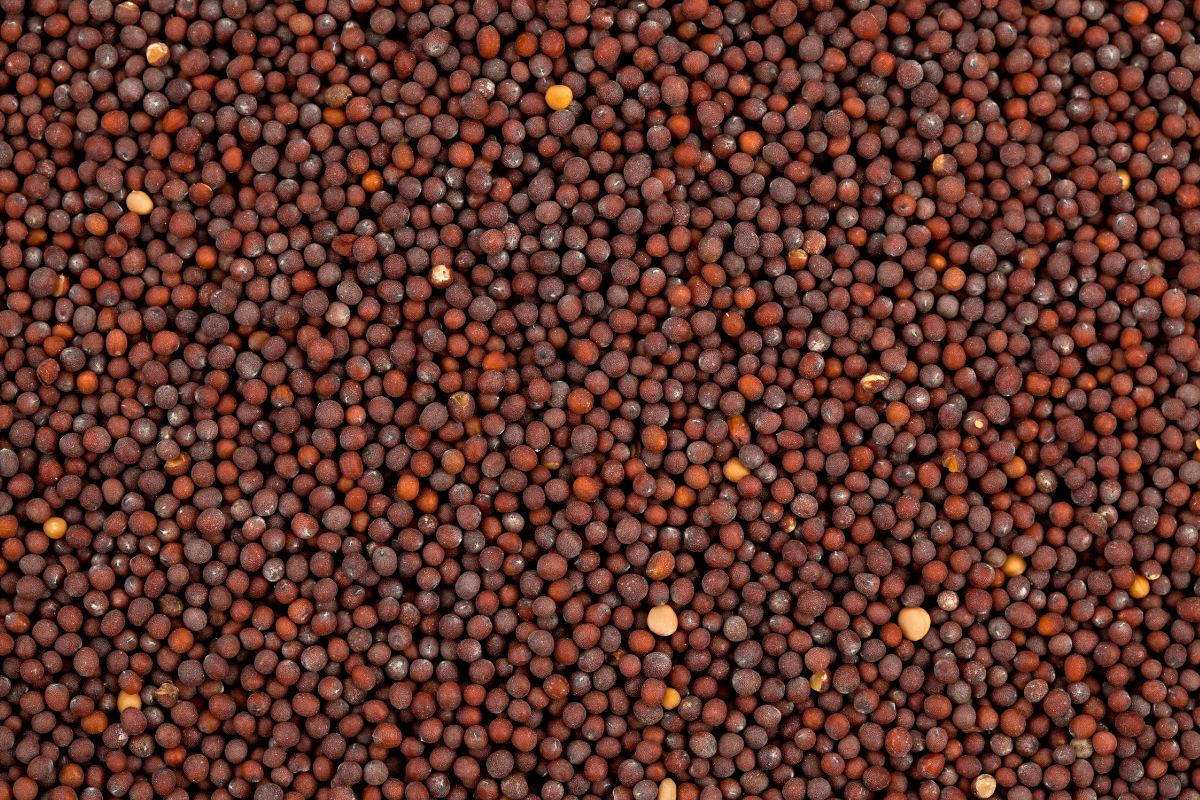
Indian mustard is an important rabi oilseed crop, and access to improved seed can influence farm productivity. In September 2026, ICAR-Indian Institute of Rapeseed-Mustard Research signed an agreement to commercialise Indian mustard variety BPM-1825 for seed production and wider distribution.
The agreement was signed with Delta Agrigenetics Pvt Ltd, Telangana, under a non-exclusive licensing arrangement. ICAR-IIRMR said the partnership is intended to expand access to improved, high-yielding mustard seed while maintaining quality standards during production and distribution.
For farmers, commercialisation does not mean that every farmer should immediately replace an existing mustard variety. The suitability of a variety depends on its recommended growing area, soil, irrigation, disease pressure, sowing time and local performance.
Why Does Seed Access Matter?
A variety developed by agricultural researchers has limited impact if farmers cannot obtain quality seed in sufficient quantities. Commercial seed production can help move promising varieties from research institutions into farmers’ fields at a larger scale.
ICAR-IIRMR described BPM-1825 as an improved high-yielding Indian mustard variety. The September agreement is part of a wider effort to use public-private partnerships to increase production and distribution of improved rapeseed-mustard technologies.
The agreement also places responsibility on the private partner to undertake ethical seed production, quality assurance and responsible distribution. For farmers, reliable seed quality is important because poor-quality or incorrectly labelled seed can undermine the expected performance of a variety.
Farmers should therefore purchase seed through authorised channels and check the variety name, seed class, lot information, germination details and other information printed on the package. They should avoid buying unidentified seed simply because a seller claims it produces higher yields.
What Should Farmers Know About BPM-1825?
BPM-1825 belongs to Indian mustard, one of the major oilseed crops cultivated during India’s rabi season. Its commercialisation is significant because improved varieties can contribute to efforts to increase domestic oilseed production and reduce dependence on imported edible oils.
But a high-yielding variety does not guarantee a particular harvest from every farm. Yield depends on sowing date, plant population, soil fertility, irrigation, temperature, disease and pest management, as well as the quality of the seed used.
Farmers should also check whether BPM-1825 is officially recommended for their specific state or agro-climatic zone before purchasing large quantities. A variety suitable for one production region may not perform similarly under another region’s weather and soil conditions.
The safest approach is to obtain recommendations from the local agriculture department, Krishi Vigyan Kendra or agricultural university. Farmers can also ask whether demonstrations or seed trials involving BPM-1825 have been conducted in their area.
Why Are Mustard Varieties Important Now?
Mustard is an important source of edible oil in India, making improvements in productivity relevant not only to farmers but also to the country’s oilseed economy. The government has been promoting oilseed production through the National Mission on Edible Oils–Oilseeds.
Better varieties can contribute to this effort when combined with timely sowing, balanced nutrient management, suitable irrigation and integrated pest management. A new seed variety alone cannot overcome poor crop management or unsuitable growing conditions.
Climate is another consideration for mustard farmers. Rabi crops can be affected by unusual temperature patterns, particularly when temperatures rise during reproductive and grain-filling stages. Farmers should select varieties and sowing windows according to local recommendations.
ICAR has identified several improved oilseed varieties and continues research aimed at increasing productivity and resilience. Its rapeseed-mustard research programme focuses on improving varieties and production technologies suited to different growing conditions.
How Should Farmers Decide?
Farmers should first compare the new variety with the mustard variety they already grow. Important factors include seed cost, maturity period, yield performance in the local area, disease response, irrigation requirement and market acceptance.
A small trial plot can provide useful local information. Farmers can grow BPM-1825 alongside a familiar recommended variety and compare crop establishment, flowering, maturity, disease incidence and final yield under similar field conditions.
Farmers should also avoid increasing seed quantity simply because a variety is described as high-yielding. Recommended seed rates and spacing should come from the official technical guidance for the variety and local production system.
Keeping records can make the comparison more useful. Farmers can note seed cost, fertiliser and irrigation expenses, labour requirements, pest-control costs and final yield. The better variety is not necessarily the one with the highest yield if its cultivation costs are substantially higher.
Can BPM-1825 Help Mustard Farmers?
The commercialisation of BPM-1825 could make an improved Indian mustard variety more widely available, but its usefulness will depend on seed supply and performance in farmers’ fields. The September 2026 agreement is an important step in moving the variety towards wider distribution.
Farmers should wait for official local recommendations rather than choosing the variety only because of its commercial launch. Once quality seed becomes available in their region, a small demonstration plot can help farmers judge whether it fits their conditions.
For mustard growers, the larger lesson is that improved varieties matter only when research, quality seed production, extension advice and farmer-level testing work together. BPM-1825 is now entering that wider distribution stage, giving farmers another variety to evaluate as part of their rabi crop planning.
Also Read: Punarnava Jal – The world’s first organic fertilizer! Know how it is beneficial for farmers?
Contact us – If farmers want to share any valuable information or experiences related to farming, they can connect with us via phone or whatsapp at 9599273766 or you can write to us at “kisanofindia.mail@gmail.com”. Through Kisan of India, we will convey your message to the people, because we believe that if the farmers are advanced then the country is happy.
You can connect with Kisan of India on Facebook, Twitter, and Whatsapp and Subscribe to our YouTube channel.
