



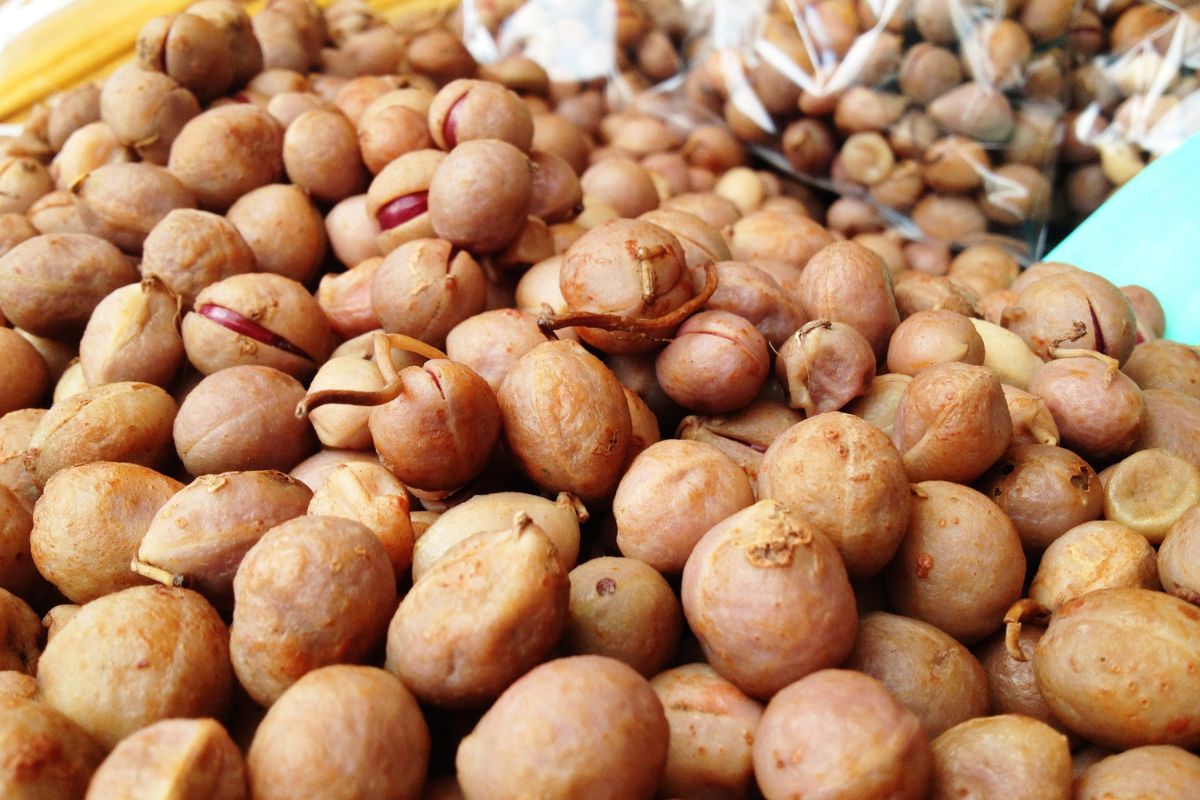
farmers in several parts of India have two new varieties to watch. ICRISAT and its partners have identified ICGV 181030 and ICGV 201214, both high-oleic groundnuts developed for specific growing regions. The varieties combine yield potential with oil qualities that could attract premium markets.
High-oleic groundnuts contain more oleic acid than conventional varieties. This gives the oil greater oxidative stability and a longer shelf life. For farmers, the benefit could extend beyond production because processors and food companies may value kernels with specific quality characteristics.
The two varieties were identified for release through the All India Coordinated Research Project on Groundnut. Their development shows how crop breeding is increasingly targeting both farm performance and market demand instead of focusing only on yield.
What makes high-oleic groundnut different?
Oleic acid is a type of monounsaturated fatty acid found naturally in groundnut oil. High-oleic varieties contain much larger amounts of it than conventional groundnuts, giving their oil better stability during storage and processing.
This characteristic can matter to food processors because oils with higher oxidative stability can remain usable for longer. That creates a possible market advantage, although farmers will need suitable buyers before expecting a higher price for their produce.
The new varieties also carry useful production traits. ICGV 181030 contains about 78% oleic acid and recorded a 7% pod-yield advantage over the best zonal check across three years of testing in Zone IV.
ICGV 181030 was developed jointly by ICRISAT and the University of Agricultural Sciences, Dharwad. It is a medium-duration Spanish bunch variety recommended for kharif cultivation in Gujarat, Rajasthan, Maharashtra, Jharkhand, Odisha, West Bengal and the northeastern states.
Its recommendation for Odisha and the Northeast is important because high-oleic groundnut options have been limited in some of these regions. The variety could give farmers another oilseed choice where soil, rainfall and market conditions are suitable.
Farmers should still confirm local recommendations before buying seed. A variety’s performance can change with sowing date, soil, rainfall, pest pressure and management. Regional suitability should therefore be checked with agricultural universities or local extension workers.
ICGV 201214 was jointly developed by ICRISAT and Junagadh Agricultural University. It is recommended for kharif cultivation in Gujarat and Rajasthan and contains about 81% oleic acid, 53% oil and 27% protein.
Market demand will decide the value
A high-quality variety becomes commercially useful only when buyers recognise and pay for its characteristics. Farmers should therefore identify processors, traders or other buyers before planting large areas.
High-oleic groundnuts can be attractive to food processors because of their oil stability. But farmers should ask whether local buyers segregate high-oleic produce and whether they offer a premium. Without separate procurement, the quality advantage may not translate into additional income.
New varieties can take time to reach farmers at scale. Quality seed production, multiplication and distribution are necessary before large numbers of farmers can adopt them.
Farmers should purchase seed through reliable and authorised sources. Buying seed from an unknown supplier simply because it carries the name of a new variety can create problems with purity, germination and crop performance.
A better variety cannot remove the need for proper crop management. Farmers still need suitable land preparation, seed treatment, correct plant population, timely weed control and appropriate moisture management.
Groundnut is particularly sensitive to waterlogging, while moisture stress during important growth stages can reduce pod development. Farmers should therefore choose varieties and planting schedules according to local soil and rainfall conditions.
Groundnut can be included in crop rotations where local conditions support it. Rotating crops can help farmers manage some pest and disease pressures while making better use of soil resources.
Farmers should avoid repeating the same crop continuously on the same land without considering disease and nutrient problems. Crop rotation should be planned around local cropping patterns, water availability and market demand.
Why this matters for edible oil
India remains heavily dependent on imported edible oils. Increasing domestic oilseed production is therefore an important agricultural goal.
High-oleic groundnut varieties could contribute in two ways. They can add production while also creating a differentiated product for food and oil markets. ICRISAT says the new varieties are intended to support farmer income and strengthen India’s edible-oil value chain.
Before adopting a new variety, farmers should compare expected seed costs, yield, market price and input requirements with their existing variety. A higher-yielding crop is not necessarily more profitable if seed or management costs are much higher.
Farmers should also consider whether the crop fits their existing machinery and harvesting arrangements. Small changes in crop duration or plant characteristics can affect labour requirements and the timing of other farm operations.
Farmers trying a new groundnut variety for the first time can begin with a limited area. This provides an opportunity to compare germination, growth, pest response, yield and market acceptance.
Keeping simple records can help farmers make a better decision for the following season. They can record seed cost, labour, fertiliser, plant protection, irrigation, yield and selling price.
Also Read: Punarnava Jal – The world’s first organic fertilizer! Know how it is beneficial for farmers?
Contact us – If farmers want to share any valuable information or experiences related to farming, they can connect with us via phone or whatsapp at 9599273766 or you can write to us at “kisanofindia.mail@gmail.com”. Through Kisan of India, we will convey your message to the people, because we believe that if the farmers are advanced then the country is happy.
You can connect with Kisan of India on Facebook, Twitter, and Whatsapp and Subscribe to our YouTube channel.