



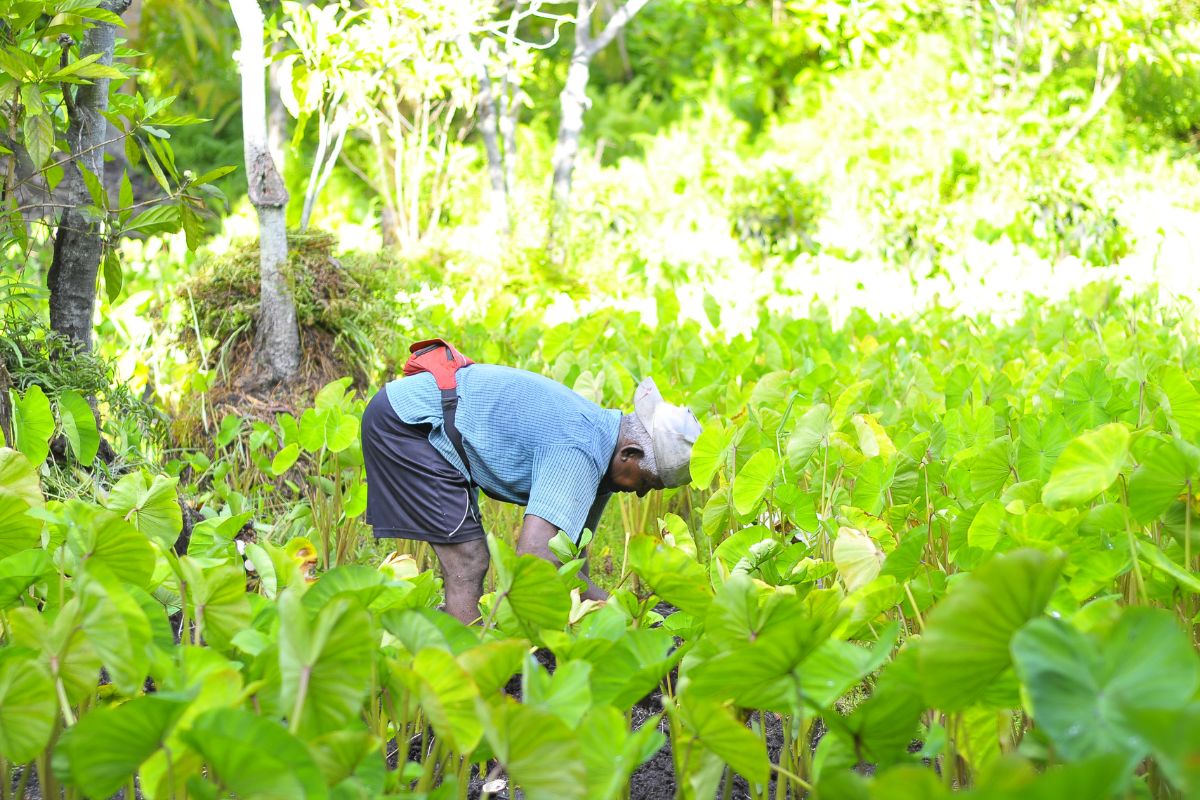
In the hilly landscapes of Meghalaya, a traditional root crop is finding renewed commercial relevance. Taro, known locally in many communities and cultivated for generations as part of household farming systems, is increasingly attracting attention from farmers looking to diversify income sources.
For decades, taro remained largely confined to local consumption and regional markets. Farmers grew it alongside other crops, valuing its reliability and adaptability rather than its commercial potential.
That situation is beginning to change.
Growing consumer interest in traditional foods, expanding urban markets, and increasing demand from food processors are creating new opportunities for taro producers. What was once viewed primarily as a subsistence crop is gradually emerging as a profitable agricultural enterprise.
The shift is encouraging farmers to reconsider the crop’s economic value.
A Crop Well Suited to Mountain Conditions
One reason taro remains popular in Meghalaya is its adaptability.
The crop performs well in humid environments and can be cultivated across a range of soil conditions. Many farmers appreciate its ability to produce reliable harvests even in areas where other crops may face challenges.
This resilience is becoming increasingly important.
Changing weather patterns and rainfall variability are encouraging farmers to prioritise crops capable of performing under uncertain conditions. Taro’s adaptability gives it a distinct advantage in such environments.
Researchers frequently identify resilient crops as important components of future farming systems.
Taro fits that description well.
Demand Extends Beyond Traditional Markets
Historically, taro was sold mainly in local markets and consumed within producing communities.
Today, demand is expanding beyond these traditional channels. Urban consumers are showing greater interest in indigenous foods, while restaurants and specialty food businesses are incorporating traditional ingredients into new products.
Food processors are also exploring opportunities in chips, flour, snacks, and packaged foods derived from taro.
These developments are creating additional market outlets for growers. Farmers who once depended on local demand now have access to broader commercial opportunities.
Market expansion is changing production decisions.
The crop’s commercial profile is growing.
Small Farmers Benefit From Diversification
Most taro producers operate on relatively small holdings.
The crop therefore plays an important role in diversification strategies designed to spread risk and improve household income. Farmers often cultivate taro alongside vegetables, fruits, spices, and other agricultural enterprises.
Diversification provides economic stability.
If one crop performs poorly due to market or weather conditions, income from other enterprises can help offset losses. Agricultural experts frequently recommend such approaches for smallholder farming systems.
Taro contributes effectively to this model.
Its flexibility strengthens farm resilience.
Value Addition Creates New Opportunities
One of the biggest drivers of renewed interest is the potential for value addition.
Fresh taro remains important, but processed products often generate higher returns. Entrepreneurs are exploring opportunities in packaged foods, flour production, and ready-to-cook products aimed at modern consumers.
Value addition allows producers to capture a larger share of the final market value.
Researchers note that many traditional crops remain underutilised because processing industries are underdeveloped. As these industries expand, commercial opportunities grow as well.
The taro sector is beginning to experience this transition.
Processing is opening new possibilities.
Traditional Crops Gain Recognition
Agricultural development often focuses on major commodities such as rice, wheat, and maize.
Yet many traditional crops possess characteristics increasingly valued in modern food systems. Nutritional diversity, climate resilience, and cultural significance are encouraging renewed interest in indigenous agricultural resources.
Taro is part of this broader movement.
Farmers who maintained cultivation over generations are now benefiting from growing recognition of the crop’s value. Traditional knowledge is finding relevance in contemporary markets.
The crop’s history is becoming an advantage.
Its future appears increasingly promising.
From Subsistence Crop to Commercial Opportunity
The story of taro in Meghalaya reflects a wider transformation occurring across agriculture.
Crops once viewed primarily as local staples are gaining commercial importance as markets evolve and consumer preferences change. Farmers are discovering that traditional crops can compete successfully in modern value chains.
For Meghalaya’s producers, taro offers a combination of resilience, market potential, and familiarity.
Those qualities are helping drive its expansion from household fields into broader commercial agriculture.
As demand continues to grow, the crop may become one of the state’s most important diversification opportunities.
In the hills of Meghalaya, an old crop is finding a new future.