


Can Battery-Powered Sprayers Cut Farm Labour? What Should Farmers Check Before Buying One?

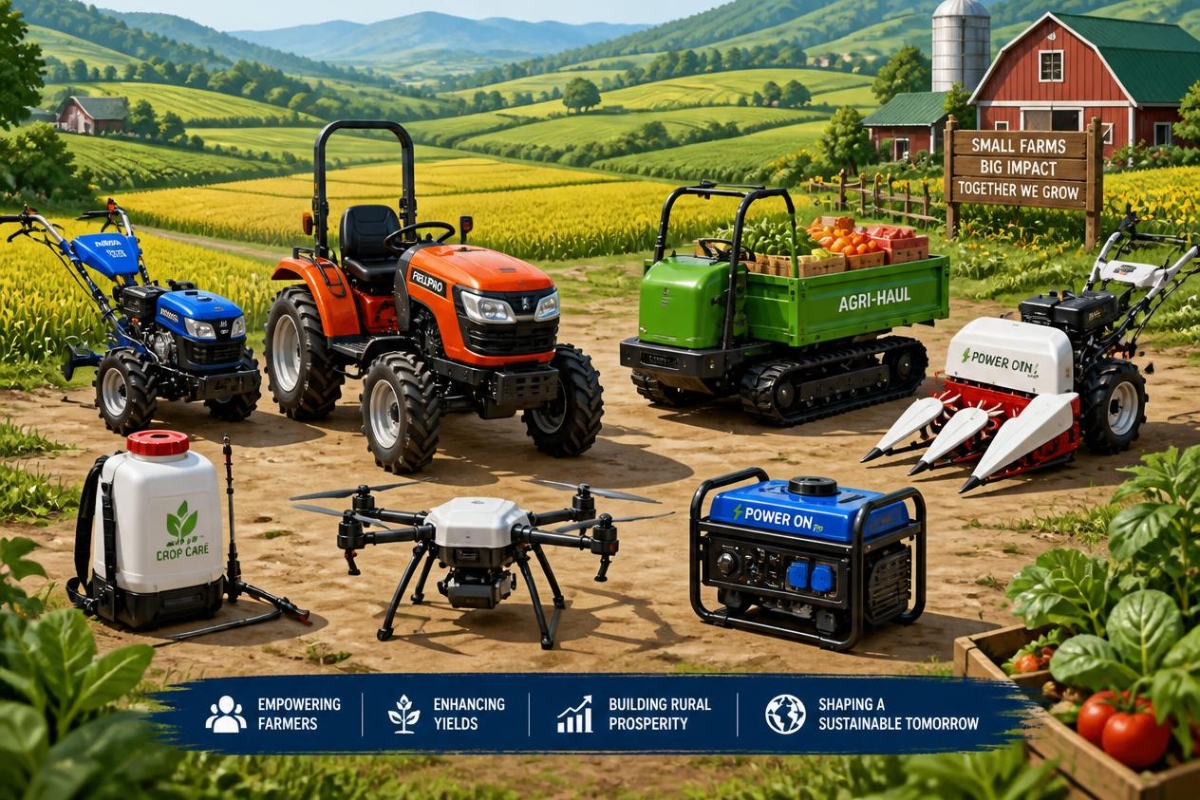
Battery-operated sprayers are becoming more common in Indian farms as farmers look for ways to reduce the physical effort involved in crop protection. In August 2026, ICAR-NIBSM distributed 140 battery-operated power sprayers to farmers and women farmers in Chhattisgarh.
The programme covered farmers from Murra, Bethia, Devgaon, Adsena and Beltukari villages. ICAR-NIBSM said the equipment was provided to promote farm mechanisation and reduce physical labour and drudgery during farm operations.
A battery-operated sprayer uses a rechargeable battery to power a pump or motor that moves liquid from the tank through the spray system. The operator carries or pushes the equipment while the motor maintains the flow needed for spraying.
Unlike a manually operated knapsack sprayer, the farmer does not need to repeatedly pump a lever to maintain pressure. This can reduce one part of the physical effort involved in spraying, particularly when treating larger crop areas.
Coverage depends on the sprayer’s tank size, nozzle, pressure, walking speed, crop spacing and amount of spray required. A Tamil Nadu Agricultural University specification for one battery-operated model lists a 10-litre tank and coverage of about 1.5 hectares a day.
That figure should not be treated as a standard for every battery sprayer. Farmers should ask manufacturers or dealers for tested coverage under conditions similar to their own crops before comparing different models.
What should farmers check first?
Tank capacity is one of the first specifications to compare. A larger tank can reduce the number of refills, but it also increases the weight carried by the operator when the tank is full.
Farmers should match tank size with the area they normally spray and their physical capacity. For small plots, a very large tank may add unnecessary weight without providing much practical benefit.
Yes. The battery determines how long the sprayer can operate before recharging. Farmers should check the battery voltage, capacity, expected operating time and charging time before purchasing the machine.
They should also ask whether replacement batteries are available locally and how much they cost. A cheaper machine can become expensive if its battery is difficult to replace or requires frequent replacement.
Spray pressure affects how liquid leaves the nozzle and how well the crop canopy is covered. The correct pressure depends on the crop, nozzle and type of application.
Farmers should avoid assuming that higher pressure always means better spraying. Excessive pressure can create unwanted drift, while insufficient pressure may produce poor coverage. The equipment should allow suitable adjustment for the intended crop.
Why is the nozzle important?
The nozzle controls the spray pattern, droplet size and application rate. Different crops and plant-protection jobs may require different nozzle types.
Farmers should check whether replacement nozzles are easily available and whether the sprayer supports commonly used nozzle sizes. A machine with an easily maintained spray system can be more practical than one that depends on difficult-to-find parts.
Some battery-operated low-volume sprayers are designed to apply smaller quantities of water than conventional spraying methods. TNAU lists one battery-operated model using about 50 litres of water per hectare.
Water use still depends on the crop, chemical, nozzle, spray volume and recommended application method. Farmers should follow the product label and agricultural advisories rather than reducing water simply to extend battery life.
A battery sprayer can reduce the physical effort required for spraying, but the actual labour saving depends on the farm. The farmer still needs to mix the spray, carry or move the equipment, refill the tank and clean it after use.
ICAR-NIBSM specifically linked its distribution programme with reducing physical labour and drudgery. For a farmer who regularly sprays several acres, reduced pumping effort may be more important than the machine’s purchase price alone.
Are battery sprayers covered under government support?
Battery-operated sprayers are included among plant-protection equipment listed under the government’s Sub-Mission on Agricultural Mechanization guidelines. The guidelines provide financial assistance rates for eligible machinery, subject to the applicable conditions and ceilings.
The Agriculture Ministry says SMAM provides financial assistance of 40–50% for agricultural machinery to eligible farmers and also supports Custom Hiring Centres. The actual assistance depends on the scheme, state and beneficiary category.
Farmers should check with their state agriculture department or official farm machinery portal before buying equipment if they want to claim subsidy. Purchasing first may affect eligibility under some programmes.
The tank, pipes, filter, pump, nozzles and battery all need regular attention. After spraying, the equipment should be cleaned according to the manufacturer’s instructions to prevent chemical residue from damaging components.
Farmers should also avoid leaving the battery unused for long periods without following the manufacturer’s storage instructions. They should ask about warranty coverage for the battery, pump and charger before buying.
Not necessarily. A small farmer with a few plots may find a battery sprayer useful because it reduces pumping effort and can be moved easily between fields.
A farmer managing a much larger area may need a different system, such as a tractor-mounted or power-operated sprayer. The right choice depends on acreage, crop height, terrain, available labour and the type of plant-protection work required.
What should farmers compare before buying?
Farmers should compare at least six things: tank capacity, battery capacity, charging time, spray coverage, nozzle options and local service support.
They should also calculate the total cost rather than looking only at the purchase price. Battery replacement, spare parts, charger repairs and nozzle replacement can add to the long-term cost of ownership.
No. The machine only changes how the spray is applied. Farmers still need to identify the pest or disease correctly and use the recommended product and dose.
ICAR-NIBSM has advised farmers to identify pests and diseases early and avoid unnecessary pesticide use. It also recommended integrated pest-management measures such as pheromone traps and Trichocards.
A battery-operated sprayer can make crop protection less physically demanding, but the machine itself does not guarantee better pest control. Its value depends on correct calibration, suitable nozzles, proper coverage and timely application.
For farmers considering one, the key question is not simply whether the sprayer is battery-powered. They should ask whether its capacity matches their farm, whether spare parts are available nearby and whether the expected labour saving justifies the cost.
Also Read: Punarnava Jal – The world’s first organic fertilizer! Know how it is beneficial for farmers?
Contact us – If farmers want to share any valuable information or experiences related to farming, they can connect with us via phone or whatsapp at 9599273766 or you can write to us at “kisanofindia.mail@gmail.com”. Through Kisan of India, we will convey your message to the people, because we believe that if the farmers are advanced then the country is happy.
You can connect with Kisan of India on Facebook, Twitter, and Whatsapp and Subscribe to our YouTube channel.