


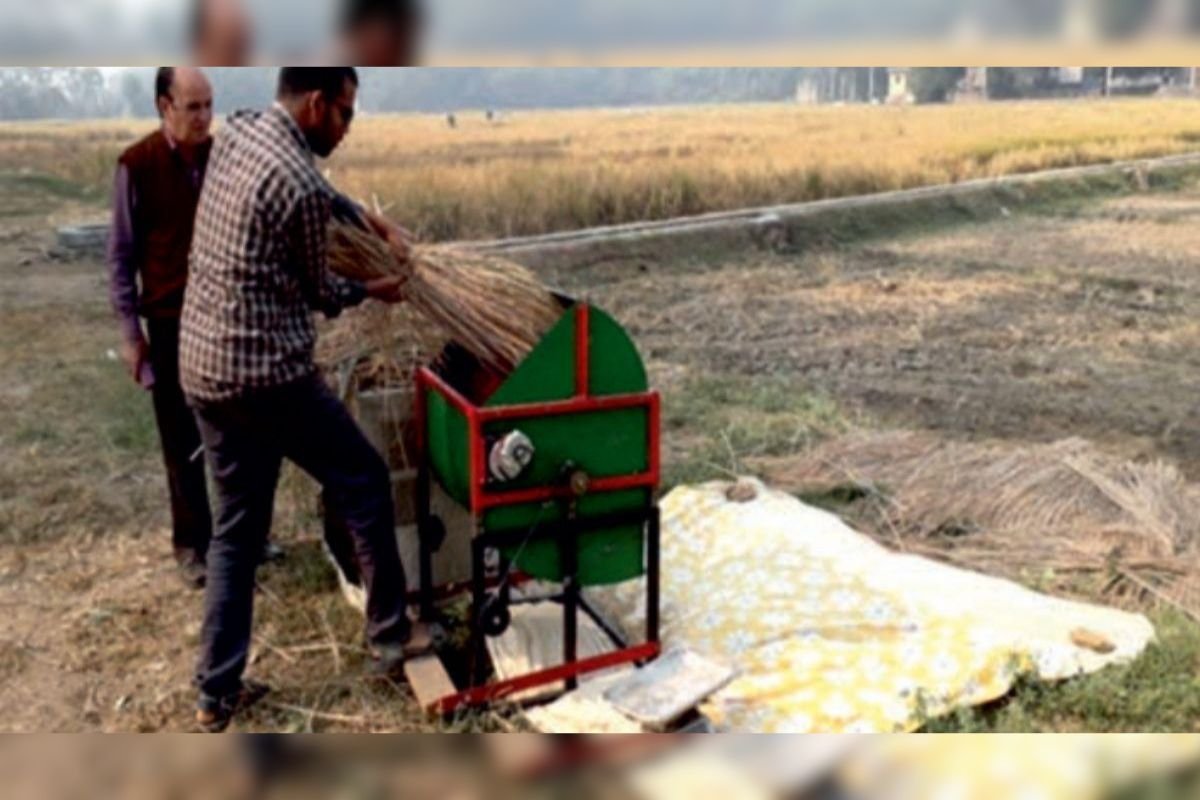
Paddy harvesting leaves farmers with a narrow window to prepare fields for the next crop. Burning residue can clear land quickly but creates pollution and loses valuable biomass. Crop residue management machines offer another option, allowing farmers to shred, incorporate, collect or manage straw before the next sowing.
The government has supplied more than 3.54 lakh crop residue management machines to states, including 26,109 machines during 2026-27 so far. The Agriculture Ministry has also asked states to ensure older machines are repaired and Custom Hiring Centres remain operational during the harvesting period.
Which Machines Can Farmers Use?
Different machines are suited to different residue conditions. Happy Seeders and Super Seeders can help farmers sow wheat into fields containing paddy residue, while straw choppers, mulchers and balers can process or collect leftover straw. Farmers should select equipment according to crop, soil, residue quantity and the next crop.
A Super Seeder can chop and manage standing or loose paddy straw while preparing the soil and sowing wheat. This can save farmers from removing every piece of residue before planting, which matters when the period between paddy harvesting and wheat sowing is short.
Straw balers provide another option where there is a local market for collected residue. They compress loose straw into bales that can be transported for uses such as biomass energy, fodder or other applications where the material meets required quality standards.
Why Hiring Can Be Better Than Buying
Large agricultural machines can be expensive, especially for farmers cultivating small areas. Buying equipment that is used only for a few days each season can leave substantial capital tied up. Hiring allows farmers to pay for the actual field operation without owning and maintaining the machine.
Custom Hiring Centres are designed for this purpose. Under the Sub-Mission on Agricultural Mechanization, financial assistance is provided for establishing such centres so that farmers can access machinery without purchasing every piece of equipment individually.
Between 2014-15 and 2025-26, 27,554 Custom Hiring Centres had been established under government-supported farm mechanisation programmes. The centres can provide access to machinery for operations ranging from land preparation and sowing to harvesting and residue management.
Before booking a machine, farmers should calculate the total cost per acre, including hiring charges, fuel, operator fees and transportation. They should also check whether the machine is suitable for their field conditions. Comparing two or three available services can prevent unnecessary expenditure during the busy harvest period.
Timing is equally important. Machines are in high demand immediately after paddy harvesting. Farmers who contact local Custom Hiring Centres, Farmer Producer Organisations or cooperatives early may have a better chance of getting equipment when their fields are ready.
A recent government review stressed that machinery should remain operational rather than sitting unused. States were asked to repair non-functional machines and ensure that Custom Hiring Centres provide equipment to small and marginal farmers at affordable rates.
Machinery Can Also Reduce Labour Pressure
Farm labour shortages can delay residue management and sowing. Mechanised operations can cover larger areas within a shorter period, helping farmers complete field preparation before the next crop window closes. This becomes particularly important when weather conditions leave only a few suitable days for sowing.
Farm mechanisation can also reduce physical drudgery. The government promotes machinery for land preparation, sowing, irrigation, plant protection, harvesting and post-harvest work, with specific attention to small and marginal farmers, women farmers, FPOs and rural entrepreneurs.
Residue management is also linked to soil health. Instead of burning straw, farmers can retain, chop or incorporate suitable residues into the field. This can return organic material to the soil and reduce smoke emissions, while helping farmers move towards more resource-conscious crop production.
ICAR research has also highlighted custom hiring as a way to make mechanisation more accessible. Shared machinery can reduce the capital burden on individual farmers, improve machine utilisation and help complete farm operations on time, particularly in rainfed and smallholder farming systems.
For farmers, the choice is not simply between buying an expensive machine and burning crop residue. Hiring equipment through a Custom Hiring Centre, FPO, cooperative or Farm Machinery Bank can provide access when needed. Farmers should compare machine performance, local charges and field requirements before selecting a service.
As paddy harvesting and wheat sowing become increasingly time-sensitive, access to the right machine can affect both costs and crop establishment. Better use of existing machinery, timely repairs and functioning hiring centres can help farmers manage residue without making a large investment in equipment.
Also Read: Punarnava Jal – The world’s first organic fertilizer! Know how it is beneficial for farmers?
Contact us – If farmers want to share any valuable information or experiences related to farming, they can connect with us via phone or whatsapp at 9599273766 or you can write to us at “kisanofindia.mail@gmail.com”. Through Kisan of India, we will convey your message to the people, because we believe that if the farmers are advanced then the country is happy.
You can connect with Kisan of India on Facebook, Twitter, and Whatsapp and Subscribe to our YouTube channel.