


Custom Hiring Centres: How Small Farmers Can Use Modern Machinery Without Buying It

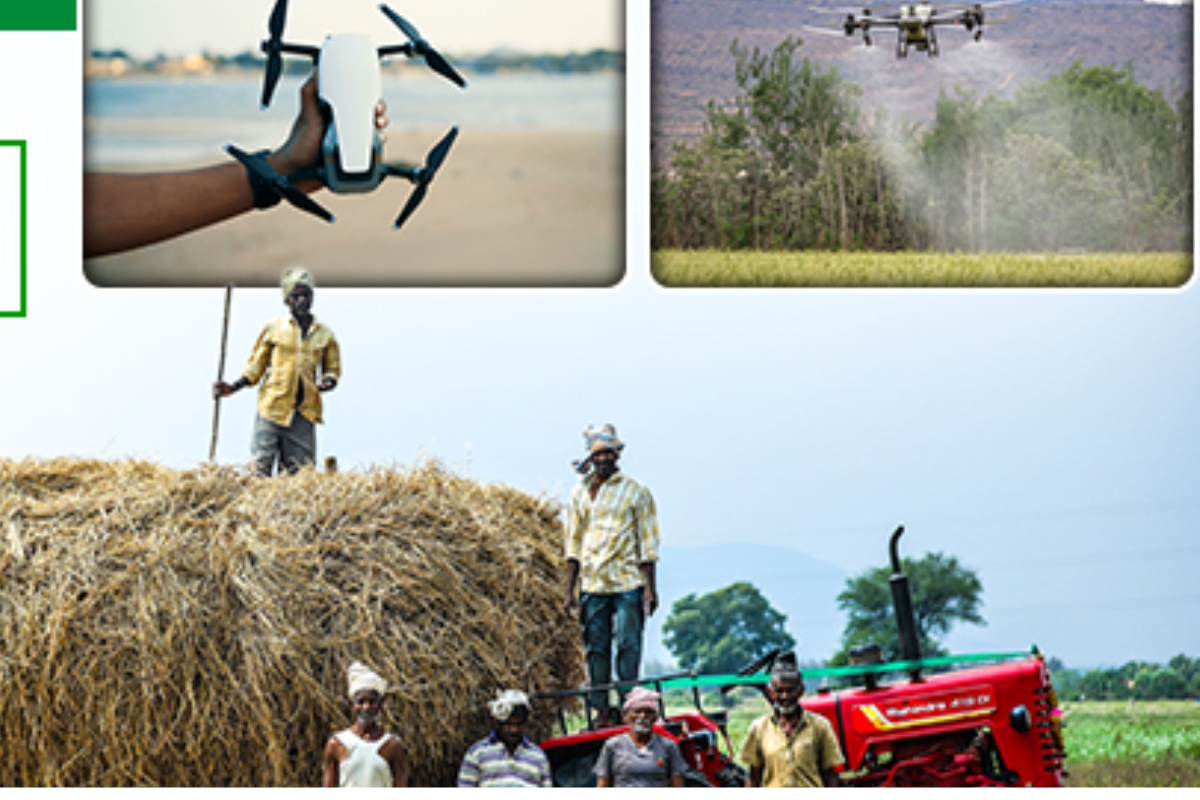
Buying farm machinery can put pressure on a small farmer’s budget. A tractor, harvester or specialised seed drill may be needed for only a few days each season, while loan repayments, repairs, fuel and storage costs continue throughout the year. Renting equipment can help farmers complete important operations without taking on the full cost of ownership.
Custom Hiring Centres (CHCs) offer one way to access machinery. These centres keep agricultural equipment that farmers can hire when needed. Depending on the centre, the available machines may include tractors, rotavators, seed drills, sprayers, threshers and harvesters. Some centres also provide crop-residue management equipment and machinery for cleaning, grading and processing produce.
The Union government promotes these centres through the Sub-Mission on Agricultural Mechanization (SMAM), implemented under the Rashtriya Krishi Vikas Yojana. The scheme aims to improve machinery access for small and marginal farmers and regions where farm power remains limited. It also supports machinery banks and facilities for specialised equipment.
How Farmers Can Choose the Right Machinery
1. Identify the operation that costs you the most. Before hiring equipment, compare the labour, time and expenses involved in land preparation, sowing, weeding, spraying or harvesting. A machine is worth considering when it addresses a real bottleneck, helps meet a crop deadline or reduces repeated manual work.
2. Match the machine to your crop and field. A seed drill suitable for wheat may not be appropriate for every crop or soil condition. Check the recommended row spacing, seed rate, tractor power requirement and field dimensions. Farmers with small, irregular or sloping plots should confirm that the machine can operate safely.
3. Ask about the complete hiring cost. A quoted rental rate may not include transportation, fuel, the operator or additional hours. Ask whether charges are calculated per acre, hour or day. Confirm who pays for delays caused by rain or machine breakdowns, and request the total cost before booking.
4. Book early during busy periods. Many farmers need the same equipment during sowing and harvesting. Contact the centre before the operation is due, confirm the delivery date and ask how long the machine will remain available. Late access can reduce the benefit of mechanisation if the crop misses its suitable working window.
Can Government Support Help Farmers Access Equipment?
SMAM provides financial assistance for eligible agricultural machinery purchases and for establishing Custom Hiring Centres. According to the Agriculture Ministry’s August 2026 policy information, assistance for eligible machinery purchases is generally 40–50% of machine cost. Eligible CHC projects can receive assistance of 40% of project cost, subject to scheme conditions and applicable limits.
These rates do not mean every farmer automatically receives a subsidy. Eligibility, approved machinery, beneficiary categories, project limits and application windows depend on the applicable guidelines and state-level process. Farmers should contact their district agriculture office or state agriculture department before buying equipment or paying an agent.
Farmers who belong to a Farmer Producer Organisation (FPO), cooperative or Self-Help Group can also explore shared machinery services. In February 2026, ICAR–Indian Institute of Millets Research inaugurated a Custom Hiring Centre at the Tekmal Mandal Farmers Producer Cooperative Society in Telangana. The facility offered machinery for field operations and millet processing, illustrating how shared access can extend beyond ploughing and harvesting.
Calculate the Savings Before Hiring
Farmers should compare the full cost of hiring with the cost of completing the same operation through manual labour or owned machinery. Include transport, fuel, operator charges and any extra work needed after the machine passes through the field. The lowest quoted rate is not always the cheapest option if the equipment is unsuitable.
For example, if hiring a machine costs ₹1,500 per acre and the farmer needs it for two acres, the basic rental charge is ₹3,000. Add transport or fuel charges before comparing this figure with other options. This is an illustration, not a standard market rate. Actual charges vary by location, machine and season.
Farmers considering their own equipment should estimate how often it will be used each year. They should include loan interest, maintenance, insurance, repairs and depreciation. Buying may suit farmers with frequent demand or those who plan to offer paid services to neighbours. Renting may be more practical when the machine is expensive or used only occasionally.
Before work begins, inspect tyres, guards, belts, hydraulic connections and other visible parts. Confirm that the operator understands the machine and that safety devices are in place. Keep children and bystanders away from operating equipment, and never attempt repairs while machinery is running.
After hiring, note the hours worked, area covered and any delays. This record helps compare service providers and plan future bookings. Farmers can also ask nearby users about reliability, spare parts and repair response times before choosing a centre.
Custom Hiring Centres can help small farmers access machinery without investing large sums in equipment they rarely use. The benefits depend on timely availability, suitable machines, transparent charges and trained operators. Before hiring or buying, compare the full cost, check local service options and ask the agriculture department about current support under SMAM.
Also Read: Punarnava Jal – The world’s first organic fertilizer! Know how it is beneficial for farmers?
Contact us – If farmers want to share any valuable information or experiences related to farming, they can connect with us via phone or whatsapp at 9599273766 or you can write to us at “kisanofindia.mail@gmail.com”. Through Kisan of India, we will convey your message to the people, because we believe that if the farmers are advanced then the country is happy.
You can connect with Kisan of India on Facebook, Twitter, and Whatsapp and Subscribe to our YouTube channel.