



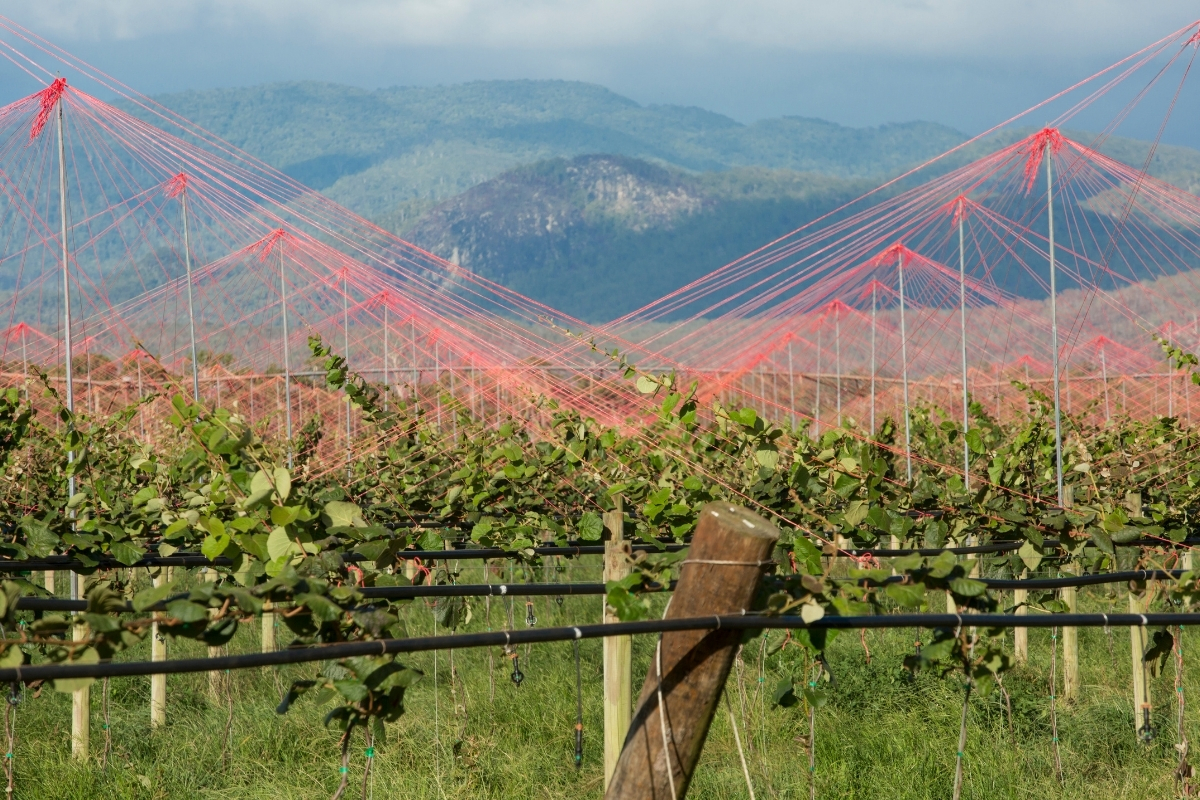
Kiwi vines need strong support systems to grow and spread properly. When vines become overcrowded or poorly managed, farmers can face problems with sunlight, airflow and crop production.
A farmer in Nagaland addressed this challenge by adopting T-Bar trellis technology in his kiwi orchard. ICAR documented the experience in a success story published on August 12, 2026, describing how the support system helped improve orchard management and production.
Why kiwi vines need a support system
Kiwi is a climbing vine. It cannot be managed like many field crops. Farmers need a structure that supports the growing vines and allows them to spread in an organised way. Without proper training and support, vines can become congested. This can create problems inside the orchard.
Leaves and branches may block sunlight from reaching different parts of the plant. Dense growth can also make pruning, harvesting and other farm work more difficult. The ICAR story focuses on how changing the orchard structure helped address these problems in a kiwi farm in Nagaland.
A T-Bar trellis is a support structure designed to hold and train climbing plants. The system uses upright posts with a crossbar at the top, creating a T-shaped structure. Wires are arranged to support the vines.
Farmers can train kiwi vines along these wires instead of allowing branches to grow in an unplanned way. The aim is to create a more organised canopy. This can make it easier to manage the orchard throughout the growing season.
When vines become crowded, farmers may find it harder to reach different parts of the plant. Dense growth can also affect how sunlight and air move through the orchard. A properly designed trellis can help separate and spread the vines.
This gives farmers better access for:
- Pruning
- Training new growth
- Monitoring pests and diseases
- Applying recommended inputs
- Harvesting fruit
The ICAR success story is titled “From Congested Vines to Higher Yields,” highlighting the role of orchard structure in improving farm management.
Farm structures can affect production
Farm equipment does not always mean tractors or large machines. Support structures can also play an important role in horticulture. A trellis becomes part of the production system. The cost of installing such a structure can be significant, especially for small farmers.
Farmers should therefore assess whether the investment suits their orchard size and expected production. Before installing a system, they need to consider:
- Number of plants
- Orchard spacing
- Cost of poles and wires
- Labour requirements
- Local weather conditions
- Expected life of the structure
The structure should be strong enough to support mature vines and withstand local conditions.
Kiwi farmers need regular pruning
Installing a trellis alone will not solve orchard management problems. Farmers still need to train and prune the vines. Pruning helps manage plant growth and prevents unnecessary congestion. The timing and method should depend on the crop stage and local growing conditions.
Farmers entering commercial kiwi production should seek technical guidance before making major pruning decisions. Incorrect pruning can affect plant growth and fruit production. A good support system works best when farmers combine it with regular orchard management.
An organised orchard can make routine work easier. Workers may be able to move through the farm more easily when vines are trained along a planned structure. Better organisation can also help farmers monitor plants.
Problems may be easier to identify when branches and fruiting areas are accessible. This does not mean a T-Bar system will suit every kiwi orchard. The design needs to match the variety, terrain and local farming conditions.
What farmers can learn from the Nagaland example
The ICAR story offers a useful lesson for horticulture farmers. Sometimes production problems begin with the physical structure of the farm. Farmers may focus on fertilisers or pesticides while overlooking whether plants have enough space and support.
Before investing in expensive inputs, orchard farmers can examine how their crops are growing. Questions worth asking include:
- Are the vines overcrowded?
- Can sunlight reach the canopy?
- Is pruning difficult?
- Can workers move easily through the orchard?
- Are fruits easy to harvest?
The farmer’s experience in Nagaland shows how changing the way vines are supported can improve the management of an existing orchard. For kiwi farmers, the main lesson is practical. A good crop needs more than good planting material. The structure that supports the crop can also shape how easily the orchard can be managed and how well the vines perform.
Also Read: Punarnava Jal – The world’s first organic fertilizer! Know how it is beneficial for farmers?
Contact us – If farmers want to share any valuable information or experiences related to farming, they can connect with us via phone or whatsapp at 9599273766 or you can write to us at “kisanofindia.mail@gmail.com”. Through Kisan of India, we will convey your message to the people, because we believe that if the farmers are advanced then the country is happy.
You can connect with Kisan of India on Facebook, Twitter, and Whatsapp and Subscribe to our YouTube channel.