



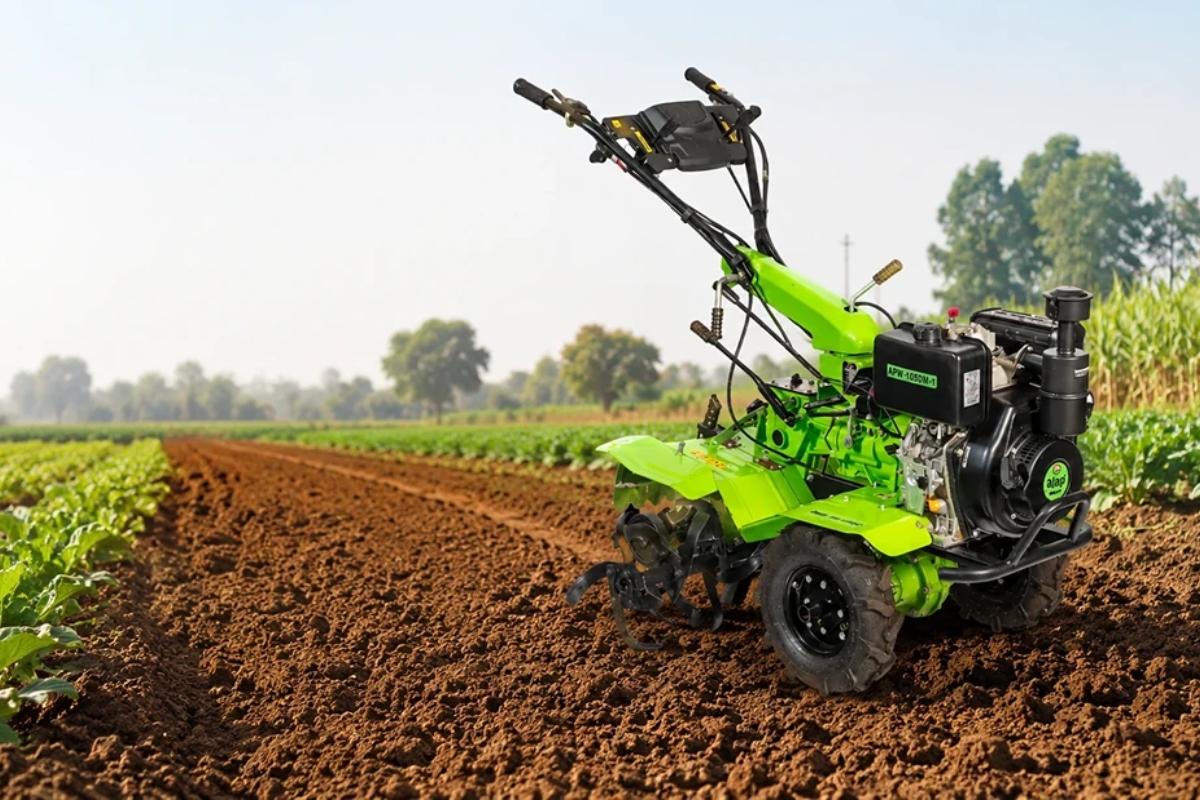
Manual weeding can require considerable labour, especially when crops are planted in rows and weeds emerge rapidly after rainfall or irrigation. A power weeder can perform several field operations, including intercultural work and weed control, making it useful for small and medium-sized farms where larger tractors may not be practical.
The Indian Council of Agricultural Research and agricultural engineering institutions have developed and tested small farm machines for operations where farmers need lower-cost equipment suited to field conditions. Farmers should select machinery according to crop spacing, soil type, field size and the work they actually need to perform.
7 Ways Farmers Can Use a Power Weeder
1. Prepare the Seedbed
Depending on its design and attachments, a power weeder can help loosen and prepare soil before planting. This can be useful for small fields, vegetable plots and other areas where tractor access is difficult. Farmers should select the appropriate attachment rather than using the same blade for every operation.
Before operating the machine, remove large stones, branches and other obstacles from the field. Operators should also check the manufacturer’s recommended working depth and engine settings. Excessive depth can increase fuel consumption and place unnecessary load on the machine.
2. Control Weeds Between Crop Rows
One of the most common uses of a power weeder is intercultural weed control between rows. The machine can disturb weeds while reducing the amount of manual hoeing required. Its usefulness depends strongly on crop spacing and the ability of the operator to avoid damaging crop roots.
Farmers should operate the machine when soil conditions are suitable. Working very wet soil can cause compaction and sticking, while extremely dry soil can make operation difficult. Early weed control is usually easier because young weeds require less effort to remove.
3. Work in Vegetable Fields
Vegetable farmers can use suitable power weeders for inter-row operations in crops planted with enough spacing. Different attachments are available for different tasks, so farmers should confirm compatibility before purchasing. A machine designed for one crop may not be suitable for narrow rows or delicate plants.
Operators need greater care when working close to vegetables because shallow roots or low-growing plants can be damaged. The machine should be guided at an appropriate speed, with enough distance maintained from the crop row.
4. Reduce Dependence on Manual Labour
Labour availability can become a problem during peak agricultural periods when many farmers need workers at the same time. A power weeder can reduce the time required for some intercultural operations, particularly on farms where tractors cannot enter or are uneconomical.
Farmers should compare the machine’s purchase or rental cost with local labour charges before investing. Fuel, maintenance, repairs and operator time should be included in the calculation. Renting through a Custom Hiring Centre may be more suitable when annual use is limited.
5. Use the Right Attachment
Power weeders are available with different blades and attachments for soil preparation, weeding and other field operations. The attachment should match the crop, soil and task. Using an unsuitable attachment can reduce work quality and increase the risk of crop damage.
Farmers should read the manufacturer’s operating instructions before changing attachments. Guards and other safety components should remain in place during operation. Any adjustment or attachment change should be carried out with the machine switched off.
6. Maintain the Machine Regularly
Regular maintenance can help prevent avoidable breakdowns during important farm operations. Farmers should check engine oil, air filters, fuel lines, belts, blades, fasteners and other components according to the manufacturer’s maintenance schedule.
Blades should be inspected for wear and damage before field work. Loose parts can create safety risks and affect machine performance. After use, farmers should clean soil and plant material from the machine and store it under suitable conditions to prevent unnecessary deterioration.
7. Follow Safety Rules
Power weeders contain moving blades and mechanical components that can cause serious injuries if handled carelessly. Operators should wear suitable protective equipment, keep children and bystanders away from the working area and never attempt repairs while the engine or moving parts are operating.
Farmers should receive basic training before using the machine independently. The operator should also understand how to stop the engine quickly in an emergency. Working on slopes, around obstacles or near irrigation channels requires additional caution.
Buying or Renting a Power Weeder
The cheapest machine is not necessarily the most suitable one. Farmers should compare engine power, working width, fuel consumption, weight, attachments, spare-parts availability and after-sales support before purchasing. The machine should match the crops and field conditions rather than being selected only on price.
For farmers who need the machine only during a few operations each year, hiring may make more financial sense. Custom Hiring Centres and other farm machinery rental services can allow farmers to access equipment without bearing the full purchase and maintenance cost.
Farmers should also check whether agricultural departments or government programmes in their state provide assistance for approved farm machinery. The availability, subsidy level and eligible equipment can change, so farmers should confirm current rules with the relevant state agriculture or farm mechanisation office.
A power weeder is most useful when farmers have suitable crops, field spacing and enough operations to justify its use. It can support weed management and soil preparation, but it is not a replacement for good crop planning.
Before buying, farmers should list the operations they want to mechanise, estimate annual hours of use and compare ownership with rental. Choosing equipment based on actual farm needs can prevent an expensive machine from sitting unused for most of the year.
Also Read: Punarnava Jal – The world’s first organic fertilizer! Know how it is beneficial for farmers?
Contact us – If farmers want to share any valuable information or experiences related to farming, they can connect with us via phone or whatsapp at 9599273766 or you can write to us at “kisanofindia.mail@gmail.com”. Through Kisan of India, we will convey your message to the people, because we believe that if the farmers are advanced then the country is happy.
You can connect with Kisan of India on Facebook, Twitter, and Whatsapp and Subscribe to our YouTube channel.