



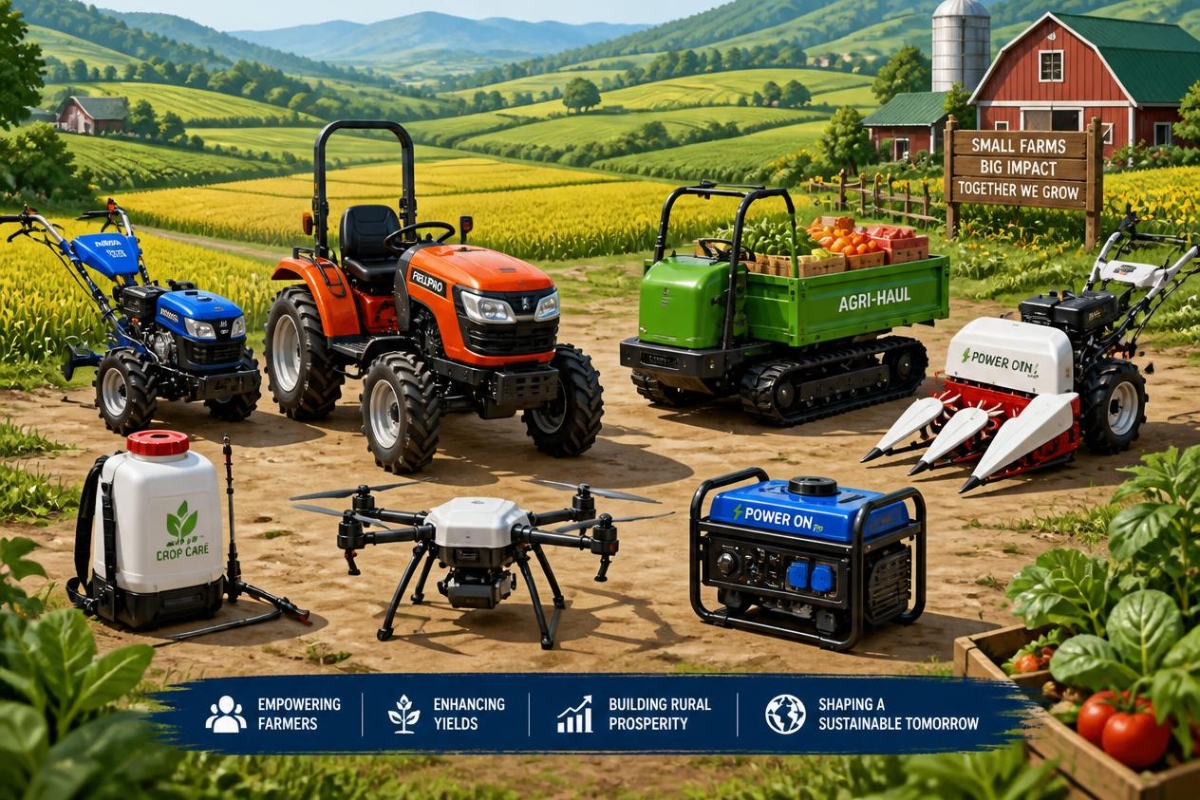
Agricultural machinery can save labour and help farmers complete sowing, weeding and harvesting on time. But buying a tractor, transplanter, reaper or specialised implement requires money even when the machine is used for only a few days each season. Maintenance, fuel, repairs and storage add to the expense.
For small and marginal farmers, renting equipment can make mechanisation accessible without the cost of ownership. Farmers can hire a machine when a particular operation is due and pay for the period or area covered. Whether this is cheaper than buying depends on local rental rates, availability and how often the equipment is needed.
The Indian Council of Agricultural Research supports research and demonstrations involving farm machinery suited to different crops and regions. Its agricultural engineering resources cover equipment for land preparation, planting, interculture, plant protection and harvesting. Farmers can use these resources to identify suitable options before approaching local suppliers or hiring centres.
Three Ways to Access Farm Machinery
1. Hire Equipment When Needed
Hiring is useful when a machine is needed for a short period, such as during sowing or harvesting. Farmers avoid paying the full purchase price and may not have to arrange long-term storage or major repairs. The main challenge is securing equipment when demand peaks.
Farmers should confirm the booking date, hourly or per-acre charge, transport fees, fuel responsibility and operator availability before agreeing to hire. They should also ask what happens if rain, machine breakdown or a delay prevents the work from being completed as planned.
2. Buy Machinery Used Frequently
Buying may make sense when a machine is required repeatedly throughout the season or when local hiring services are unreliable. A farmer who regularly needs a particular implement may gain more control over work schedules by owning it, especially when delays could affect crop establishment or harvesting.
The purchase decision should include the initial price, interest on borrowed money, fuel, servicing, spare parts, insurance where applicable and expected resale value. Farmers should also consider whether they have a safe place to store the equipment and the skills needed to operate it.
3. Share Equipment With Other Farmers
Farmers who work in neighbouring fields can consider sharing machinery through a group, cooperative or farmer producer organisation. Sharing spreads the purchase cost across several users and can make an otherwise expensive implement more accessible.
A written agreement should specify booking priority, maintenance responsibilities, fuel costs, repair payments and arrangements when two members need the machine simultaneously. Clear records reduce disagreements and help the group calculate whether shared ownership is cheaper than hiring equipment individually.
What Is a Custom Hiring Centre?
A Custom Hiring Centre, or CHC, provides farmers access to agricultural machinery without requiring each farmer to buy it. Depending on the centre, equipment may include tractors, seed drills, weeders, sprayers, harvesters and other implements suited to local crops.
ICAR has promoted machinery access through initiatives involving farmer organisations and custom hiring facilities. For example, ICAR’s Indian Institute of Millets Research inaugurated a CHC at a farmer producer cooperative in Tekmal, Telangana, in February 2026. The initial initiative was expected to benefit around 500–700 member farmers, with potential expansion to nearby villages.
Farmers can ask their local agriculture department, KVK or FPO whether a CHC operates nearby and what equipment it offers. They should compare its charges with private rental providers and check whether machines are available during the crop’s most time-sensitive operations.
Five Checks Before Hiring or Buying
1. Match the machine to your crop. A tool suitable for wheat may not work well in paddy, orchards or vegetable fields. Confirm that the implement fits the crop’s row spacing, soil conditions and intended operation.
2. Calculate the cost per acre. Include rental charges, transport, fuel, operator fees and any additional labour. For an owned machine, include annual maintenance and financing costs, then divide the expected total by the area it will serve.
3. Check machine condition. Inspect tyres, moving parts, guards, belts and other safety features before work begins. Ask whether routine maintenance has been completed and whether spare parts are available locally.
4. Confirm the operator’s experience. Incorrect machine settings can damage crops, waste fuel or leave work incomplete. For unfamiliar equipment, ask for a demonstration and ensure the operator understands the machine’s limits and safety requirements.
5. Book early. Demand often rises sharply during sowing and harvesting. Booking in advance can reduce the risk of missing a suitable weather window, particularly when many farmers in the same area need the same machine.
How to Decide Whether Ownership Is Worth It
Farmers can compare annual ownership costs with the total amount they would pay to hire the same machine. The calculation should cover the expected years of use, repair expenses, interest, storage and resale value. It should also consider whether the machine could earn rental income from neighbouring farms.
A machine that is affordable to buy may still be a poor investment if it remains unused for most of the year. Conversely, frequent hiring at high rates may make ownership or group purchase more economical. Farmers should use their actual field area and local prices rather than relying on general estimates.
The best machinery decision is the one that helps farmers complete important operations on time without placing unnecessary pressure on household finances. Hiring, buying and sharing can all work, but the result depends on local availability, machine suitability and how often the equipment will be used.
Before investing, farmers should compare at least two local suppliers, check options through nearby custom hiring centres and calculate the full cost per acre. A careful comparison can help farmers gain access to useful equipment while keeping money available for seed, fertiliser, irrigation and other crop expenses.
Also Read: Punarnava Jal – The world’s first organic fertilizer! Know how it is beneficial for farmers?
Contact us – If farmers want to share any valuable information or experiences related to farming, they can connect with us via phone or whatsapp at 9599273766 or you can write to us at “kisanofindia.mail@gmail.com”. Through Kisan of India, we will convey your message to the people, because we believe that if the farmers are advanced then the country is happy.
You can connect with Kisan of India on Facebook, Twitter, and Whatsapp and Subscribe to our YouTube channel.