



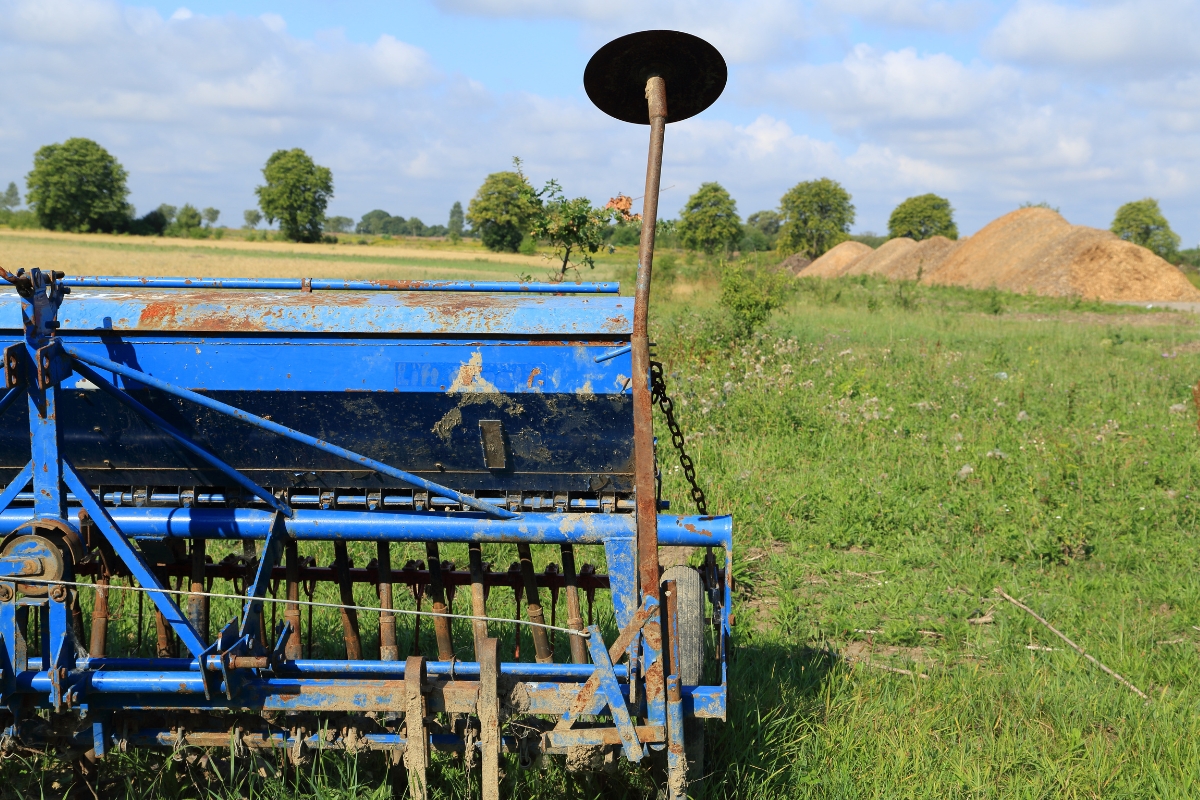
Timely sowing is one of the most important factors influencing crop yields. Delays in planting often expose crops to moisture stress, pest attacks, and changing weather conditions. Yet many small and marginal farmers continue to rely on manual sowing or diesel-powered equipment that increases labour requirements and cultivation costs.
To address these challenges, agricultural engineers are developing solar-powered automatic seeders that combine renewable energy with precision planting technology. These machines use solar panels to charge onboard batteries that power electric motors responsible for seed placement and machine movement. The technology reduces dependence on diesel while improving sowing accuracy and operational efficiency.
Researchers believe solar-powered seeders could become an important option for small farms as India expands both renewable energy adoption and agricultural mechanisation.
Solar Energy Replaces Diesel During Sowing
Conventional seed drills often depend on tractors or diesel engines to operate. Rising fuel prices increase cultivation costs and create additional financial pressure for farmers, particularly during peak sowing seasons.
Solar-powered seeders use photovoltaic panels to generate electricity that is stored in rechargeable batteries. The stored energy powers electric motors capable of operating the seeding mechanism without consuming fossil fuels. Farmers benefit from lower operating costs while reducing emissions associated with conventional farm machinery.
Agricultural engineers note that renewable energy-powered equipment is becoming increasingly practical as battery technology continues improving.
Uniform seed placement plays an important role in achieving healthy crop establishment. Seeds planted at uneven depths or irregular spacing often germinate inconsistently, resulting in variable crop growth across the field.
Automatic seeders regulate seed spacing, planting depth, and row alignment with greater precision than manual broadcasting. This creates more uniform plant populations, allowing crops to utilise sunlight, nutrients, and water more efficiently throughout the growing season.
Researchers consistently report that precision sowing contributes to better crop establishment and more consistent yields.
Mechanisation has often remained beyond the reach of smallholders because of high equipment and fuel expenses. Solar-powered machines reduce one of the recurring operational costs by eliminating diesel consumption during field operations.
The technology becomes especially attractive in regions where fuel transportation adds further expense or where farmers already use solar-powered irrigation systems. Combining renewable energy with farm machinery creates opportunities for integrated clean-energy agriculture.
Agricultural economists believe lower operating costs can improve profitability even when farm sizes remain small.
Multiple Crops Can Be Planted
Modern automatic seeders are designed to handle different crops by adjusting seed metering mechanisms according to seed size and planting requirements. Farmers can use the same equipment for cereals, pulses, oilseeds, and selected vegetable crops with suitable calibration.
This flexibility increases equipment utilisation throughout the year and improves the economic value of the investment. Manufacturers are also developing modular systems that allow farmers to change planting configurations quickly between cropping seasons.
Researchers expect multi-crop compatibility to encourage wider adoption among diversified farming systems.
India has significantly expanded the use of solar energy in agriculture, particularly through solar irrigation pumps. Solar-powered farm machinery represents the next stage of this transition by extending renewable energy beyond irrigation.
Replacing diesel-powered operations with electric alternatives helps reduce greenhouse gas emissions while lowering production costs. Scientists studying sustainable agriculture believe renewable energy technologies will become increasingly important as farming seeks to reduce its environmental footprint.
The integration of solar power with mechanisation supports both economic and environmental goals.
Mechanisation Powered by the Sun
Solar-powered automatic seeders demonstrate how agricultural mechanisation is evolving beyond conventional engines. By combining precision planting with renewable energy, the technology offers farmers an opportunity to improve efficiency while reducing fuel dependence.
For smallholders, the equipment can lower operating costs and improve sowing quality. For researchers, it represents another step toward cleaner and more resource-efficient farming systems.
As renewable energy continues expanding across rural India, the machines preparing fields for the next harvest may increasingly be powered by sunlight instead of diesel.
Also Read: Punarnava Jal – The world’s first organic fertilizer! Know how it is beneficial for farmers?
Contact us – If farmers want to share any valuable information or experiences related to farming, they can connect with us via phone or whatsapp at 9599273766 or you can write to us at “kisanofindia.mail@gmail.com”. Through Kisan of India, we will convey your message to the people, because we believe that if the farmers are advanced then the country is happy.
You can connect with Kisan of India on Facebook, Twitter, and Whatsapp and Subscribe to our YouTube channel.