


Why Buy Every Farm Machine? Can Custom Hiring Make Mechanisation Cheaper for Small Farmers?

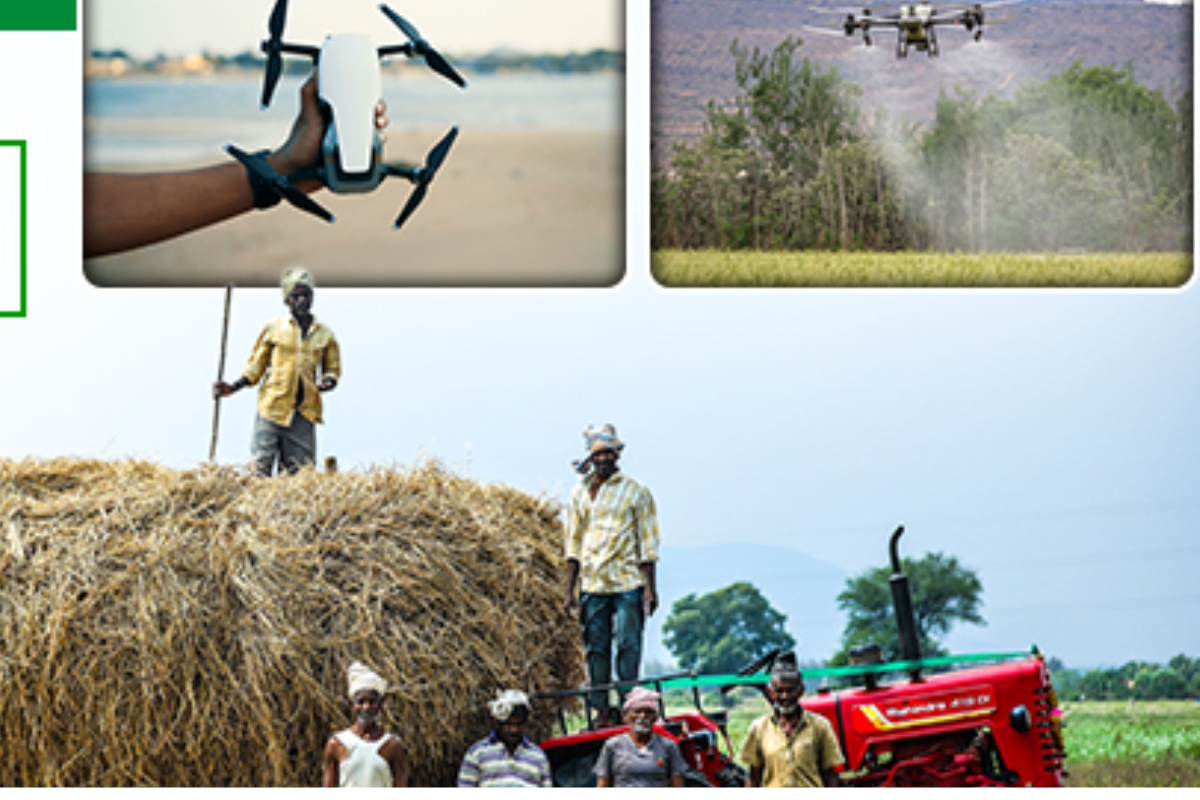
A farmer may need several machines during one crop season. A tractor for land preparation, a seed drill for sowing, a sprayer for crop protection and harvesting equipment later. Buying every machine can be difficult, especially when each machine is used only for a short period.
Custom Hiring Centres offer another option. Instead of owning machinery, farmers can rent equipment when they need it. The model can give small and marginal farmers access to machines without requiring them to make the full purchase investment.
A Custom Hiring Centre is a facility where agricultural machinery and implements are made available to farmers on a rental basis. The centre can be operated by different organisations, including farmer groups, FPOs and other eligible service providers.
The idea is to improve access to mechanisation. Farmers can hire a machine for a particular operation instead of purchasing equipment that may remain unused for much of the year.
ICAR research published in 2025 noted that custom hiring can reduce the capital burden on farmers, improve machine utilisation and lower per-unit costs when equipment is shared.
Why can buying machines be difficult?
Farm machinery involves more than the purchase price. Farmers also have to consider maintenance, repairs, fuel, storage and, in some cases, the cost of a trained operator. A machine may also be needed for only a few days each season. If it remains idle for the rest of the year, the cost per acre can become high.
This is particularly relevant for small farms. A farmer cultivating a few acres may find it difficult to recover the cost of a machine through personal use alone. Hiring changes that calculation. The farmer pays for the service when the machine is actually needed.
The machinery available depends on the Custom Hiring Centre. Equipment can include tractors, seeders, sprayers, threshers, harvesters, weeders and other implements.
Some centres specialise in particular crops or farming operations. Others provide a wider range of machinery covering land preparation, sowing, intercultural operations and harvesting.
An ICAR-IIMR Custom Hiring Centre launched at a farmer cooperative in Telangana in February 2026 included a combine harvester, tractor, millet baler, ragi thresher-cum-pearler and millet processing equipment.
This shows that a hiring centre does not have to focus only on field machinery. It can also provide equipment for primary processing and value addition.
How is the rental cost calculated?
The hiring charge can depend on the machine, operation, location, duration and whether an operator is included. Some services may be charged by the hour, while others can be calculated by acreage or another unit.
Farmers should ask for the complete cost before booking. Fuel, transport, operator charges and other fees may need to be considered separately. The relevant comparison is the total hiring cost against the cost of owning and operating the same machine.
For example, if a farmer needs a machine for only a few hours each year, hiring may avoid a large ownership cost. If the machine is needed frequently across a large area, ownership may become more practical.
Mechanisation can help farmers complete time-sensitive operations when labour is limited. This can be important during sowing and harvesting, when delays may affect the crop.
ICAR has reported that custom hiring can reduce dependence on manual labour and help farmers complete field operations on time. The benefit depends on machine availability. A farmer cannot gain much from hiring if the equipment is unavailable during the narrow period when the field needs it.
This is why local Custom Hiring Centres need good scheduling. Several farmers may require the same machine at almost the same time.
Yes. Farmer Producer Organisations can use collective demand to provide machinery services to their members.
A recent ICAR example comes from Hodal Farmers’ Producer Company in Haryana. Its Custom Hiring Centre provides services including ploughing, rotavation, sowing, spraying, threshing and residue management to small and marginal farmers. The model can work because the equipment serves several farms instead of remaining with one farmer.
An FPO can also combine machinery services with input supply, crop advisory, storage or processing. This can create several services around the same farmer group.
Can a farmer group share machinery?
Farmers do not always need a formal FPO to share equipment. A group of farmers can coordinate machinery use and divide hiring or ownership costs.
The main challenge is scheduling. If everyone needs the machine on the same day, sharing becomes difficult.
Farmers should agree on booking rules before using shared equipment. They should also decide who will handle maintenance, transport and operator arrangements.
A simple record of machine use and payments can prevent disagreements. The system works best when every farmer knows the cost before booking the equipment.
The Department of Agriculture and Farmers Welfare operates the Digital Platform for Farm Mechanization and Technology. Its FARMS platform is designed to support access to farm machinery and hiring services.
The government’s Custom Hiring Centre dashboard also tracks registered farmers, service providers and implements available for hiring. As of 17 September 2026, the platform was displaying state-wise information on registered users, Custom Hiring Centres and equipment offered for hire.
Farmers can therefore check government-supported machinery platforms along with local centres and FPOs when looking for equipment.
The first question is whether the machine is suitable for the crop and field. Farmers should check its capacity, working width and compatibility with their operation.
They should also confirm the rental rate, minimum booking period, fuel responsibility and operator charges. Transport costs can matter if the machine has to travel from another village.
Machine condition should also be checked before work begins. Farmers should ask whether repairs or breakdowns during operation are covered by the service provider.
Finally, farmers should book early during peak periods. Waiting until the last day can leave fewer machines available.
When does buying make more sense?
Buying may make sense when a machine is used frequently and covers enough acreage to justify its cost.
Farmers can calculate the annual ownership cost by considering purchase price, maintenance, repairs, fuel, insurance where applicable and depreciation. They can then compare this with the annual cost of hiring the same service. Ownership may also make sense when a machine is difficult to find locally or when operations must be completed within a very short window.
The decision should be based on actual use rather than the idea that owning machinery is always better. Hiring does not remove the need to check machine quality. A poorly maintained machine can delay farm operations and increase costs.
The Department of Agriculture and Farmers Welfare maintains a farm machinery platform that includes performance-testing information for agricultural machinery and implements. Farmers should ask whether the machine is suitable for their crop and whether the service provider has trained operators.
Also Read: Punarnava Jal – The world’s first organic fertilizer! Know how it is beneficial for farmers?
Contact us – If farmers want to share any valuable information or experiences related to farming, they can connect with us via phone or whatsapp at 9599273766 or you can write to us at “kisanofindia.mail@gmail.com”. Through Kisan of India, we will convey your message to the people, because we believe that if the farmers are advanced then the country is happy.
You can connect with Kisan of India on Facebook, Twitter, and Whatsapp and Subscribe to our YouTube channel.