



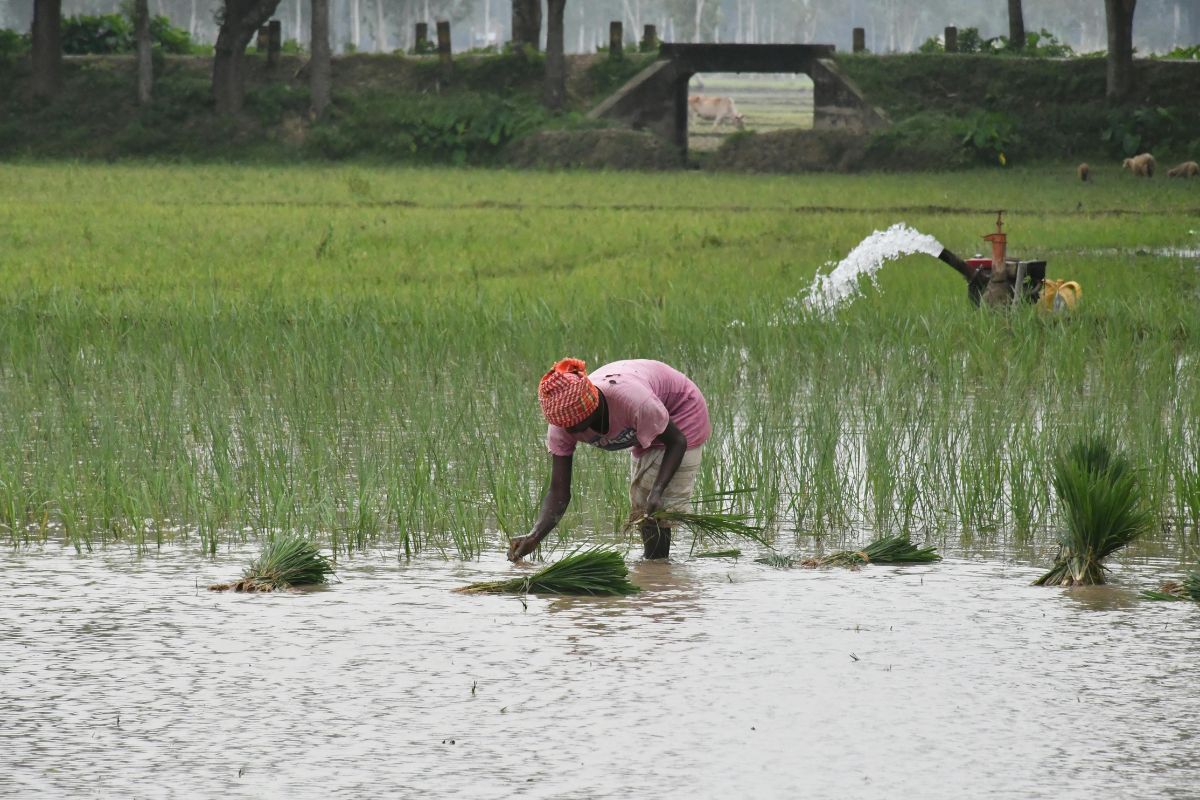
In the Ziro Valley of Arunachal Pradesh, farmers have been practising a form of agriculture that many experts now describe as one of the most sustainable farming systems in the world.
Long before terms such as climate-smart agriculture, integrated farming, and sustainable food systems became popular, the Apatani community developed a method that combined rice cultivation, fish production, water management, and soil conservation within a single agricultural landscape.
The system has survived for generations in a valley surrounded by forested hills. Even today, visitors to Ziro are often surprised by what they see. Paddy fields stretch across the valley floor, but these are not ordinary rice farms. Fish swim through specially designed channels between rice plants, while a carefully managed network of irrigation canals distributes water across the entire landscape.
The result is a farming model that produces food, conserves resources, and supports rural livelihoods without depending heavily on modern machinery or chemical inputs.
The success of the Apatani system begins with water management.
Streams flowing from surrounding hills are diverted through a network of channels constructed and maintained by local communities. Water moves gradually through rice fields before returning to natural drainage systems.
Unlike many irrigation projects that require large infrastructure investments, the Apatani system operates through local knowledge developed over centuries.
Every field receives controlled water flow throughout the growing season. Farmers regulate water levels carefully depending on crop requirements and weather conditions.
Because water is used efficiently and continuously recycled, the valley supports intensive cultivation despite its limited agricultural land.
The irrigation system remains one of the reasons why Ziro Valley continues to attract attention from researchers, policymakers, and agricultural planners.
Rice and Fish Grow Together
One of the most distinctive features of the system is the integration of fish with rice cultivation.
Farmers create deeper trenches and channels within paddy fields where fish can survive throughout the growing season. The fish feed on insects, larvae, and organic matter present in the water.
This creates multiple benefits. Fish provide an additional source of food and income. At the same time, they help control pests naturally inside the fields.
Their movement improves water circulation, while organic waste contributes nutrients that support rice growth. Instead of managing crops and aquaculture separately, the system combines both activities within the same land area.
For farming families, this means earning value from two products rather than one. The Apatani farming system developed long before chemical fertilizers became common in Indian agriculture.
Traditional practices rely heavily on organic matter, compost, and nutrient recycling within the farming ecosystem.
Crop residues, household organic waste, and natural biomass contribute to soil fertility. Because fish are integrated into the system, farmers also benefit from biological nutrient cycling that occurs naturally in the fields.
This approach helps maintain soil productivity while reducing dependence on external inputs.
At a time when many farmers face rising fertilizer costs, the system demonstrates how ecological processes can support agricultural production.
The Ziro Valley does not possess vast agricultural areas.
Flat land is scarce and surrounded by mountains. This limitation forced communities to develop methods that maximise productivity from every available hectare.
Rather than expanding cultivation into surrounding forests, the Apatani community intensified production within the valley itself.
The combination of irrigation, rice cultivation, fish farming, and careful resource management allowed farmers to generate substantial output from relatively small areas.
This efficiency remains one of the most remarkable aspects of the system.
Agricultural planners often cite the valley as an example of how traditional communities adapted successfully to geographical constraints.
Climate Change Is Renewing Interest in Traditional Systems
As climate change creates new challenges for agriculture, interest in indigenous farming knowledge is growing.
Many modern farming systems depend heavily on external inputs, energy, and water resources. The Apatani model offers a different approach built around local ecosystems and resource efficiency.
The valley’s irrigation channels help manage water effectively during changing weather conditions. Crop diversification reduces risk, while ecological management supports long-term productivity.
These characteristics are attracting attention from people searching for climate-resilient agricultural models.
The system demonstrates that sustainability is not always a new concept. In some cases, it has existed for centuries.
The importance of the Apatani farming system extends beyond food production. It reflects a deep understanding of ecology, water, soil, and community cooperation. Knowledge is passed from one generation to another through practice rather than formal instruction.
The system has helped sustain communities in the valley for hundreds of years while preserving the surrounding landscape.
As India looks for ways to make agriculture more sustainable, many experts believe traditional systems such as this deserve greater attention.
In the rice fields of Ziro Valley, a model of farming continues to operate much as it always has.
It produces food, conserves resources, and supports livelihoods using principles that remain relevant even in the age of modern agriculture.
Also Read: Punarnava Jal – The world’s first organic fertilizer! Know how it is beneficial for farmers?
Contact us – If farmers want to share any valuable information or experiences related to farming, they can connect with us via phone or whatsapp at 9599273766 or you can write to us at “kisanofindia.mail@gmail.com”. Through Kisan of India, we will convey your message to the people, because we believe that if the farmers are advanced then the country is happy.
You can connect with Kisan of India on Facebook, Twitter, and Whatsapp and Subscribe to our YouTube channel.