


Japan Is Building AI-Powered Vertical Strawberry Farms That Use 90% Less Water

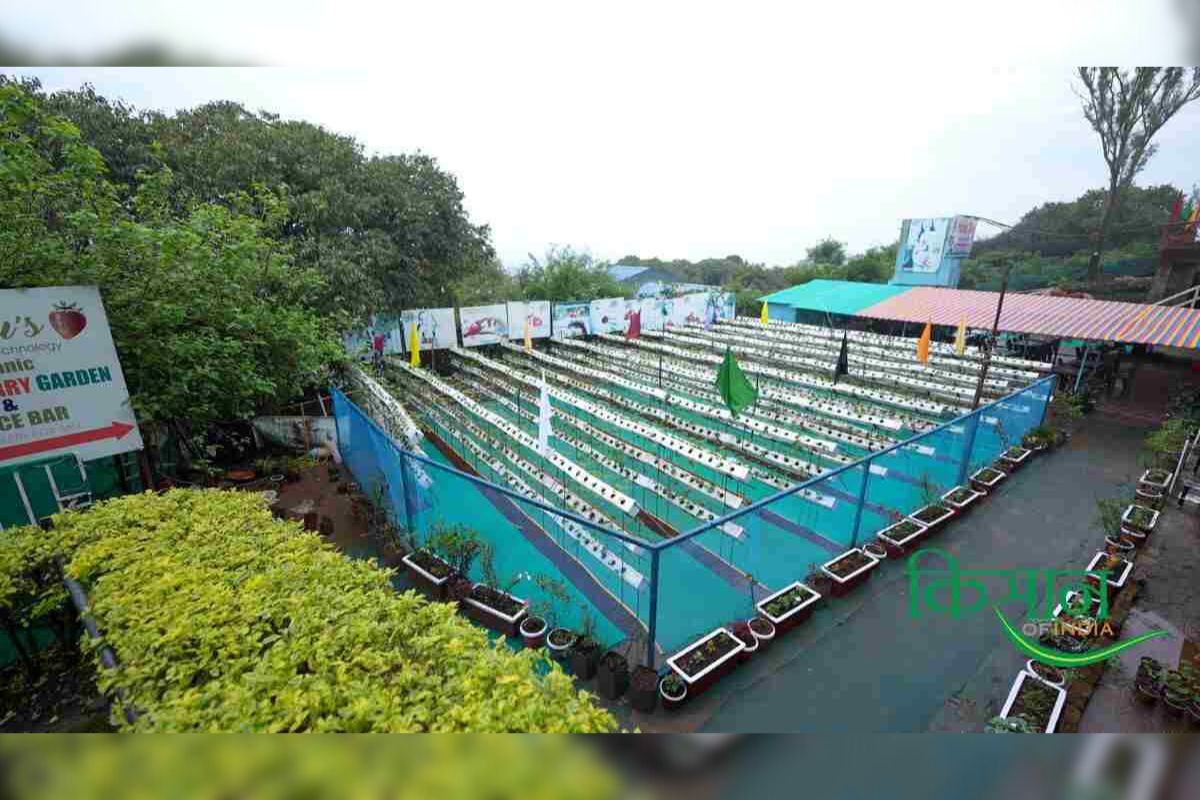
Japan is taking vertical farming beyond leafy vegetables. Several companies are now producing premium strawberries in fully controlled indoor farms, where artificial intelligence manages irrigation, lighting, temperature and humidity. By growing strawberries on stacked shelves instead of open fields, these farms use up to 90% less water while producing fruit throughout the year.
The shift comes as Japan faces shrinking farmland, labour shortages and increasingly unpredictable weather. Indoor strawberry farms are helping growers produce uniform, export-quality fruit regardless of the season.
Unlike conventional farms, every part of the growing environment is monitored by sensors.
Artificial intelligence analyses temperature, humidity, carbon dioxide, light intensity and plant growth before adjusting conditions automatically. Irrigation is delivered only when plants need it, reducing water use while improving fruit quality.
Researchers say this data-driven approach allows farmers to produce more consistent harvests than traditional open-field cultivation.
Labour shortages remain one of Japanese agriculture’s biggest challenges.
Many indoor strawberry farms now use automated systems to move planting trays, monitor crop growth and assist with harvesting. Cameras inspect fruit size and colour, allowing growers to identify berries that are ready for harvest without checking each plant manually.
Automation enables farms to operate efficiently with fewer workers.
Premium Fruit for High-Value Markets
Indoor farms focus on quality rather than volume.
By controlling growing conditions, producers can harvest strawberries with consistent size, sweetness and appearance. This makes the fruit suitable for premium domestic supermarkets, hotels and export markets where consumers pay higher prices for uniform quality.
Scientists say controlled-environment agriculture also reduces losses caused by heavy rain, frost and pests.
India is one of the world’s largest producers of strawberries, but cultivation remains concentrated in regions such as Maharashtra, Himachal Pradesh and parts of Jammu & Kashmir.
Japan’s experience shows that AI-driven vertical farming could help Indian growers produce premium strawberries close to major cities while reducing dependence on weather.
Although large indoor farms require significant investment, smaller climate-controlled units could be developed through agri-startups, Farmer Producer Organisations (FPOs) and protected cultivation programmes. The technology could also support year-round production for high-value urban markets and the hospitality sector.
A Glimpse of Future Horticulture
Japan’s vertical strawberry farms demonstrate how artificial intelligence, automation and controlled-environment agriculture can transform high-value horticulture.
For India, the lesson is not to replace conventional farming but to use advanced indoor production where land, water and labour are limited. As climate change makes fruit production more unpredictable, smart indoor farming could become an important complement to traditional cultivation.
Also Read: Punarnava Jal – The world’s first organic fertilizer! Know how it is beneficial for farmers?
Contact us – If farmers want to share any valuable information or experiences related to farming, they can connect with us via phone or whatsapp at 9599273766 or you can write to us at “kisanofindia.mail@gmail.com”. Through Kisan of India, we will convey your message to the people, because we believe that if the farmers are advanced then the country is happy.
You can connect with Kisan of India on Facebook, Twitter, and Whatsapp and Subscribe to our YouTube channel.